Seattle Scientists and NVIDIA Release an Open AI Model That Designs New Proteins Faster
The UW Medicine Institute for Protein Design and NVIDIA have released RFD4-Proteina, an open-source generative model that, across computational benchmarks, achieved fivefold to tenfold higher design success rates while generating protein candidates five to 10 times faster than previous models.
Just News Desk, Correspondent||4 min read
SEATTLE - Scientists at the University of Washington's Institute for Protein Design and the chipmaker NVIDIA have released an open-source artificial intelligence model that, in computational tests, designed new proteins five to 10 times faster than its predecessors and succeeded fivefold to tenfold more often, a pace the researchers say could move promising drug candidates into laboratory testing sooner.
The model, called RFD4-Proteina, was introduced on Wednesday by the UW Medicine institute, which described it as an open, generative model co-developed with NVIDIA. Its name reflects its parentage, according to the university: it marries the institute's RoseTTAFold Diffusion line of models with NVIDIA's Proteina-Complexa.
"RFD4-Proteina will open the door to new solutions in medicine, sustainability, materials and biotechnology," said David Baker, the institute's director and a professor of biochemistry at the University of Washington School of Medicine. Dr. Baker is a Howard Hughes Medical Institute investigator and a recipient of the 2024 Nobel Prize in Chemistry.
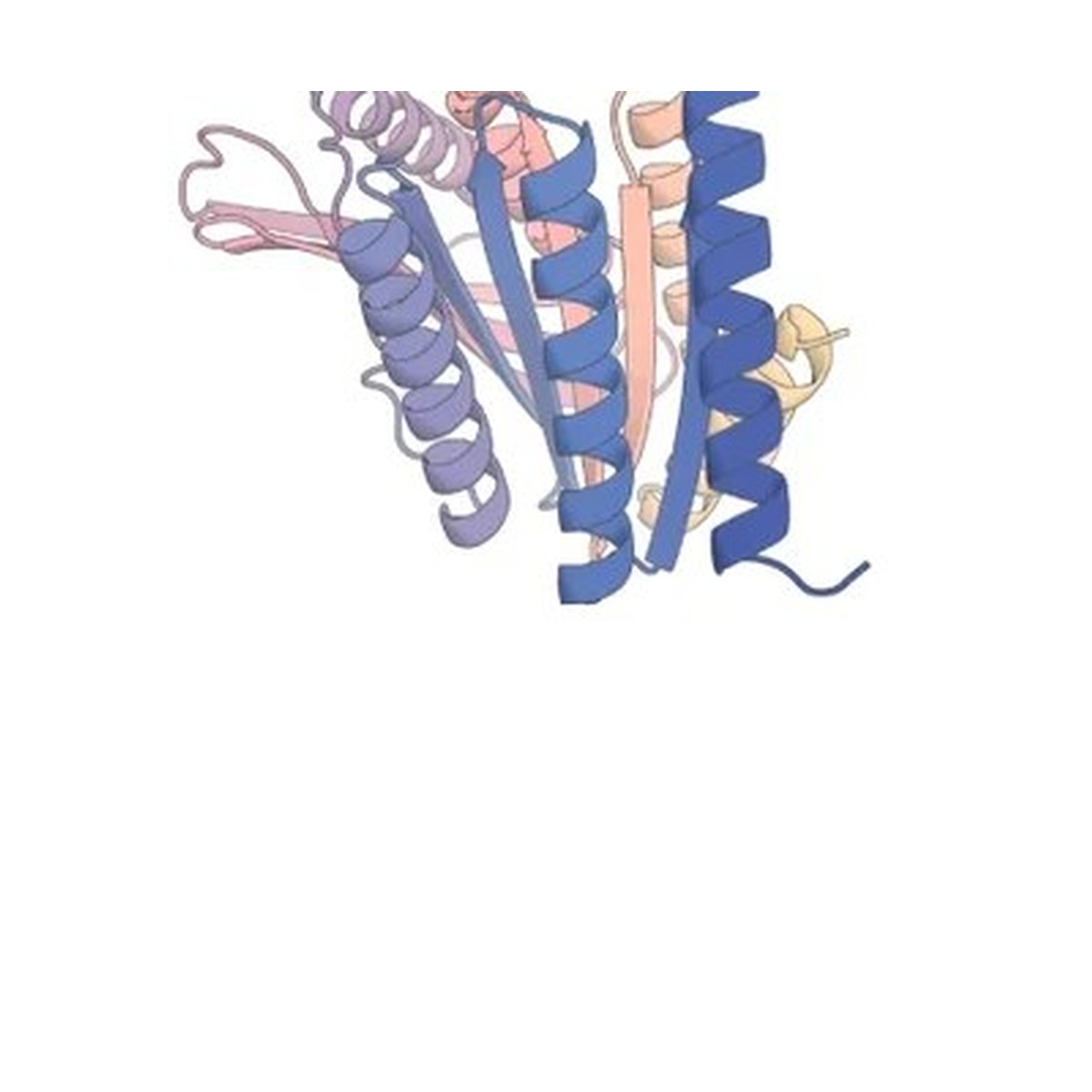
A protein structure generated by RFdiffusion, an earlier open-source design model from the Institute for Protein Design lineage that RFD4-Proteina builds on. Detail cropped from Figure 1 of Watson et al., "De novo design of protein structure and function with RFdiffusion," Nature, July 2023. Illustrative image, not an RFD4-Proteina design. Image: Joseph L. Watson, David Juergens, Nathaniel R. Bennett and co-authors, CC BY 4.0, via Wikimedia Commons. Source page: https://commons.wikimedia.org/wiki/File:Protein_design_using_the_open_source_RFdiffusion.webp
Over the past decade, the institute has helped pioneer the design of proteins on a computer, producing molecules with functions not found in nature. The university said that work has already yielded new antivenom therapies and the first vaccine of its kind built this way. The new model, it said, lets scientists build potential medicines, materials and other innovations faster and with much less computing power.
What sets the model apart, according to the release, is what its developers call biomolecular reasoning. Like language models whose "thinking" effort can be adjusted, RFD4-Proteina can devote more computation to harder problems. It refines a protein's sequence and structure at the same time as the structures of the molecules it is meant to interact with, so that a change in one informs changes in the others.
Across computational benchmarks, the university said, the model achieved fivefold to tenfold higher design success rates while generating protein candidates five to 10 times faster than previous models. Laboratory bench tests confirmed that its designs behaved as anticipated, the institute said, across tasks of varying size, complexity and function.
Researchers who have used it describe a compression of time. "In just a few days we designed a pesticide-degrading enzyme that performs many fold better than my previous best, which took months to design," said Seth Woodbury, a UW bioengineering doctoral candidate and National Science Foundation fellow. Meg Lunn-Halbert, a UW doctoral candidate in biochemistry and in biological physics, structure and design, said her team had precisely controlled which glycans, sugars important for immune-system recognition, attach to proteins, "in ways past models haven't been able to achieve, and to do so in under just a week rather than months."
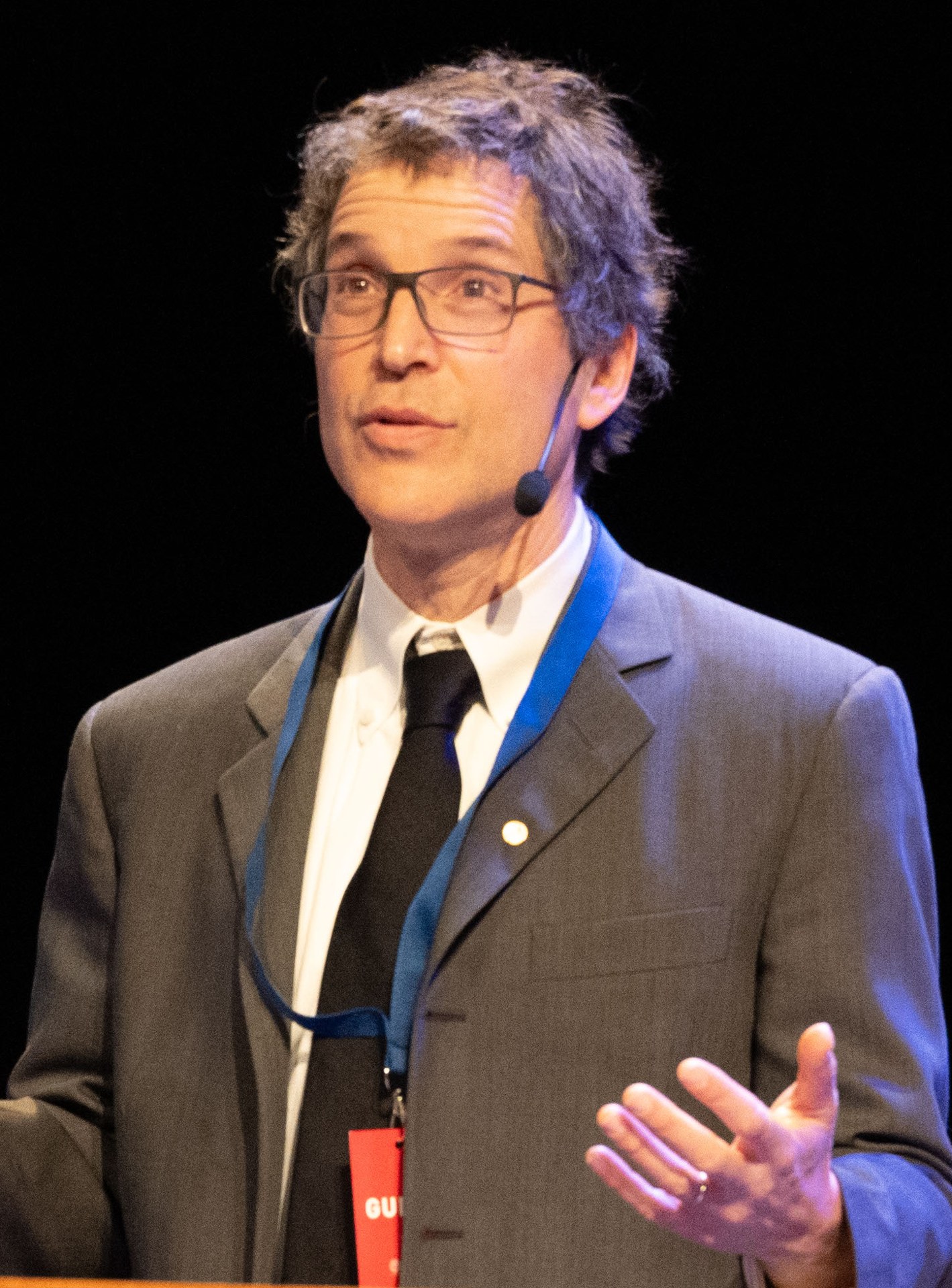
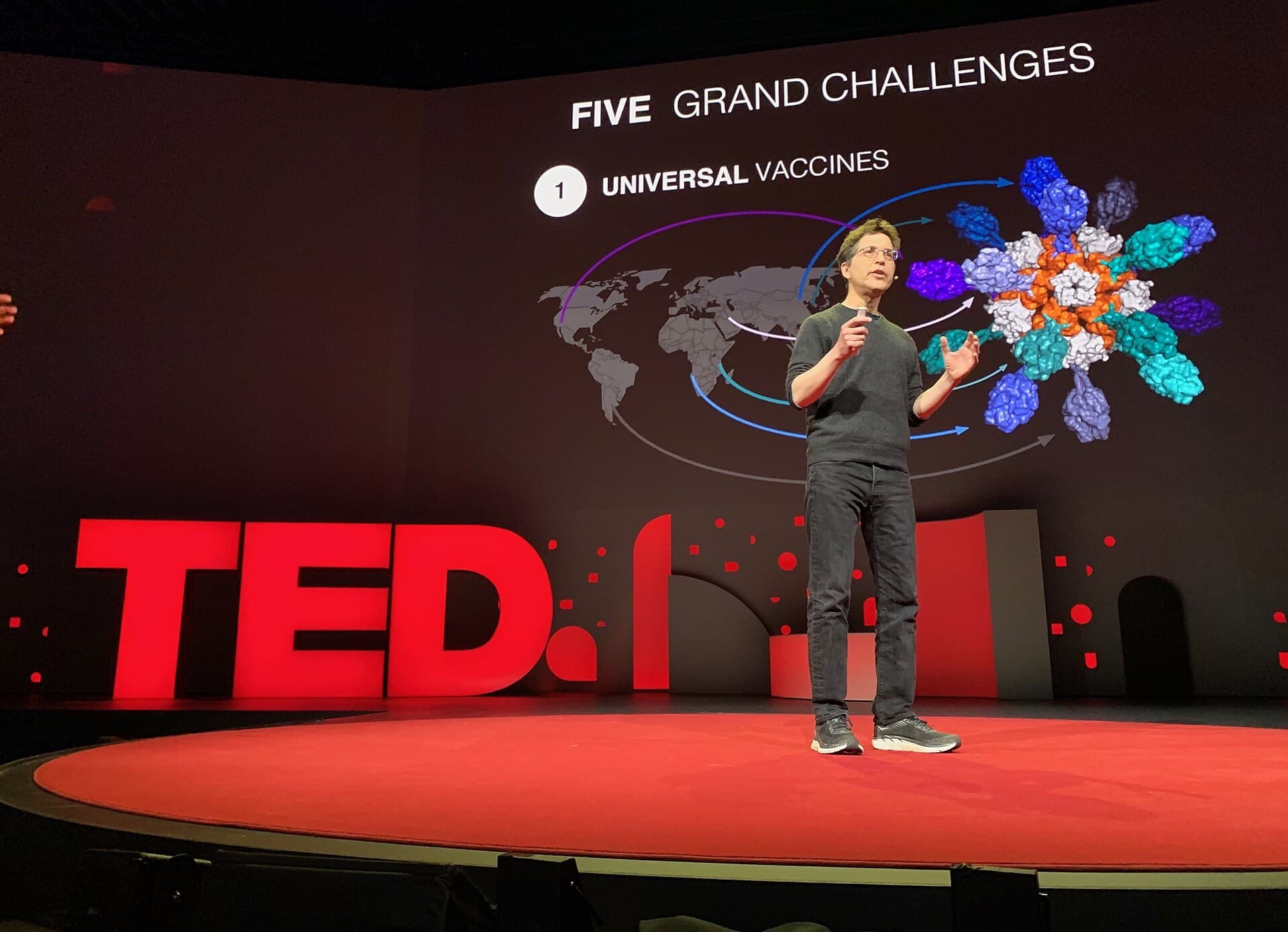
David Baker, director of the UW Medicine Institute for Protein Design and a 2024 Nobel laureate in chemistry, at a press conference during Nobel Prize week in Stockholm, Sweden, December 8, 2024. Photo: Arthur Petron, CC BY-SA 4.0, via Wikimedia Commons. Source page: https://commons.wikimedia.org/wiki/File:David_Baker,_2024_Nobel_Prize_Laureate_in_Chemistry_(cropped).jpg
The decision to release the model openly is central to its promise. It is immediately available as an open-source resource under the BSD-3 license, the university said, which will allow scientists around the world to build on it and explore more potential designs. At the institute, the project was led by UW doctoral students Nathaniel Corley, Maxwell Kazman and Rafi Brent, alongside Kieran Didi, a visiting student from the University of Oxford.
The work was funded by the Howard Hughes Medical Institute, the Gates Foundation, the Grantham Foundation, the Fund for Science and Technology, Schmidt Sciences, the OpenFold consortium, Rosetta Commons and other supporters of the institute, according to the release, with a computational grant from the Jen-Hsun and Lori Huang Foundation that the university called critical to the model's development. NVIDIA made its own announcement at its GTC Berlin conference.
The benchmark gains are computational, and the medicines they might hasten remain years of testing away. But by giving the tool away, its makers have widened the circle of laboratories that can try.
Sources: UW Medicine Newsroom, "Researchers achieve major advance in protein design," news release, Seattle, October 21, 2026, https://newsroom.uw.edu/news-releases/researchers-achieve-major-advance-in-protein-design
- science
- technology
- artificial-intelligence
- medicine
- open-source
- north-america