Kenya Unveils a $160 Million Plan to Pay for Conservation for a Decade, With Communities at Its Center
Kenya's government, The Nature Conservancy and Enduring Earth have launched Thamani Asili, a 10-year Project Finance for Permanence designed to raise US$160 million, half from philanthropy and half from the government, to conserve about 17.3 million hectares and support community livelihoods in four priority landscapes.
Just News Desk, Correspondent||5 min read
TAITA TAVETA, Kenya - Kenya on Wednesday launched a 10-year, US$160 million initiative intended to give its parks, conservancies and the communities that live beside them something conservation in the country has rarely had: money that does not run out when a project ends. The program, called Thamani Asili, or "value of nature" in Kiswahili, was unveiled in Taita Taveta County by the government with The Nature Conservancy and the partnership Enduring Earth, which said it is expected to directly benefit about 1.6 million people.
The figure is a financing plan rather than money already in the bank. According to The Nature Conservancy, the initiative is designed to mobilize US$80 million from philanthropy, with the Government of Kenya expected to match it with an equivalent US$80 million over 10 years. The conservancy listed more than a dozen donors from whom it "anticipates key financial support," among them Margaret A. Cargill Philanthropies, the Rob Walton Foundation, the Robert W. Wilson Charitable Trust and San Diego Zoo Wildlife Alliance. The Kenya News Agency, the government's news service, put the total at 20.8 billion Kenyan shillings.
Thamani Asili is a Project Finance for Permanence, a model in which governments, donors and communities agree on a long-term conservation plan and the money to pay for it at the outset. It was launched by Rebecca Miano, the Cabinet Secretary for Tourism and Wildlife, who represented President William Ruto at the event, according to the Kenya News Agency.
"Conserving nature creates opportunities, strengthens livelihoods and honours the cultures and heritage of the people who live alongside wildlife," Ms. Miano said in a statement released by The Nature Conservancy. She added, "Our commitment is clear: to protect our wildlife, empower communities and build a future where both people and nature thrive together."
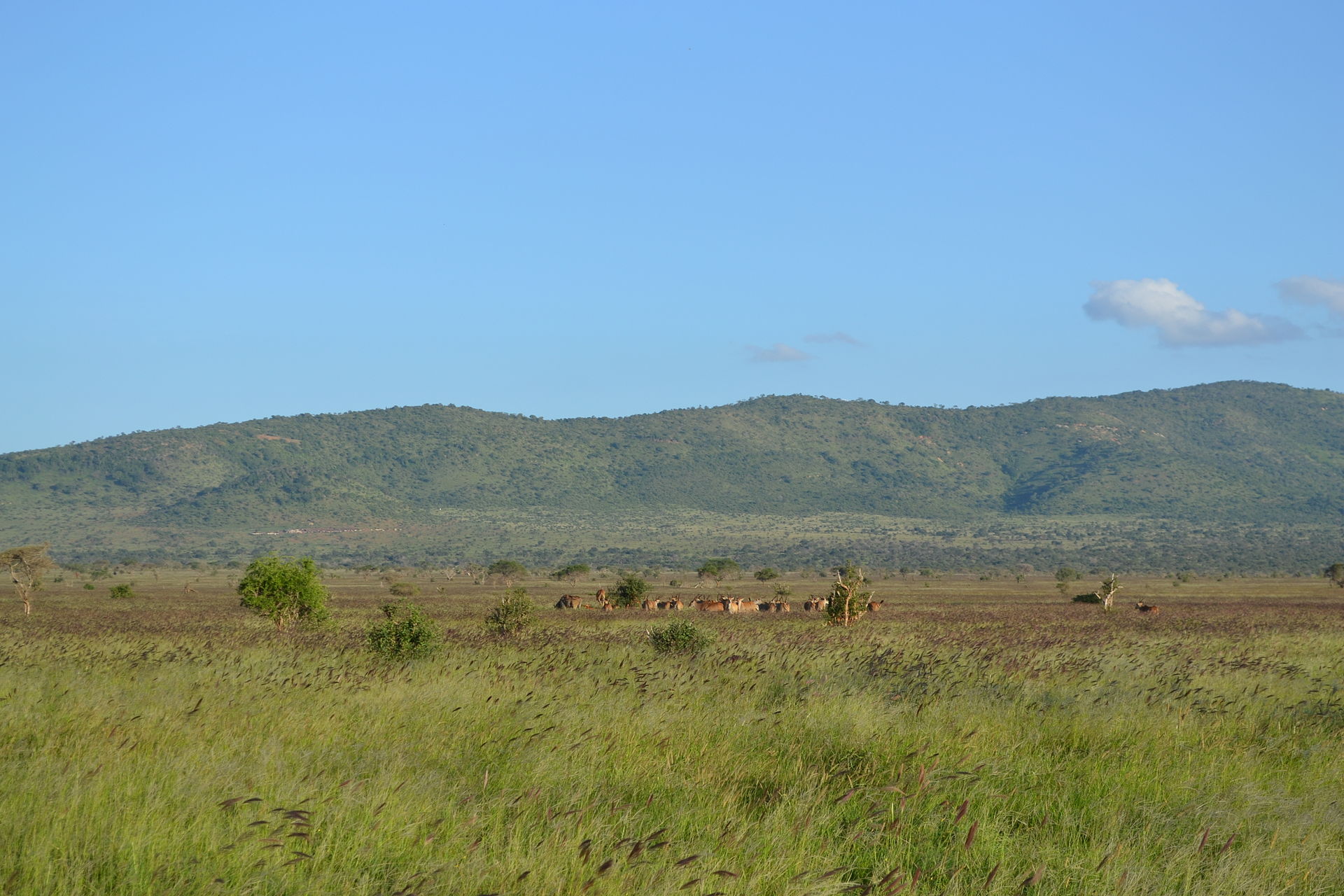
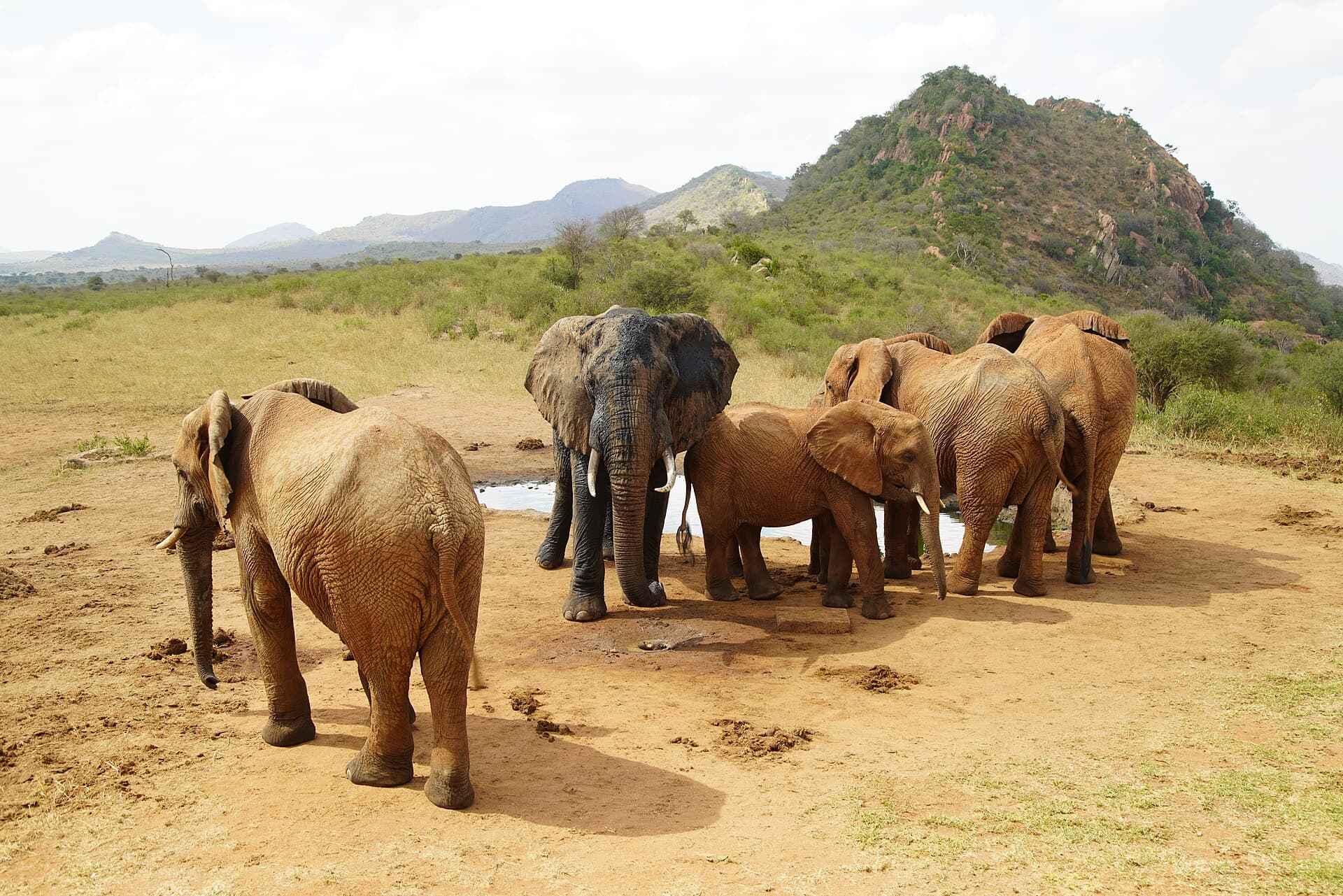
Savanna looking south-east from near the Taita Hills Game Lodge, close to the eastern boundary of the LUMO Community Wildlife Sanctuary, in the Taita Hills Wildlife Sanctuary, Taita Taveta County, Kenya, Dec. 16, 2011. Photo: CT Cooper, CC BY 3.0, via Wikimedia Commons. Source page: https://commons.wikimedia.org/wiki/File:Savanna_towards_the_south-east_from_the_south_of_Taita_Hills_Game_Lodge_within_the_Taita_Hills_Wildlife_Sanctuary_in_Kenya_2.jpg
The ambitions are large. Over the next decade, the partners say, Thamani Asili will help conserve about 17.3 million hectares, supporting Kenya's goal of protecting 30 percent of its lands, inland waters and near-shore ecosystems. That includes establishing about 2.7 million hectares of new conserved areas with communities and other stakeholders, improving the management of about 11 million hectares of existing conservation areas, and helping communities better manage roughly six million more. The Nature Conservancy said the work is expected to help avoid about 7.5 million tons of carbon emissions by 2035.
Initial efforts will focus on four landscapes: Tsavo to Coastal, Greater Ewaso, Greater Rift to Western, and Southern Kenya. The Kenya News Agency reported that the program spans 31 counties.
Its organizers have framed it as much as an economic program as an environmental one. They say investment in ecotourism, sustainable grazing, carbon programs and other nature-based businesses is expected to create about 7,800 direct jobs and 15,000 indirect jobs, benefiting up to 80,000 people through new livelihoods. A further 3.9 million people could benefit from stronger land governance and natural resource management, according to The Nature Conservancy. The plan also includes measures to reduce conflict between people and wildlife, such as better protection for livestock.
That conflict is a daily reality in Taita Taveta. Gov. Andrew Mwadime said more than 60 percent of the county's land lies within the Tsavo ecosystem and a further 24 percent is under conservancies, the Kenya News Agency reported. "We're glad that Thamani Asili offers something long-term and comprehensively beneficial to our people," he said.
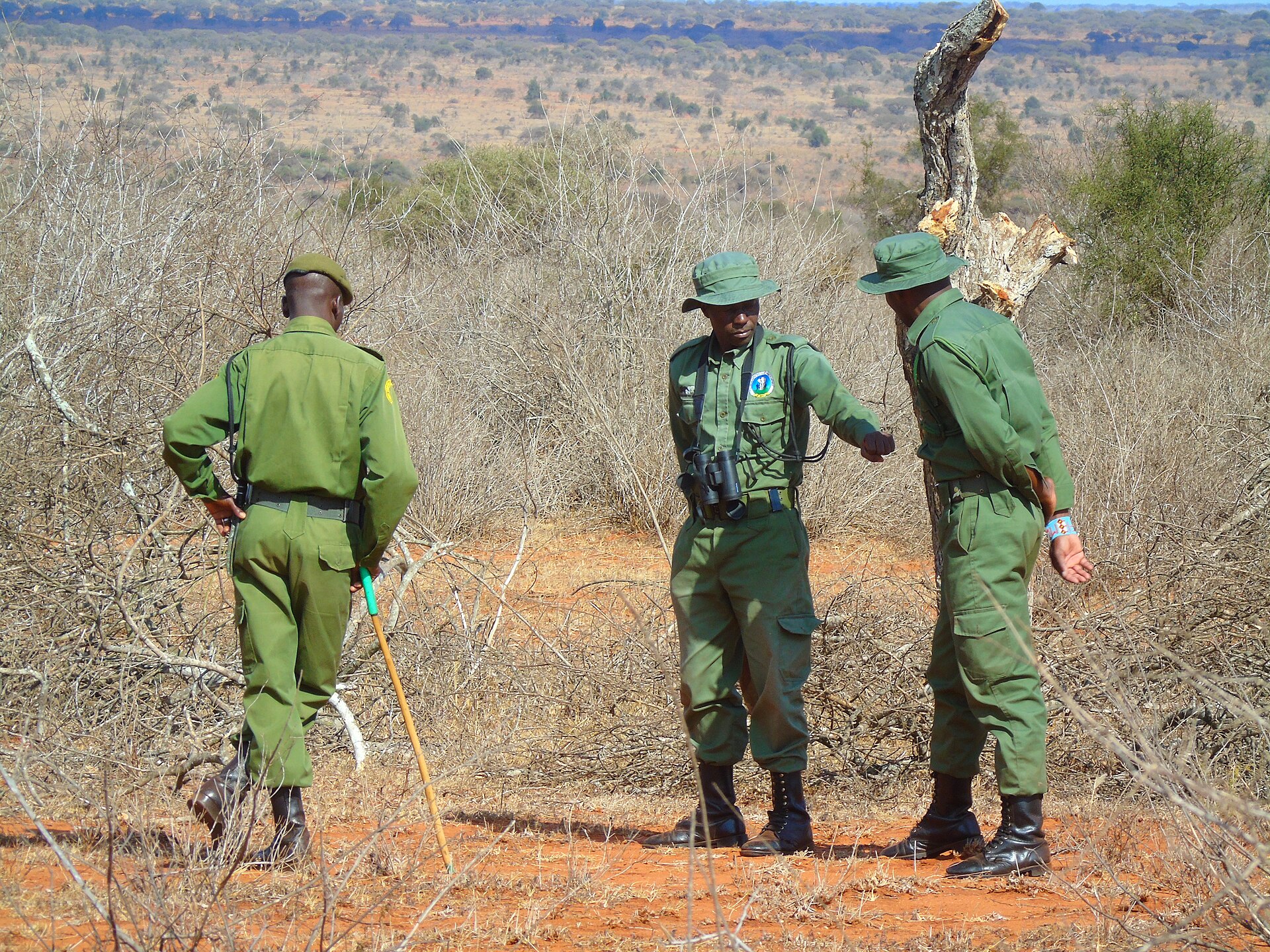
Rangers of the LUMO Community Wildlife Conservancy, a community-run conservancy in Taita Taveta County, on foot patrol, Aug. 17, 2023. Photo: Maghanga006, CC BY-SA 4.0, via Wikimedia Commons. Source page: https://commons.wikimedia.org/wiki/File:LUMO_Conservancy_Rangers_On_Foot_Patrol.jpg
Erustus Kanga, director general of the Kenya Wildlife Service, said in the launch statement: "Our communities are not separate from conservation; they are its heart. Together, we must ensure that the people who live alongside wildlife are not only its custodians but also beneficiaries of its value."
Ruth Masha, The Nature Conservancy's country director for Kenya, said: "We know that when communities lead, conservation can deliver lasting results."
The money will be managed by the Thamani Asili Fund for Kenya, a newly created independent conservation trust fund that will disburse donor funding and track progress. It is the third such arrangement in Africa, The Nature Conservancy said, and the tenth supported by Enduring Earth, a collaboration founded in 2020 by The Nature Conservancy, The Pew Charitable Trusts, World Wildlife Fund and ZOMA LAB. The group says its partnerships have durably conserved more than 282 million hectares and secured US$2.1 billion in sustainable finance in eight countries, including Gabon, Mongolia and Namibia.
Whether the plan delivers will depend, as the Kenya News Agency noted, on translating funding commitments into measurable gains for wildlife and for the people who share the land with it.
Sources: The Nature Conservancy, "The Government of Kenya and The Nature Conservancy Unveil US$160m Thamani Asili Community Conservation Initiative," Taita Taveta, Kenya, Oct. 21, 2026, https://www.nature.org/en-us/newsroom/thamani-asili-pfp-kenya/ ; Arnold Linga Masila, Kenya News Agency, "Government launches Sh20.8bn wildlife conservation programme in 31 counties," Oct. 22, 2026, https://www.kenyanews.go.ke/government-launches-sh20-8bn-wildlife-conservation-programme-in-31-counties/ . Photographs released by The Nature Conservancy are not used because they are not openly licensed; the images shown are openly licensed Wikimedia Commons photographs of the Tsavo landscape and Taita Taveta County, not of the launch.
- environment
- conservation
- kenya
- wildlife
- conservation-finance
- communities