Great Lakes Piping Plovers Post a Fifth Straight Record Season, With 99 Pairs and 184 Fledged Chicks
The endangered Great Lakes population of piping plovers grew to 99 breeding pairs in 2026, the most since federal listing in 1986, and fledged a record 184 chicks, according to the National Audubon Society. Plovers nested on Cat Island in lower Green Bay for the first time in 75 years, though the population remains short of its recovery goal of 150 pairs.
Just News Desk, Correspondent||5 min read
GREEN BAY, Wisconsin - The endangered piping plovers of the Great Lakes have had their strongest nesting season since the population was listed under the Endangered Species Act in 1986, with 99 breeding pairs fledging a record 184 chicks across the region in 2026, the National Audubon Society reported. It was the fifth consecutive year of record numbers for a population that had dwindled to about a dozen pairs, all in northern Michigan, by 1990.
The figures, compiled by the Great Lakes Piping Plover Conservation Team, a coalition of federal, state, provincial and Tribal agencies, universities, zoos, nonprofit groups and volunteers, were published by Audubon on 7 October in a season summary by Sarah Saunders, senior manager of quantitative science at Audubon Great Lakes. The 99 pairs were 11 more than the 88 counted in 2025.
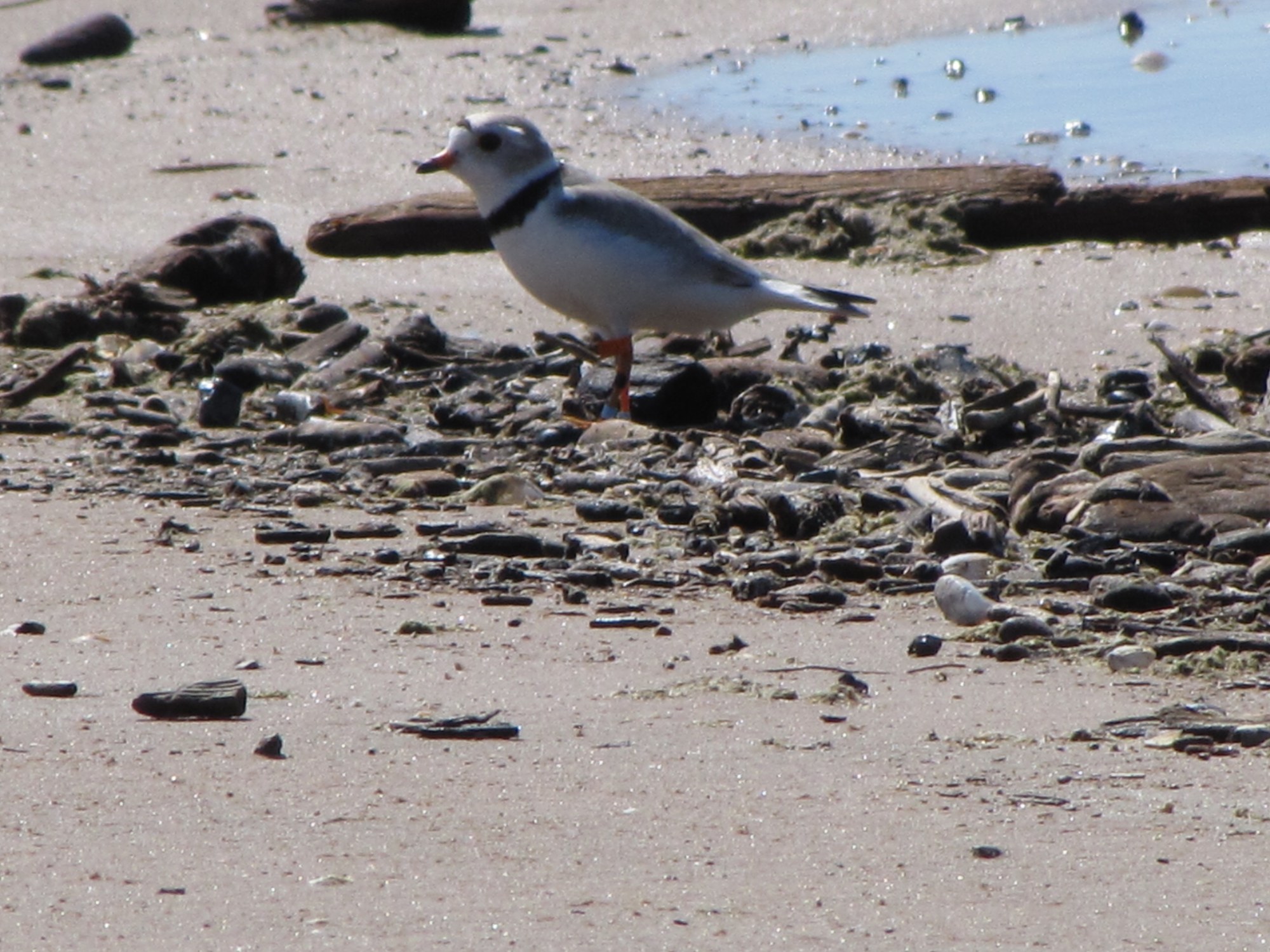
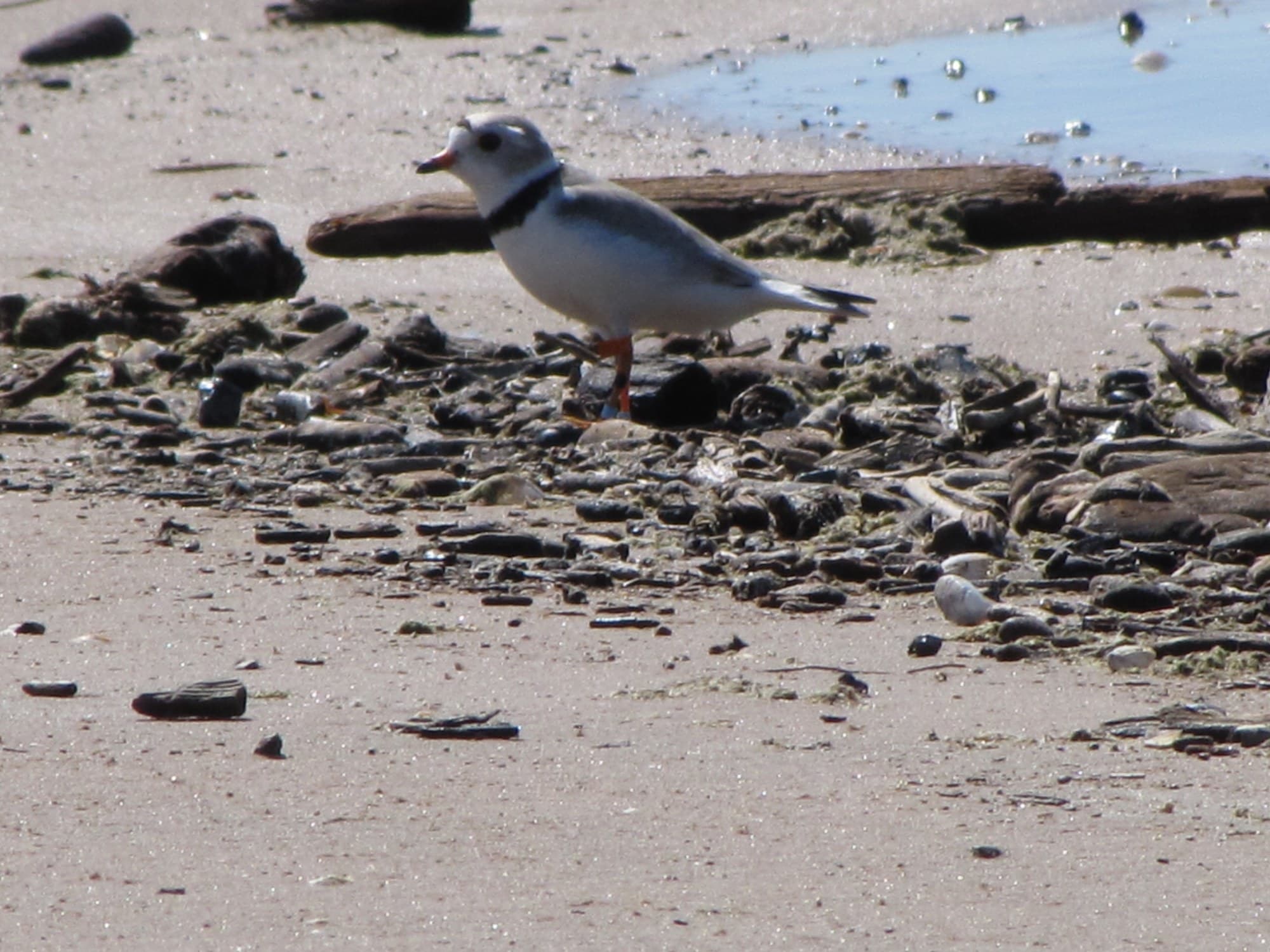
An adult Great Lakes piping plover on a Lake Michigan beach just south of Seney National Wildlife Refuge, Michigan, in June 2012, watching while its chicks were banded. The photograph predates the 2026 season and is illustrative. Photo: Mike McCarthy, Seney Natural History Association, via Wikimedia Commons (CC BY-SA 2.0). Source page: https://commons.wikimedia.org/wiki/File:Piping_Plover_Adult_(Charadrius_melodus)_(7686098084).jpg
Monitors documented 101 nests and 84 wild broods across the basin, according to the summary. Sixty-five of those broods fledged 160 wild chicks, an average of 1.6 per pair, above the annual recovery target of 1.5. When 24 captive-reared birds are included, the season produced 184 fledglings, or 1.9 per pair.
The season was not without losses. Seventeen nests failed, nine of them associated with the predation of adults and four washed out by storms, Audubon said.
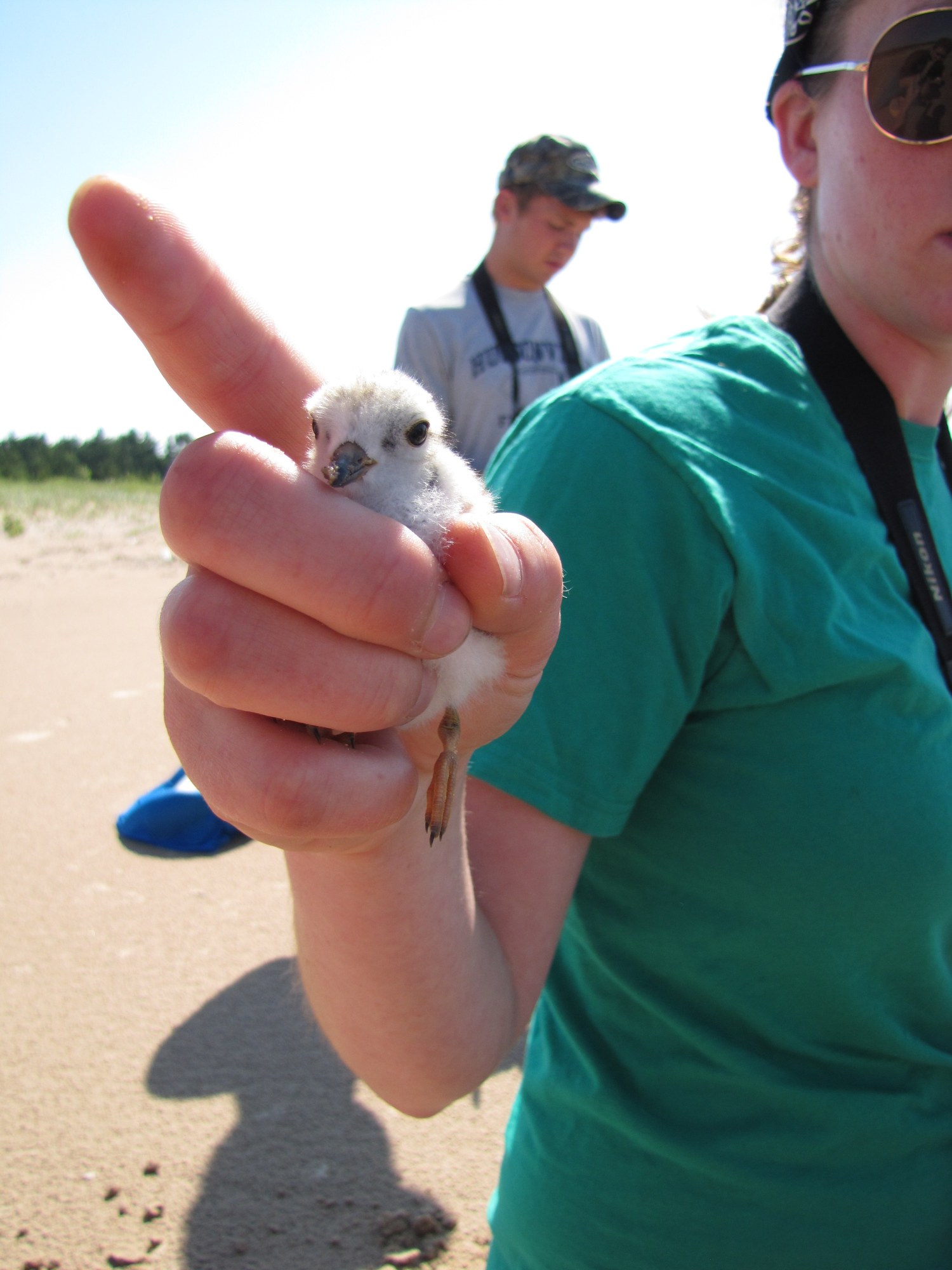
A Great Lakes piping plover chick is held for banding near Seney National Wildlife Refuge, Michigan, in June 2012. Chicks are fitted with colour-coded bands so researchers can follow individual birds. Illustrative; not a 2026 photograph. Photo: Mike McCarthy, Seney Natural History Association, via Wikimedia Commons (CC BY-SA 2.0). Source page: https://commons.wikimedia.org/wiki/File:Piping_Plover_Chick_(7686079832).jpg
Captive rearing again proved decisive. Because both parents incubate, a nest can be left exposed when one adult disappears, and storms can wash eggs away before they hatch. In such cases field teams collect viable eggs and bring them to a captive-rearing centre at the University of Michigan Biological Station in Pellston, Michigan. This year the programme incubated 36 eggs, from which 26 chicks hatched and 24 fledglings were released, with 13 zoos taking part. Those 24 birds, Audubon said, otherwise would not have survived.
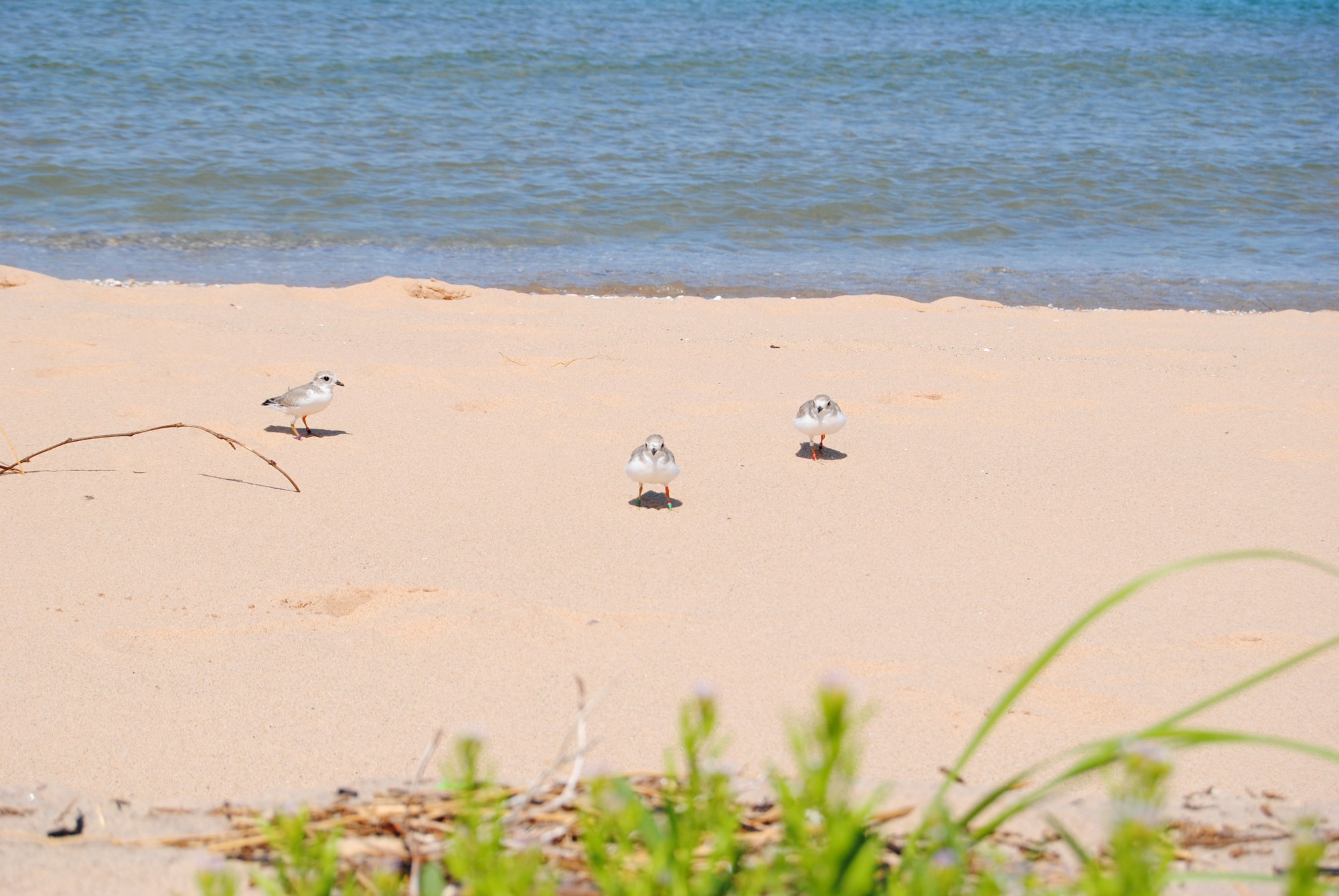
Three fledgling piping plovers run across a beach after being released, August 2019. The file record does not specify the location; the image is illustrative of the release of young plovers and does not show 2026 birds. Photo: National Park Service, via NPGallery and Wikimedia Commons (public domain). Source page: https://commons.wikimedia.org/wiki/File:Three_fledging_plovers_being_released,_2019_(96c65d09-8521-4a11-8bc0-f22bd1fe739c).JPG
Plovers nested on all five Great Lakes again, a pattern that began in 2017. Michigan remains the stronghold: Sleeping Bear Dunes National Lakeshore alone held 32 pairs that fledged 60 wild chicks, according to the summary. Wisconsin's Apostle Islands recorded a record-tying seven pairs, Pennsylvania 10 fledglings and Ontario nine.
The most striking return came at Cat Island in lower Green Bay. After restoration work rebuilt portions of the island chain, plovers nested there for the first time in 75 years, and two broods fledged five chicks. "Seeing Piping Plovers return to Cat Island after decades of absence demonstrates what's possible when habitat restoration and long-term conservation investment come together," said Tom Prestby, Wisconsin conservation manager at Audubon Great Lakes.
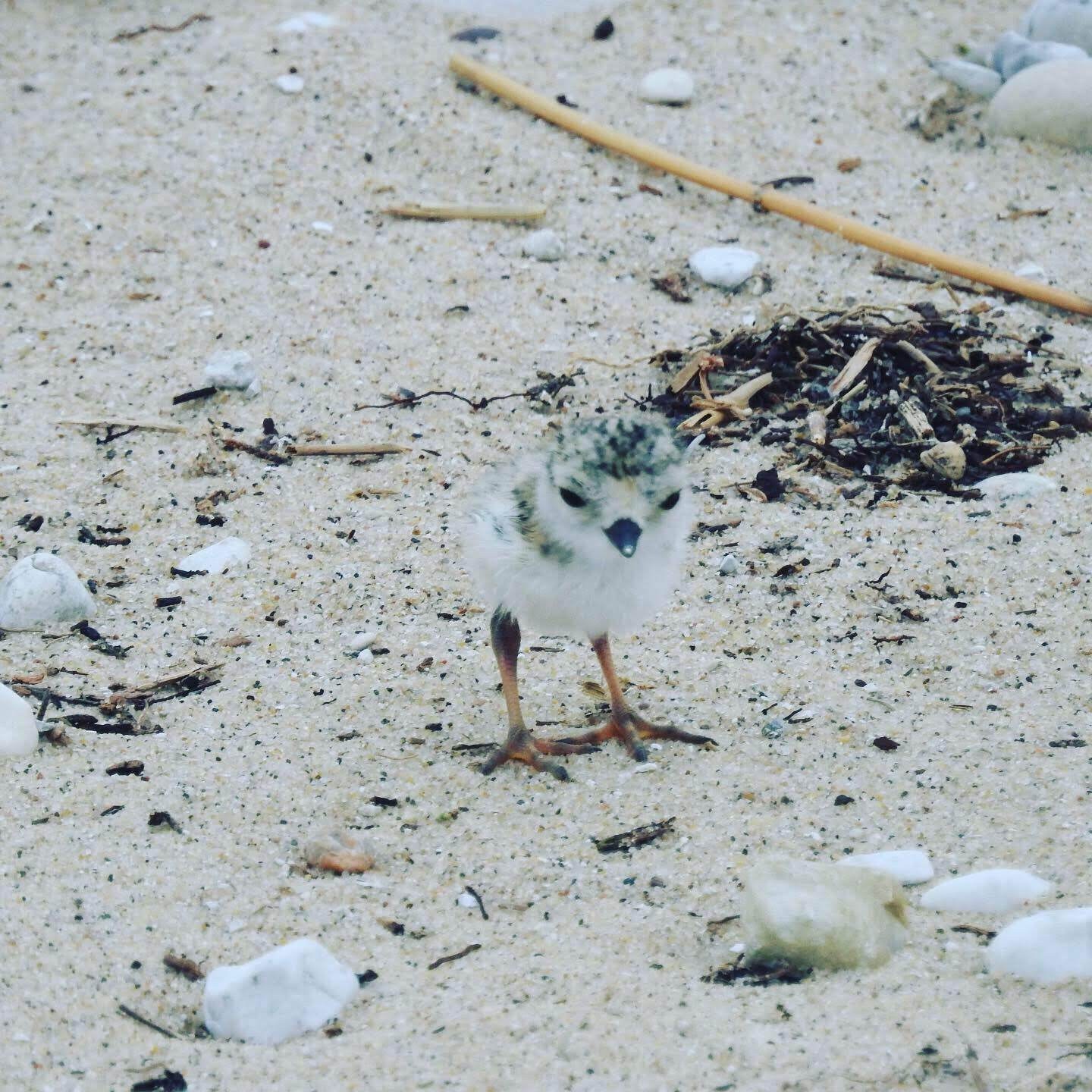
A young piping plover chick on a sandy beach, its speckled down serving as camouflage. The file record gives no date or location; the image is illustrative and does not show Cat Island or a 2026 chick. Photo: National Park Service, via NPGallery and Wikimedia Commons (public domain). Source page: https://commons.wikimedia.org/wiki/File:Young_Piping_Plover_Chick_(a3dd088a-0864-43b4-bac2-3ce875d7bdf0).jpg
No single measure accounts for the recovery. Partial beach closures, fencing and nest exclosures, frequent monitoring, predator management, public education and habitat restoration all play a part, along with long-term banding. In 2026 a Smithsonian Migratory Bird Center crew banded 43 adults and 204 wild chicks, Audubon said. Great Lakes Restoration Initiative funding has supported monitoring and recovery work since 2010.
"Local volunteers continue to play a vital role, contributing many hours of their personal time to monitoring, outreach and education," said Jillian Farkas, the U.S. Fish and Wildlife Service lead biologist for Great Lakes piping plovers. "With 99 pairs nesting in 2026, we remain hopeful that it's possible for these plovers to reach their recovery goal of 150 breeding pairs."
That goal remains some distance away. Recovery requires at least 150 breeding pairs sustained for five consecutive years, including 50 pairs outside Michigan, and the population is still listed as endangered. Predation, severe storms, changing lake levels, encroaching vegetation and growing recreational use of beaches can quickly erase gains, the summary cautioned.
Source: Sarah Saunders, "Record Numbers Bring Great Lakes Piping Plovers Closer to Recovery," National Audubon Society (Audubon Great Lakes), 7 October 2026, https://www.audubon.org/great-lakes/news/record-numbers-bring-great-lakes-piping-plovers-closer-recovery . Figures are from the Great Lakes Piping Plover Conservation Team's 2026 monitoring as reported by Audubon. All images are openly licensed and illustrative; none was taken during the 2026 season.
- environment
- conservation
- wildlife
- birds
- great-lakes
- endangered-species