A Slow Loris Feared Extinct, and Missing From Science Since the 1930s, Is Still Living on Indonesia's Bangka Island
A new study in the journal Spixiana documents more than 90 Bangka slow lorises rescued on Bangka Island since 2015, 86 of them released, providing what the authors call compelling evidence that a primate listed as Critically Endangered (Possibly Extinct) persists across the island. They urge a reassessment of its status and new conservation and breeding programs.
Just News Desk, Correspondent||5 min read
PANGKALPINANG, Indonesia - A small, venomous primate that the International Union for Conservation of Nature lists as possibly extinct, and that had all but vanished from the scientific record after the 1930s, is still living on the Indonesian island of Bangka, according to a new study. A local wildlife rescue center has taken in more than 90 Bangka slow lorises since 2015 and returned 86 of them to the island's forests, researchers reported this month in the journal Spixiana.
The species, Nycticebus bancanus, is a nocturnal tree dweller with large eyes and distinctive facial markings, considered endemic to Bangka and possibly neighboring Belitung, off the southeastern coast of Sumatra. The IUCN Red List classifies it as Critically Endangered (Possibly Extinct) and gives 1937 as the year it was last seen. The conservation group Re:wild includes it on its list of lost primates.
The paper, titled "Neglected but still alive," was written by Langka Sani, Endi Riadi and Andre Septian of the Alobi Wildlife Rescue Center, which is based near Pangkalpinang, the provincial capital; Jochen Menner of the Taman Safari Prigen Conservation Breeding Ark in East Java; and Timon Glaw of the Haus des Meeres Aqua Terra Zoo in Vienna, the corresponding author. It draws on Alobi's rescue and release records from 2015 to August 2025.
"The Bangka slow loris is still alive," Mr. Glaw told Reuters.
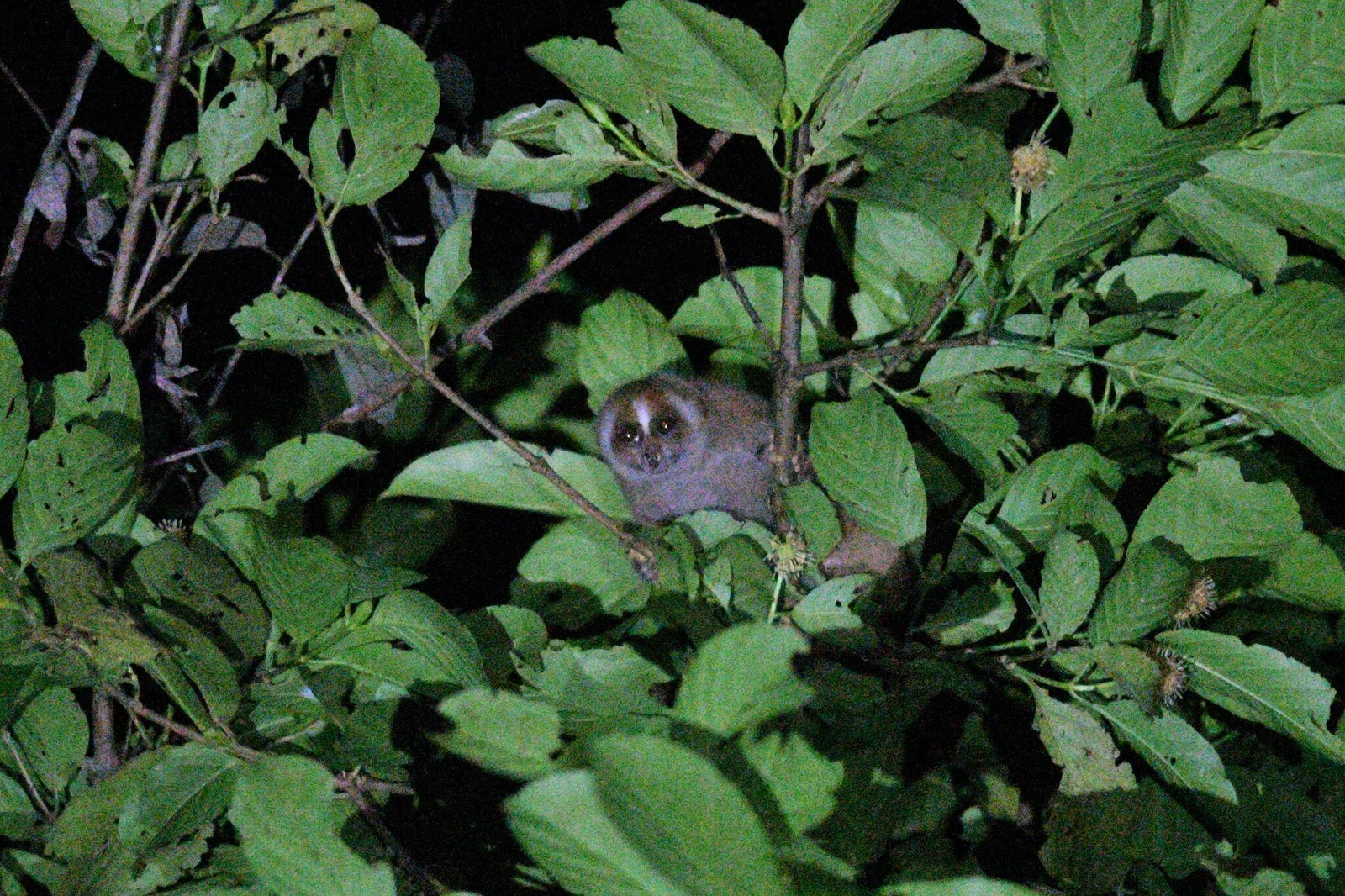
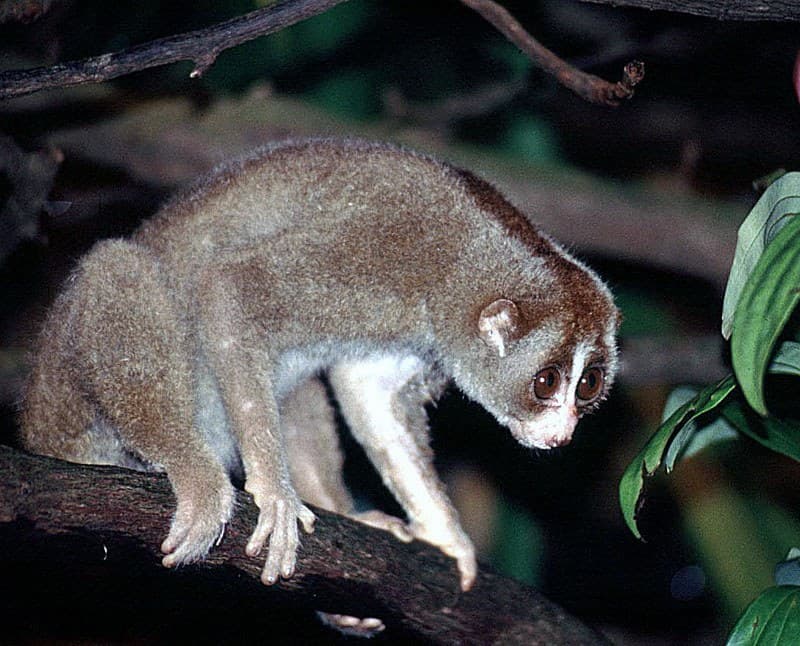
A Bornean slow loris (Nycticebus menagensis), a related species, photographed at night among leaves in September 2022 (illustrative; not a Bangka slow loris). Photo: Thompson Hyggen, CC0 (public domain dedication), via Wikimedia Commons. Source page: https://commons.wikimedia.org/wiki/File:Nycticebus_menagensis_236799954.jpg
The authors are careful about what the records show. The rescues were opportunistic, made after residents or authorities contacted Alobi by phone, WhatsApp or social media, and so they skew toward animals found near people. Of 43 lorises rescued since 2021 for which detailed circumstances were available, 16 had wandered into houses or gardens, seven bore burns consistent with electric shock, most apparently from power lines, six were recovered from roads and five came from the local wildlife trade or captivity. Others were found in plantations, one tangled in a fence and one attacked by a dog. At least three died.
Animals were rescued in all four of Bangka's regencies and in the city of Pangkalpinang, which the authors say suggests the species may still occur across much of the island, including in plantations and other disturbed habitat. Released animals went to seven forest sites chosen because they offered suitable habitat and some degree of legal or practical protection. The researchers note that no data on post-release survival have yet been collected.
They also addressed the possibility that the lorises were introduced from elsewhere, since slow lorises are commonly traded as pets in Indonesia. A skull kept at Alobi has only two upper incisors, a feature of Bangka and Bornean slow lorises, which the authors say makes an introduction from Sumatra or Java, where slow lorises have four, unlikely. They add that molecular confirmation of the species' taxonomic validity, which now rests on physical traits alone, is crucial.
Nor were the animals entirely unknown before. The paper notes that Alobi had posted photographs and videos of the species online, that three iNaturalist observations from Bangka since 2023 likely show it, and that a 2017 survey project received funding but produced no published scientific results. What was missing, the authors argue, was scientific attention.
"What I find particularly astonishing is that such a charismatic and distinctive primate has received so little scientific attention for nearly a century," Mr. Glaw told Reuters. "Its rediscovery also offers hope that other species feared to be extinct may still survive in places where scientists have not looked for decades."
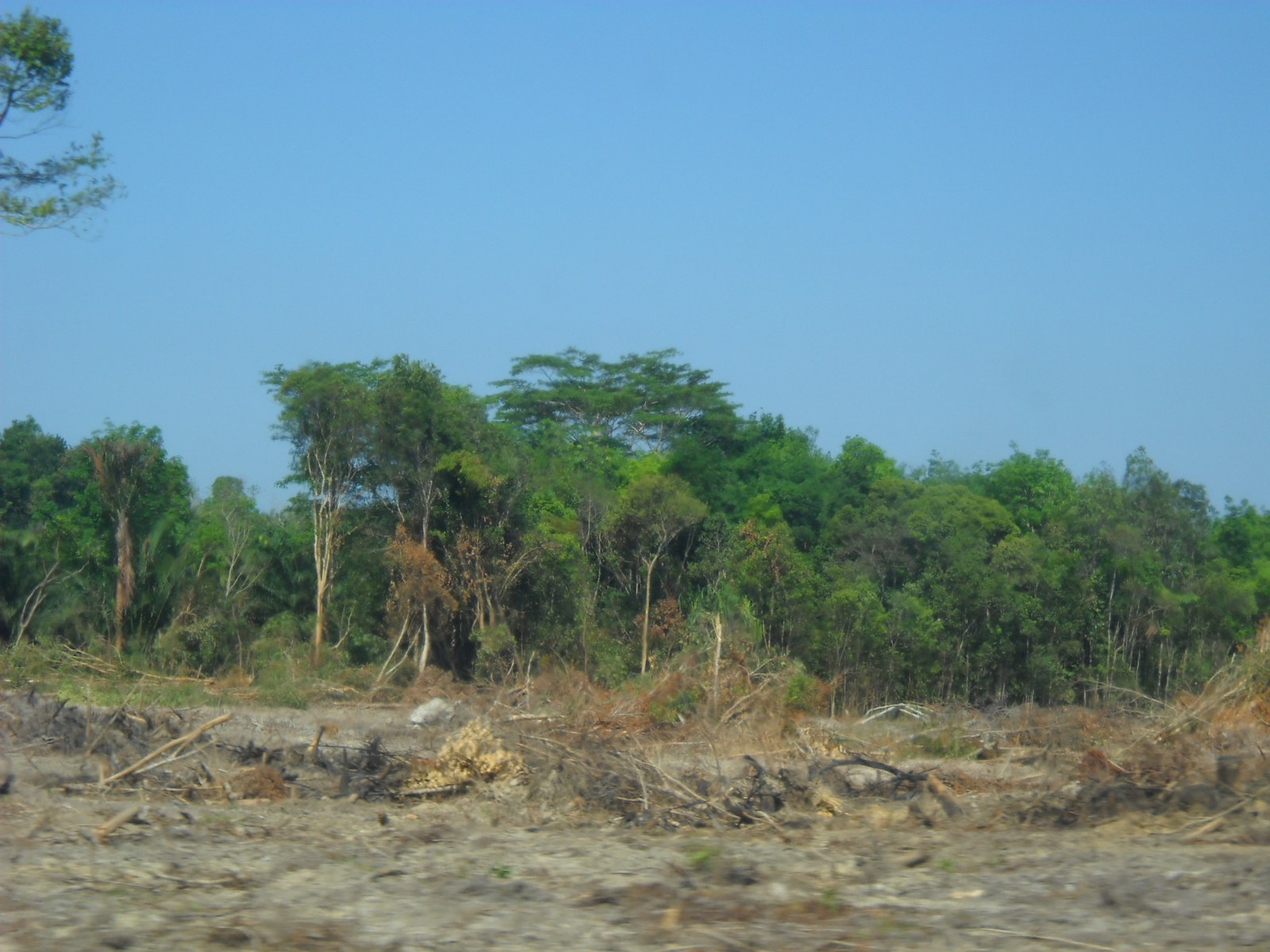
Forest in Merawang subdistrict, Bangka Regency, on Bangka Island, being cleared for an oil palm plantation, Nov. 4, 2011. Photo: Taman Renyah, CC BY-SA 3.0, via Wikimedia Commons. Source page: https://commons.wikimedia.org/wiki/File:Forest_of_Bangka_Island.jpg
The island's forests are under heavy pressure. Bangka has been a center of tin mining for more than three centuries, and much of its landscape is now oil palm plantations, farmland and mining areas, according to the study, which cites research finding the species' forest habitat shrank by 62 percent between 2000 and 2012. During a July 2023 visit to Bukit Mangkol, a release site, the authors saw a deliberately set forest fire and small-scale tin mining, and found no lorises in a brief search after dusk that they stress was not a systematic survey.
The authors recommend a reassessment of the species' Red List status, "in particular the current Possibly Extinct tag," along with an on-island conservation program centered on protecting habitat and monitored releases, a captive breeding program that could include animals unfit for release, and urgent targeted surveys on Bangka, Belitung and Borneo.
"Every species is the result of millions of years of evolution and part of a complex ecological network, and losing the Bangka slow loris would mean losing something truly irreplaceable," Mr. Glaw said.
Sources: Sani, L., Riadi, E., Septian, A., Menner, J. & Glaw, T., "Neglected but still alive: Further evidence for the continued existence of the Bangka Slow Loris (Nycticebus bancanus) on Bangka Island, Indonesia (Primates: Lorisidae)," Spixiana 49 (1): 119-128, October 2026, https://pfeil-verlag.de/wp-content/uploads/2026/10/spx49-1_22_sa.pdf ; Will Dunham, Reuters, "Feared extinct, Bangka slow loris primate rediscovered in Indonesia," as published by The Jakarta Post, Oct. 21, 2026, https://www.thejakartapost.com/culture/2026/10/21/feared-extinct-bangka-slow-loris-primate-rediscovered-in-indonesia . Photographs of Bangka slow lorises released by the Alobi Wildlife Rescue Center and the study's authors are not used because they are not openly licensed; the loris images shown are related species, labeled illustrative.
- environment
- wildlife
- primates
- indonesia
- conservation
- rediscovery