
New Zealand's Heaviest Insect Climbs Back as 11,000 Zoo-Bred Giant Wētā Find New Homes
A New Zealand Journal of Zoology paper documents how Butterfly Creek and Auckland Zoo bred wētāpunga for 45 translocations of 11,000 giant wētā to 10 new wild sites, lifting the species from Nationally Endangered to Nationally Increasing, according to the Department of Conservation.
Just News Desk, Correspondent||5 min read
AUCKLAND, New Zealand - Over 15 years, tens of thousands of wētāpunga, New Zealand's heaviest insect, were bred at Butterfly Creek and Auckland Zoo, enabling 45 translocations of 11,000 of the giant wētā to 10 new wild sites and lifting the species from Nationally Endangered to Nationally Increasing, according to the Department of Conservation, which said on 2 October that the programme had been documented in the New Zealand Journal of Zoology.
The paper, led by Dr. Chris Green, an honorary research associate of the department, sets out what the recovery team learned about husbandry, release methods and population persistence. "The journal paper summarises one of the most comprehensive case studies of invertebrate conservation breeding, translocation and species recovery ever undertaken in Aotearoa New Zealand, perhaps the world," Dr. Green said in the department's release.
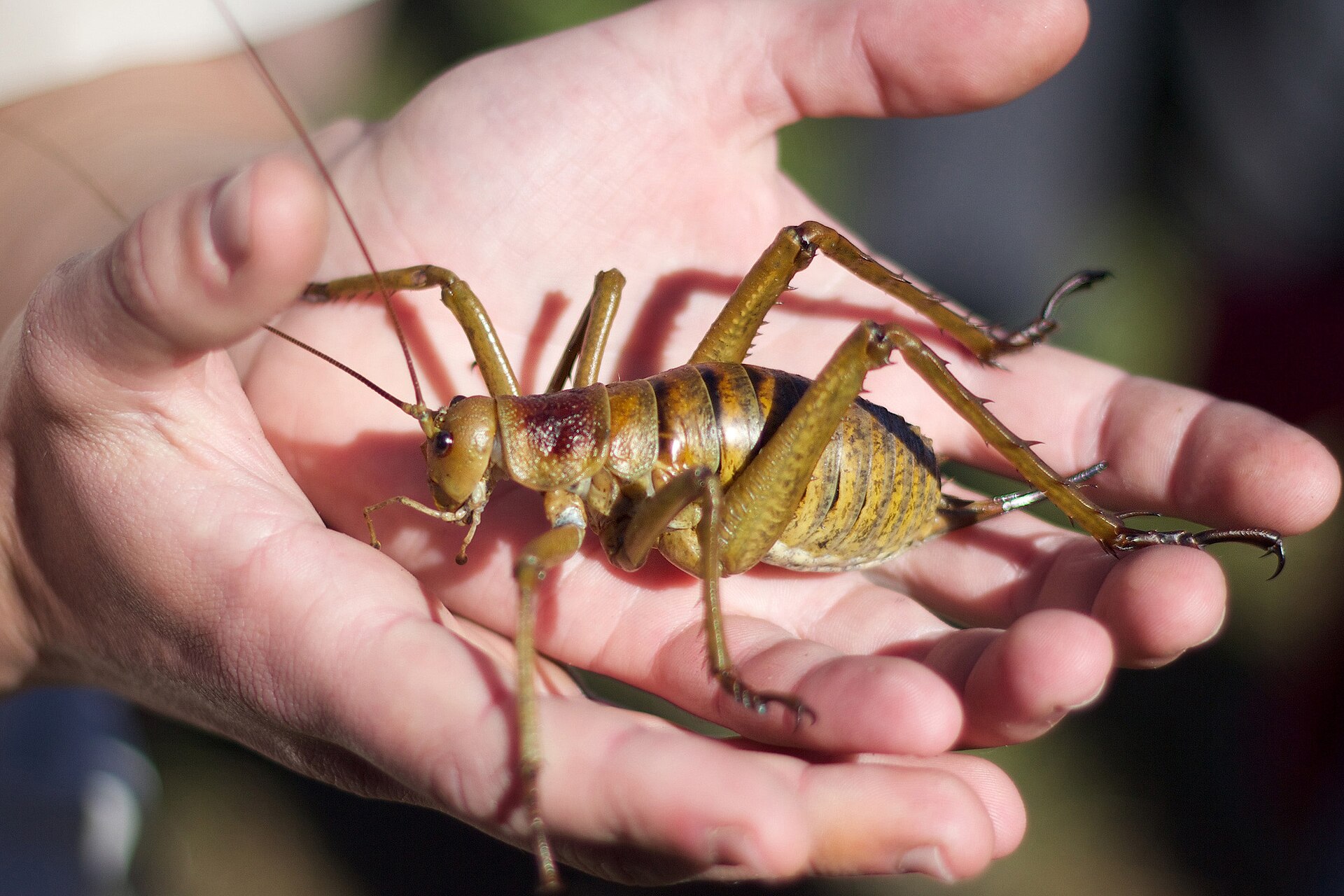
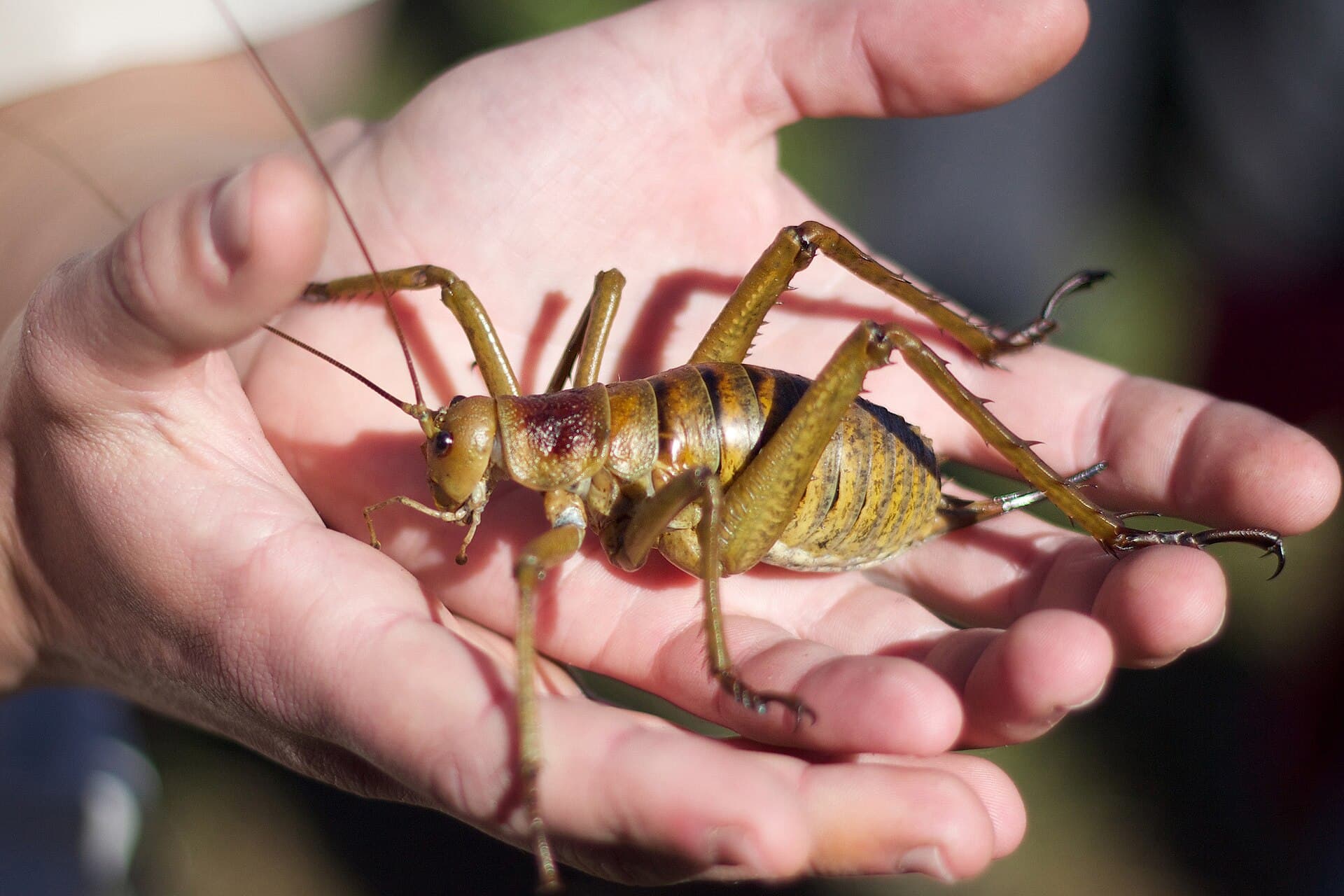
A wētāpunga (Deinacrida heteracantha) on Tiritiri Matangi Island in the Hauraki Gulf, photographed in 2015 and described by the uploader as one of 100 released on the island on 1 May 2014. Photo: Dinobass, via Wikimedia Commons (CC BY-SA 4.0). Source page: https://commons.wikimedia.org/wiki/File:Wetapunga.jpg
Wētāpunga, the largest of the country's giant wētā and the heaviest orthopteran in the world, once lived far more widely. Land clearance for farming destroyed much of its habitat, the department said, and introduced rats, stoats and other predators drove every population to extinction except the one on Te Hauturu-o-Toi, or Little Barrier Island. In the 1990s a departmental recovery plan for threatened wētā named it one of New Zealand's most threatened species.
Surveys on Te Hauturu-o-Toi between 2005 and 2009 suggested that the remnant population was too small to supply animals directly for new populations, the department said, which led to a breeding programme in captivity. A small number of wētā collected from the island founded a colony at Butterfly Creek, which produced the first animals released onto two Hauraki Gulf islands, Motuora and Tiritiri Matangi, in 2010 and 2011.
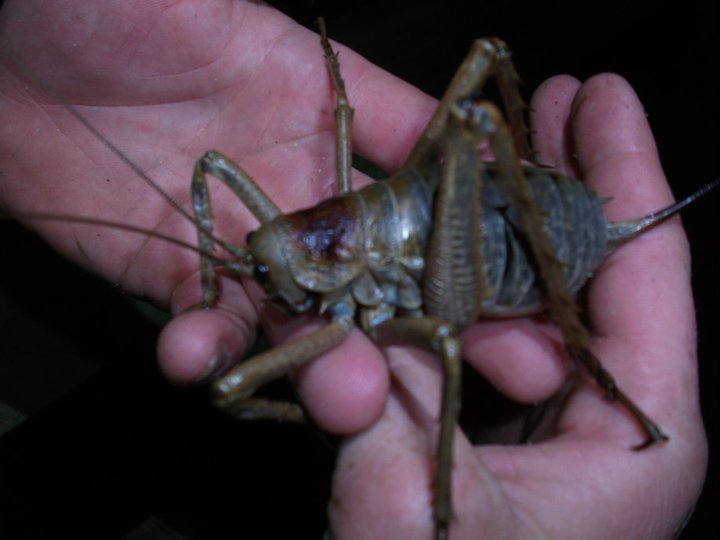
A Little Barrier Island giant wētā captured and photographed on Te Hauturu-o-Toi/Little Barrier Island on 9 February 2011. The island holds the remnant population from which the programme's founders came; this is not a photograph of a programme animal. Photo: William Stovell and Zoe Stone, via Wikimedia Commons (CC BY-SA 2.0). Source page: https://commons.wikimedia.org/wiki/File:Little_Barrier_Island_giant_weta-little_barrier_2011-2.jpg
Auckland Zoo set up a second colony in 2012 and, in the department's words, refined and "industrialised" the techniques, rearing large numbers of wētā in communal creches. From 2014 to 2025 the zoo bred and released 8,874 wētāpunga, the department said. By 2025, more than 11,000 raised at the two facilities had been released onto eight predator-free islands in the Hauraki Gulf and the Bay of Islands and, most recently, two fenced mainland sanctuaries north of Auckland.
The clearest measure of success comes from the first two release islands. Intensive monitoring on Motuora and Tiritiri Matangi shows that at least four generations of wētāpunga have been born there, which the department said is recognised internationally as confirmation that the species has established on both. Many of the other island populations, it said, are well on their way to the same milestone.
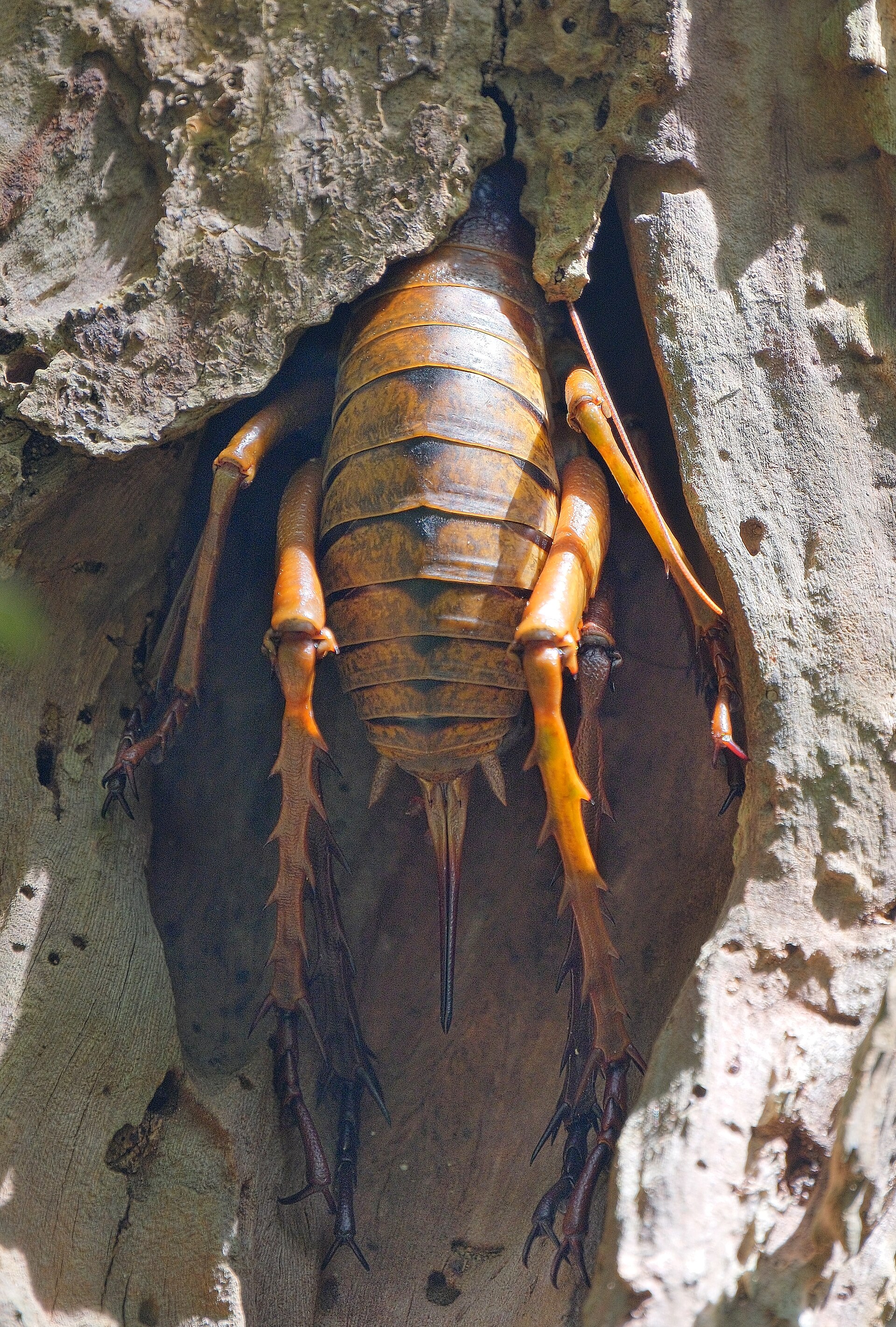
A wētāpunga tucked into a hole in a tree on Tiritiri Matangi Island, February 2024, one of the two islands where at least four generations have now been born. Photo: Pseudopanax at English Wikipedia, via Wikimedia Commons (released into the public domain). Source page: https://commons.wikimedia.org/wiki/File:Giant_weta_tucked_into_a_hole_in_a_tree_(Tiritiri_Matangi).jpg
The work drew on many hands. Ngāti Manuhiri, kaitiaki of wētāpunga and mana whenua of Te Hauturu-o-Toi, where the founding animals originated, supported the programme throughout, the department said, and the wētā are a taonga species for the iwi. Community restoration groups across the upper North Island raised money for the intensive management the insects required and helped organise releases and monitoring.
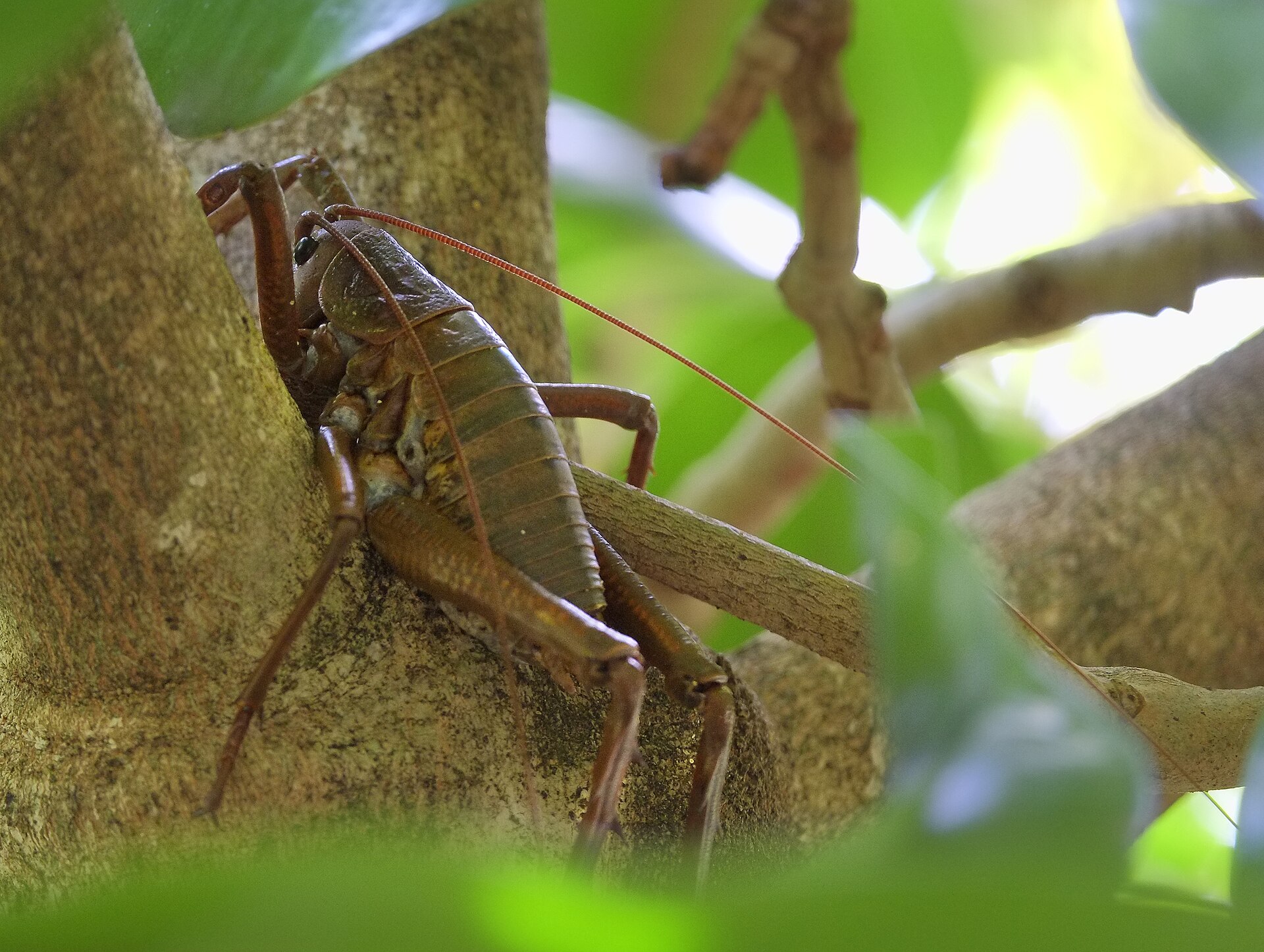
A wētāpunga sitting in the fork of a tree branch on Tiritiri Matangi Island, February 2024. Photo: Pseudopanax at English Wikipedia, via Wikimedia Commons (released into the public domain). Source page: https://commons.wikimedia.org/wiki/File:Giant_weta_sitting_on_a_tree_branch_fork_(Tiritiri_Matangi).jpg
The lessons are already travelling. What the team learned is now informing the breeding of Māhoenui giant wētā at the Ōtorohanga Kiwi House, Dr. Green said, and he named the Canterbury knobbled weevil and several native stag beetles among the critically endangered invertebrates that could benefit from similar programmes. "The future of wētāpunga is looking bright," he said.
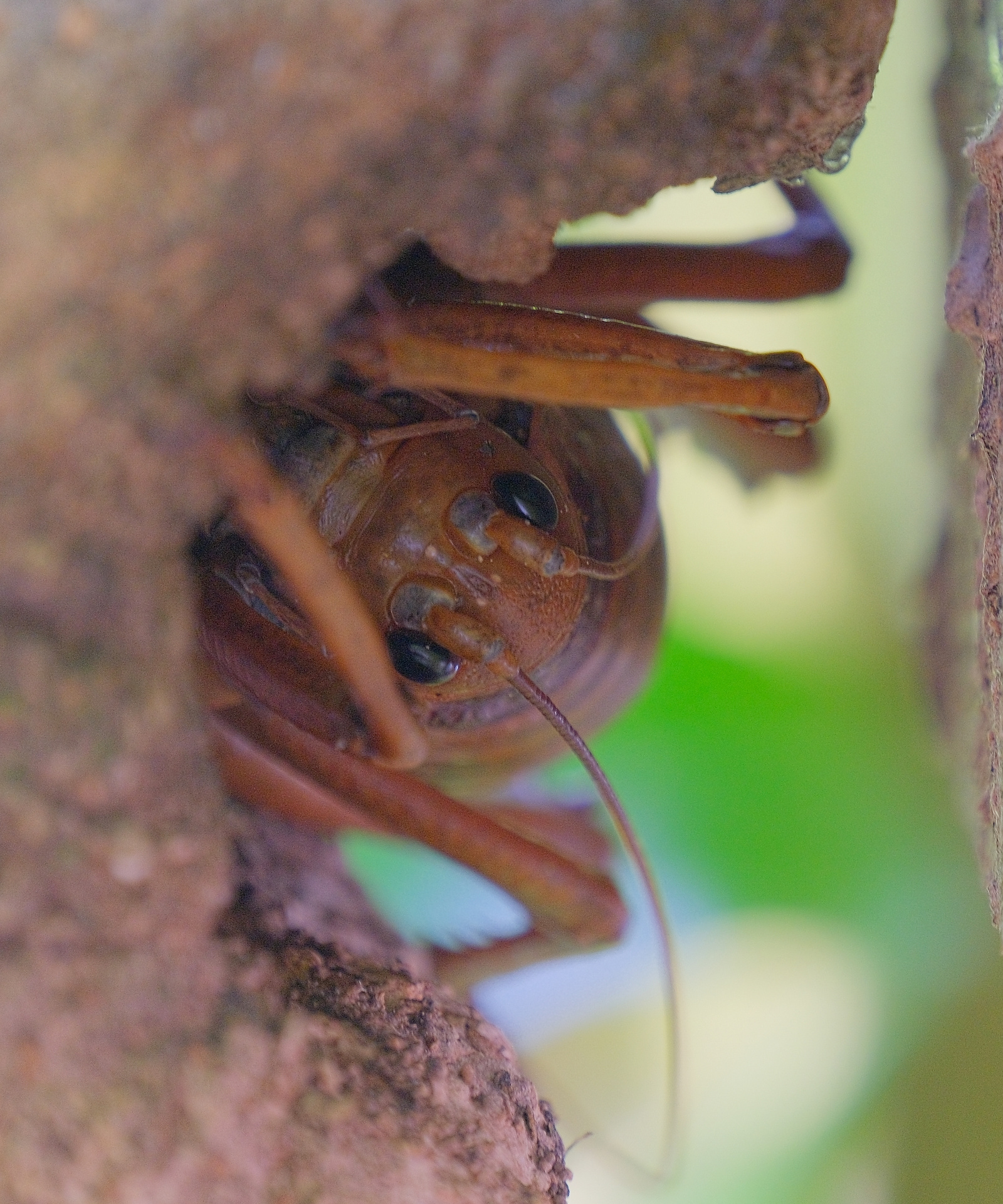
A wētāpunga sitting in a hollow on a tree trunk on Tiritiri Matangi Island, February 2024. Photo: Pseudopanax at English Wikipedia, via Wikimedia Commons (released into the public domain). Source page: https://commons.wikimedia.org/wiki/File:Giant_weta_sitting_in_a_hollow_on_a_tree_trunk_(Tiritiri_Matangi).jpg
The primary record is the Department of Conservation media release of 2 October 2026 (https://www.doc.govt.nz/news/media-releases/2026-media-releases/science-paper-outlines-blueprint-for-successful-giant-weta-recovery/). The paper is "Captive Breeding Programme Enables a Successful Wētāpunga (Deinacrida heteracantha: Orthoptera: Anostostomatidae) Recovery Programme," by Green and colleagues, in the New Zealand Journal of Zoology (https://doi.org/10.1002/njz2.70061). The images above are Wikimedia Commons files; none was supplied by the programme.
- environment
- conservation
- new-zealand
- oceania
- wildlife
- insects
- reintroduction
- zoos


.jpg)
.jpg)
.jpg)