
Golden Bandicoot Numbers Triple to About 300 at Newhaven Wildlife Sanctuary
Australian Wildlife Conservancy ecologists estimate about 300 golden bandicoots now live inside the 9,450-hectare feral-predator-free refuge at Newhaven Wildlife Sanctuary in Central Australia, roughly triple the 80 animals reintroduced in August 2023, according to an AWC press release dated 20 January 2026.
Just News Desk, Correspondent||5 min read
NEWHAVEN WILDLIFE SANCTUARY, Northern Territory - Threatened golden bandicoots have roughly tripled inside a feral-predator-free refuge in Central Australia, with Australian Wildlife Conservancy ecologists now estimating about 300 animals where 80 were reintroduced two and a half years earlier, according to an AWC press release dated 20 January 2026.
The population lives inside a 9,450-hectare fenced area at Newhaven Wildlife Sanctuary, on Ngalia-Warlpiri and Luritja Country in the Red Centre northwest of Alice Springs. Dr Tim Henderson and colleagues reported that motion-sensor cameras detected bandicoots on about 8 percent of cameras in September 2023, one month after release, and on more than 60 percent by September 2025. In a recent survey, the team captured 99 individuals, 92 of them born at the sanctuary, and said every female caught had pouch young or showed signs of recent breeding.
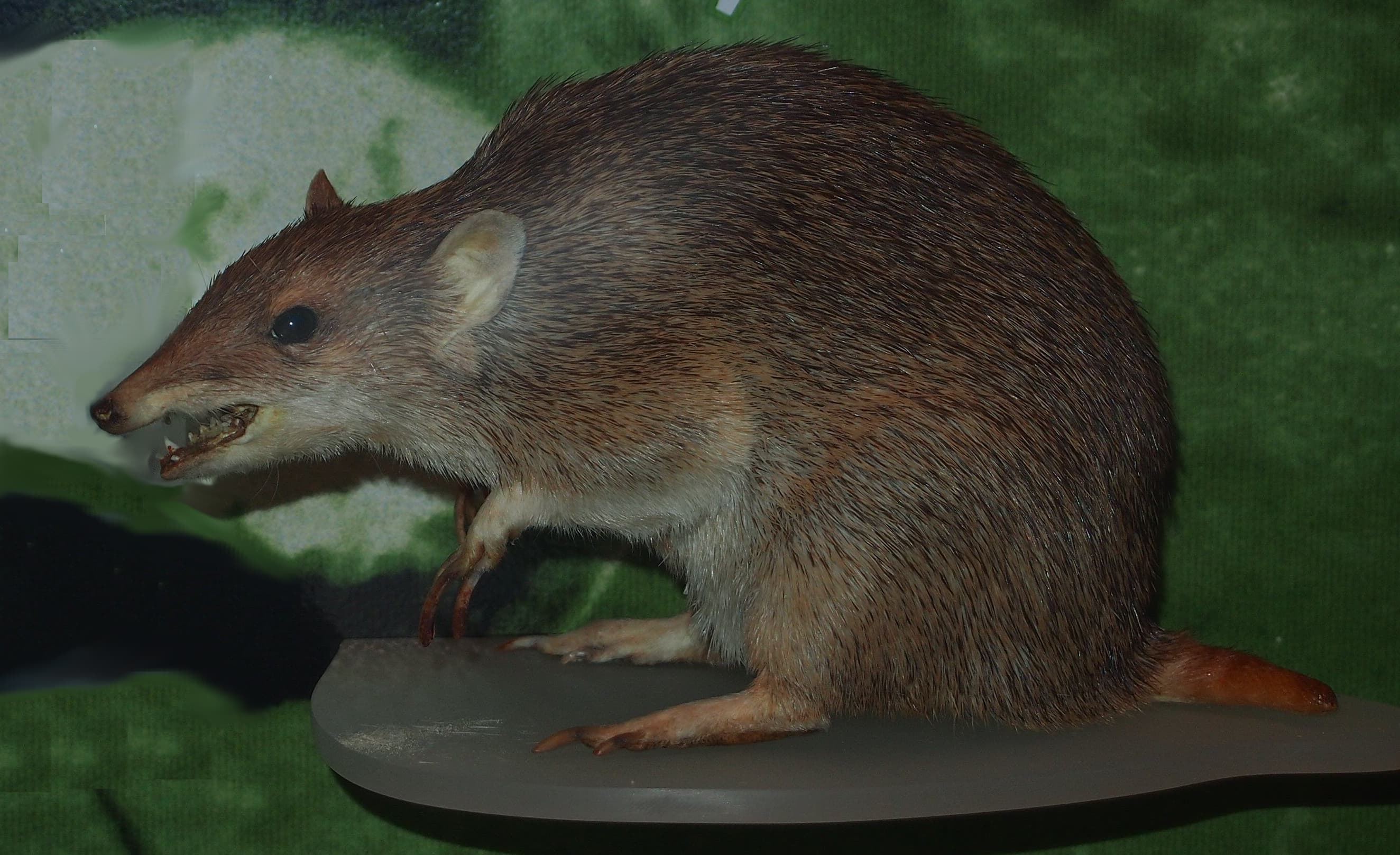
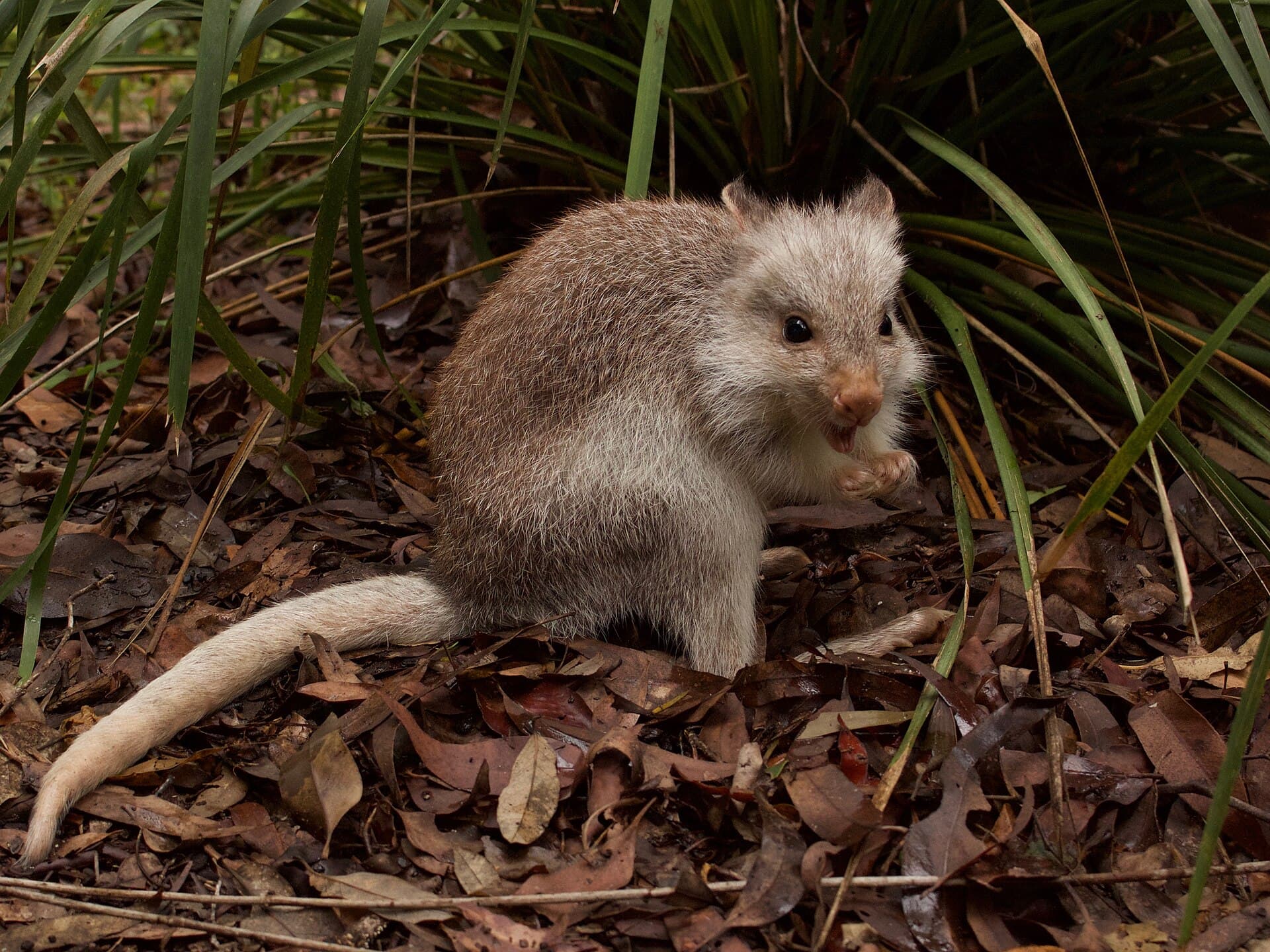
Mounted specimen of a golden bandicoot (Isoodon auratus) at the Central Australian Museum, used here for species identification. Not a live animal from the Newhaven reintroduction or a field photograph from the 2023 - 2025 monitoring surveys. Photo: Mark Marathon, via Wikimedia Commons (CC BY-SA 4.0). Source page: https://commons.wikimedia.org/wiki/File:Isoodon_auratus.jpg
Once among the most common small mammals of Australia's arid zone and an important food for First Nations Peoples, the golden bandicoot is now listed as Vulnerable. Remnant mainland populations persist mainly in a few northwest Kimberley locations after the species vanished from about 95 percent of its former range, a decline AWC attributes chiefly to predation by feral cats and foxes, compounded by grazing and altered fire regimes after colonisation. In Central Australia the animal had been extinct for roughly 60 years until August 2023.
That month, the Ngarinyin People, Traditional Custodians of Wilinggin Country in the Kimberley, including AWC's Charnley River - Artesian Range Wildlife Sanctuary, gifted a founding group of 40 bandicoots to the Traditional Custodians of Watakinpirri Country on Newhaven. AWC's Newhaven monitoring materials describe a total founding release of 80 animals drawn from Charnley River and Barrow Island sources. ABC News, reporting on 7 February 2026, quoted Dr Henderson on strong rainfall years after translocation and on a roughly 44-kilometre fence that excludes cats and dingoes from the refuge.
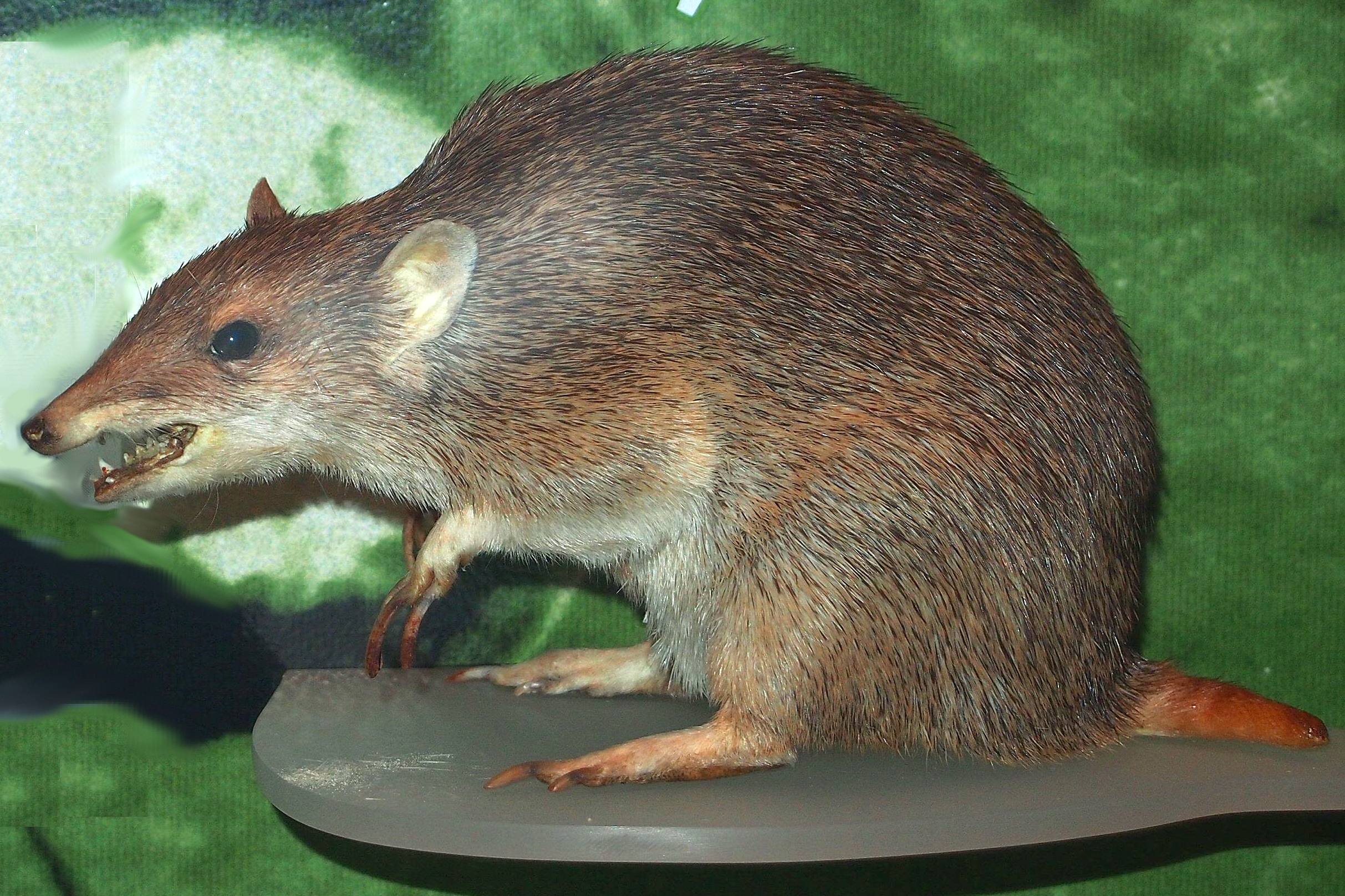
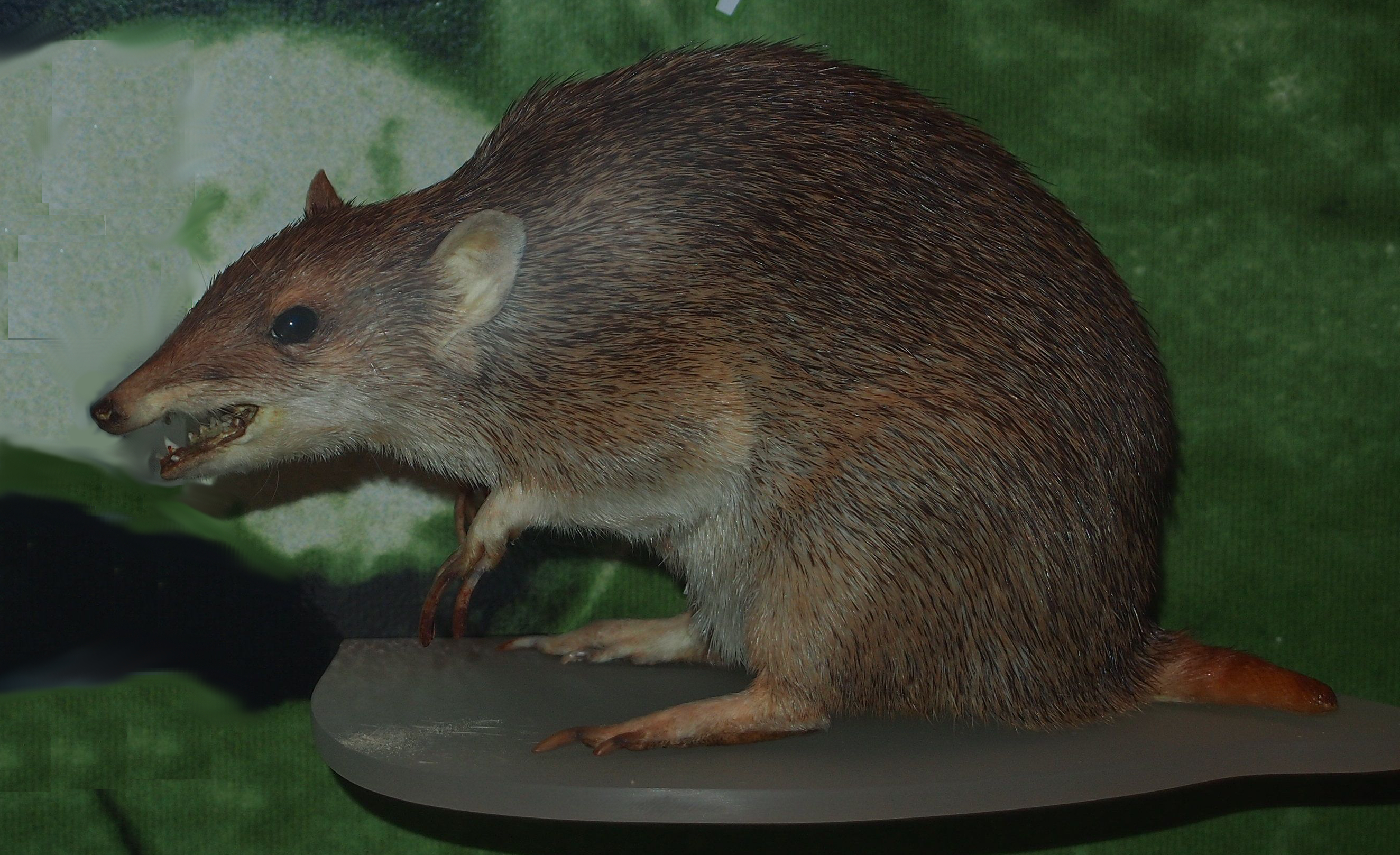
Another view of a mounted golden bandicoot (Isoodon auratus) at the Central Australian Museum. Species context only; not a live Newhaven animal and not an AWC survey photograph. Photo: Mark Marathon, via Wikimedia Commons (CC BY-SA 4.0). Source page: https://commons.wikimedia.org/wiki/File:Isoodon_auratus_2.jpg
"This kind of growth is exactly what happens to species such as the Golden Bandicoot, when they finally get a break from the pressures of being hunted by cats," Dr Henderson said in the AWC release. "Bandicoots breed fast, they mature early, and they can have multiple young per year, under favourable conditions." He added that bringing the species back into a feral-predator-free environment had allowed its natural rate of increase to resume. ABC's Victoria Ellis and Nat Tencic reported that golden bandicoots weigh about 300 grams and were the seventh species reintroduced at Newhaven.
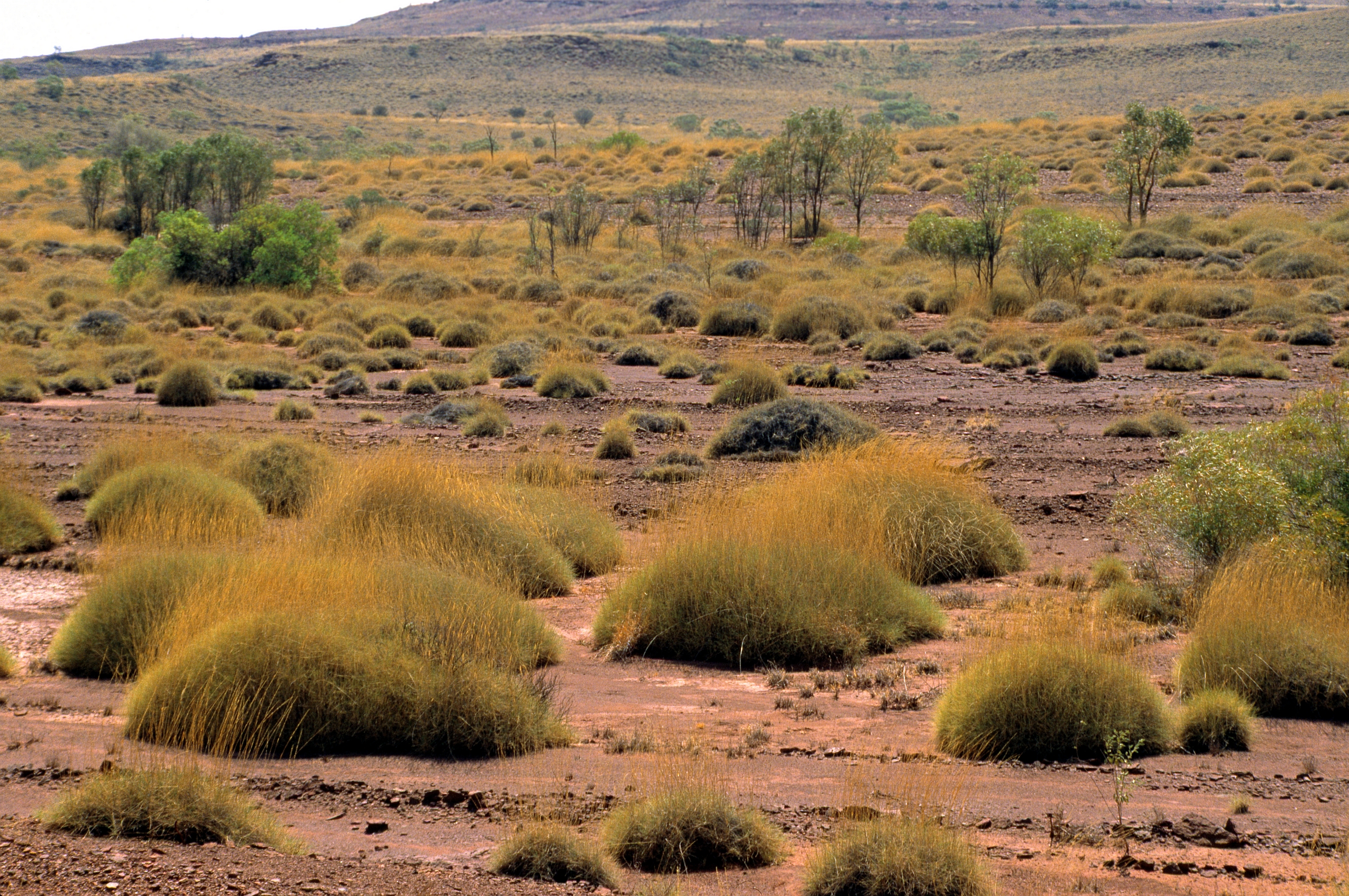
Spinifex country near Barrow Creek, Northern Territory, 1992, illustrative of Central Australian arid grasslands of the kind surrounding Newhaven's Red Centre landscape. Not a photograph of the Newhaven fenced refuge or of bandicoot release sites. Photo: John Coppi, CSIRO, via Wikimedia Commons (CC BY 3.0). Source page: https://commons.wikimedia.org/wiki/File:CSIRO_ScienceImage_4195_Spinifex_country_near_Barrow_Creek_NT_1992.jpg
Bandicoots dig as they forage, turning soil and promoting seed growth, a role Dr Henderson described to ABC as restoring an ecological process missing from the landscape for decades. AWC said the Newhaven animals have expanded their range inside the fence with high breeding activity and strong survival, and that the population could, over time, grow into the thousands if conditions hold. The organisation frames the project within a wider reintroduction program that aims, over the next decade, to expand protection for threatened wildlife vulnerable to introduced predators from 20 to 30 species.
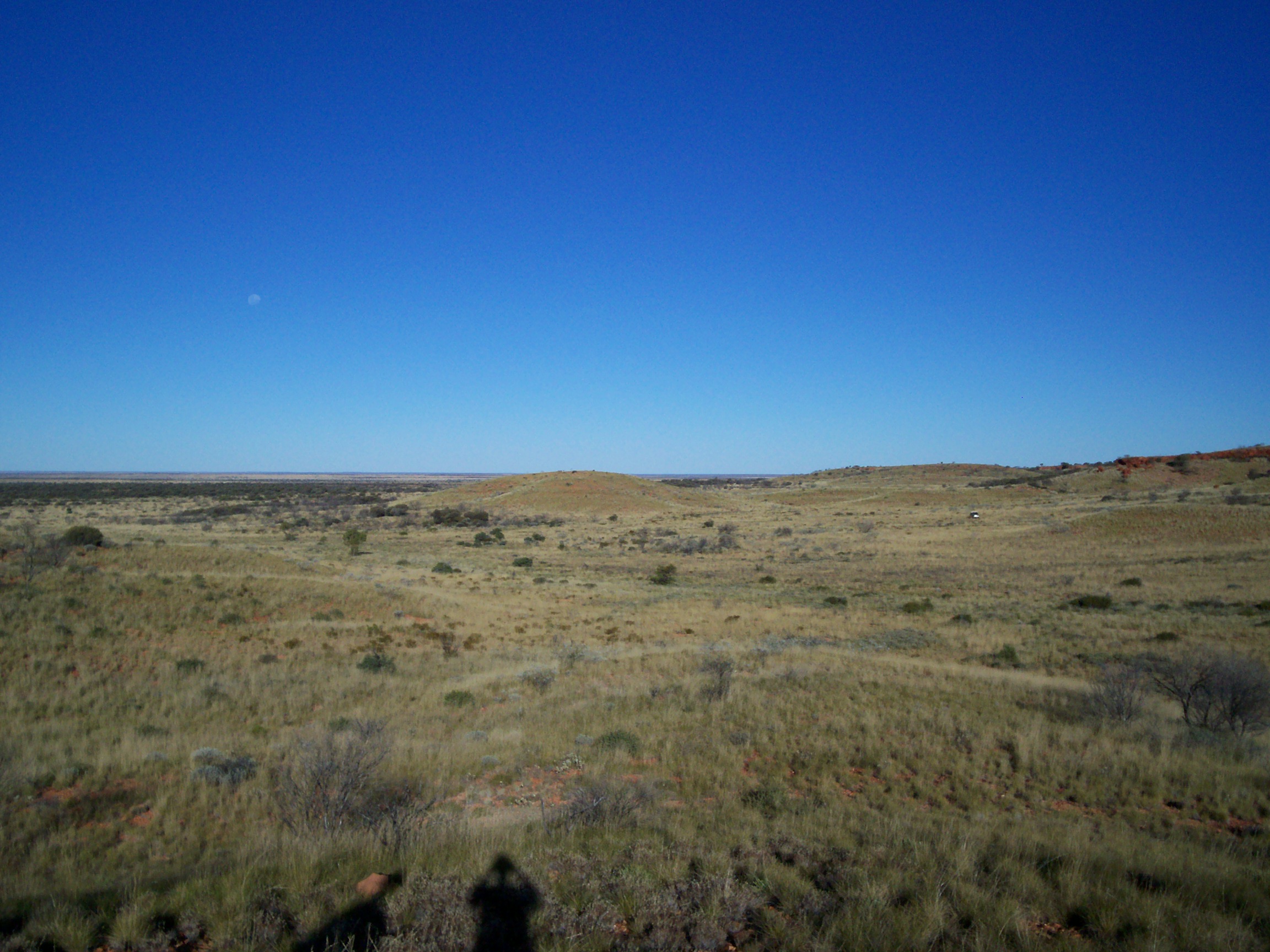
Spinifex-dominated landscape photographed from the Alfred and Marie Range in the Gibson Desert, habitat context for arid inland Australia of the sort that frames Newhaven's sandplain and range country. Not Newhaven Wildlife Sanctuary and not a survey site photograph. Photo: Gazjo, via Wikimedia Commons (public domain). Source page: https://commons.wikimedia.org/wiki/File:Gibson_Desert_and_moon_from_Alfred_%26_Marie_Range.jpg
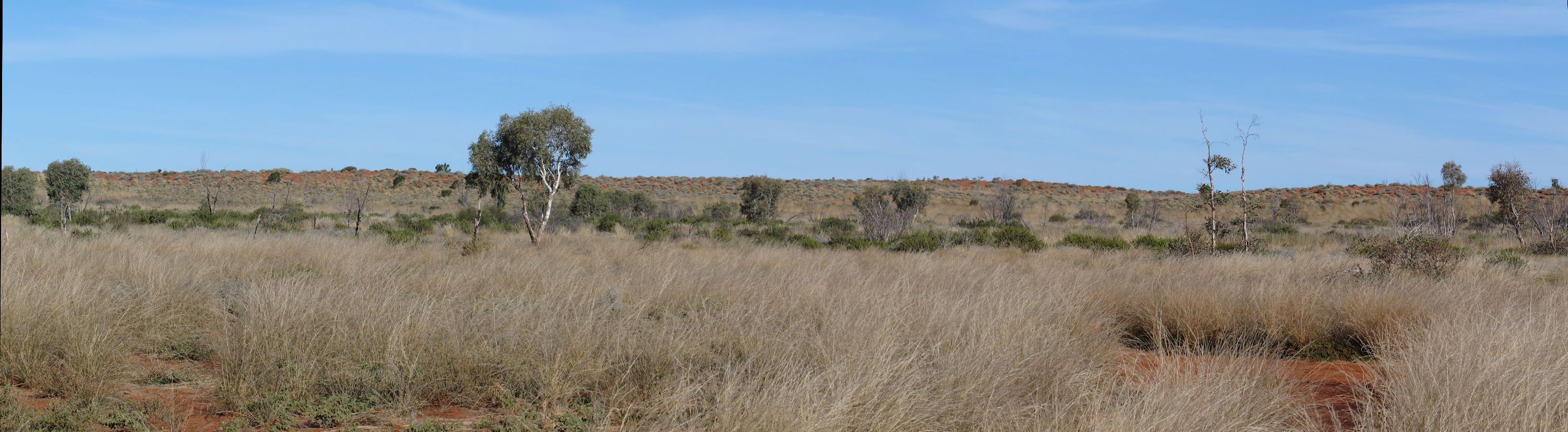
Panorama of grasslands and a dune along the Gunbarrel route in Gibson Desert Nature Reserve, Western Australia. Illustrative arid-zone habitat; not the Newhaven fenced area in the Northern Territory. Photo: spelio, via Wikimedia Commons (CC BY-SA 2.0). Source page: https://commons.wikimedia.org/wiki/File:Pano_of_Gunbarrel_grasslands_and_dune_in_the_Gibson_Desert_Nature_Reserve._(6937186643).jpg
The primary public record remains AWC's 20 January 2026 press release, with ABC Alice Springs coverage on 7 February 2026 as a secondary account that includes additional colour from Dr Henderson on rainfall, fence length and the animals' size. AWC field photographs credited to Tim Henderson and Sam Mulvena appear on the press page but are not cleared for republication here. The museum mounts and arid-landscape images used above are Wikimedia Commons files chosen for species and habitat context only.
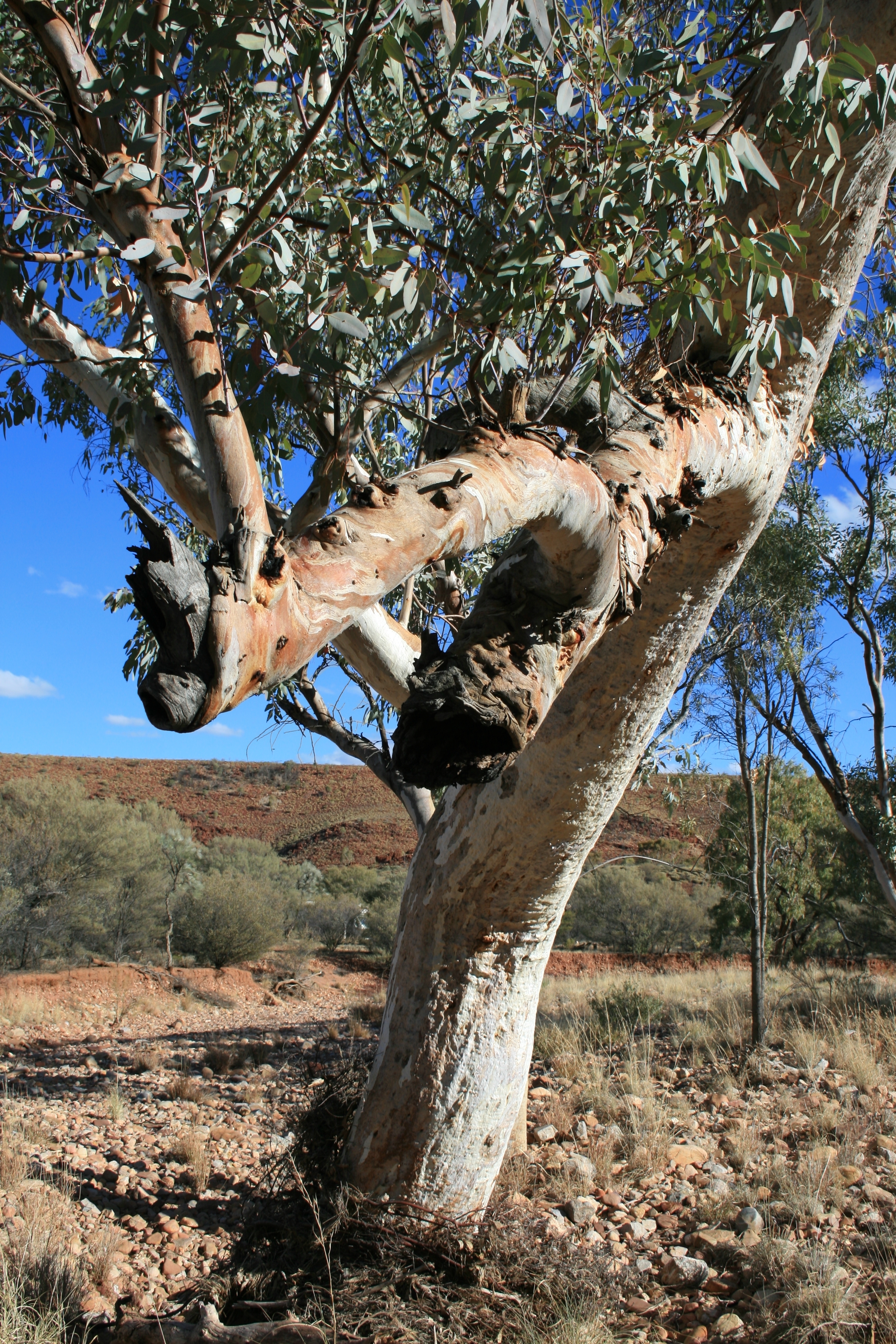
Trunk of a river red gum (Eucalyptus camaldulensis) near the Ochre Pits on Namatjira Drive, Northern Territory, illustrating Central Australian arid woodland flora northwest of Alice Springs. Not a Newhaven sanctuary photograph. Photo: Toby Hudson, via Wikimedia Commons (CC BY-SA 3.0). Source page: https://commons.wikimedia.org/wiki/File:RiverRedGum_CentralAustralia.JPG
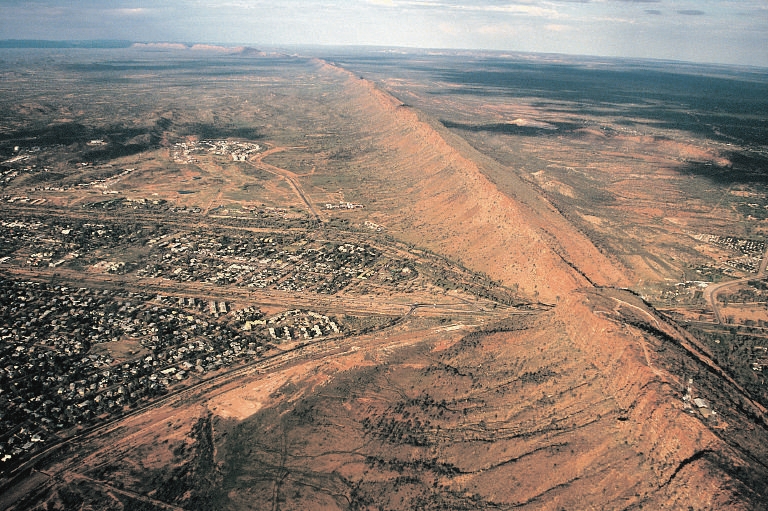
Aerial view of Alice Springs and Heavitree Gap in the MacDonnell Ranges, location context for Newhaven Wildlife Sanctuary, which lies roughly 300 to 400 kilometres northwest of the town. Not a photograph of the sanctuary or its fence. Photo: Stephen Codrington, via Wikimedia Commons (CC BY 2.5). Source page: https://commons.wikimedia.org/wiki/File:Alice_Springs_ridge.jpeg
- environment
- conservation
- australia
- wildlife
- mammals
- reintroduction
- northern-territory
- bandicoots


.jpg)

