
Fifteen Northern Bald Ibises Follow a Microlight Over the Pyrenees to a New Colony in Catalonia
Fifteen young northern bald ibises, hand-raised by human foster mothers and led south behind a microlight aircraft, were handed over on 13 September to Fundació Alive's colony at the Aiguamolls de l'Empordà in Catalonia, where the first group of the endangered birds was released into the wild in March, according to the Austrian Waldrappteam and Fundació Alive.
Just News Desk, Correspondent||6 min read
PAU, Spain - Fifteen young northern bald ibises, raised by human foster mothers and led south behind a microlight aircraft, have been handed over to a fledgling colony in the Aiguamolls de l'Empordà wetlands of Catalonia, where the first group of the endangered birds was released into the wild in March, according to the Austrian conservation group Waldrappteam and the Catalan foundation Fundació Alive.
The handover on 13 September came at the end of a short but pivotal flight over the Pyrenees to the airfield at Ordis, in Alt Empordà, the Waldrappteam wrote in its migration diary. "Once all 30 birds had finally arrived in Spain again, an important and bittersweet moment for their foster parents had arrived," the team wrote. "15 of our Northern Bald Ibises reached their destination today and were handed over into the care of the Alive Foundation. There, they will become part of the colony and will eventually be released into the wild."
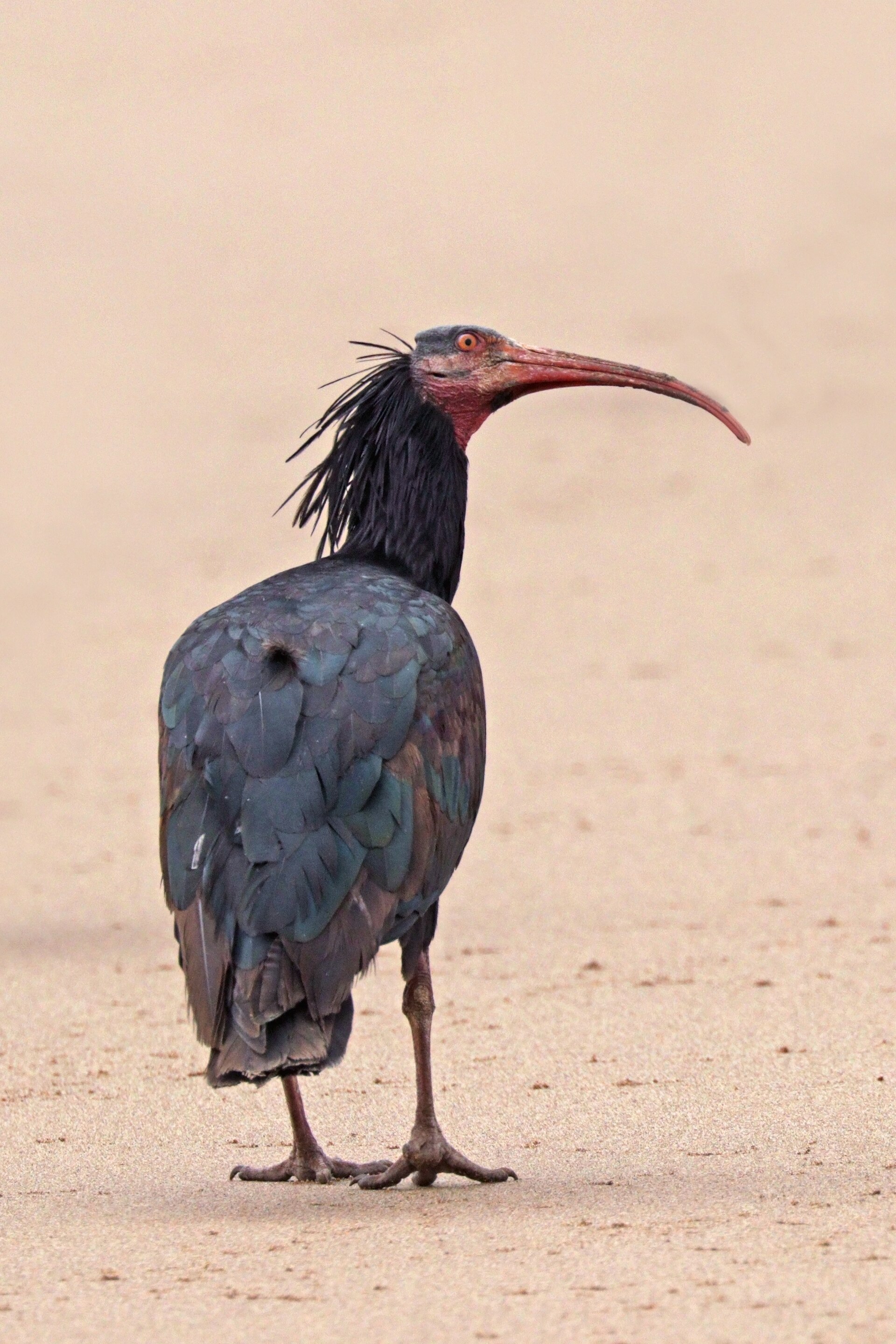
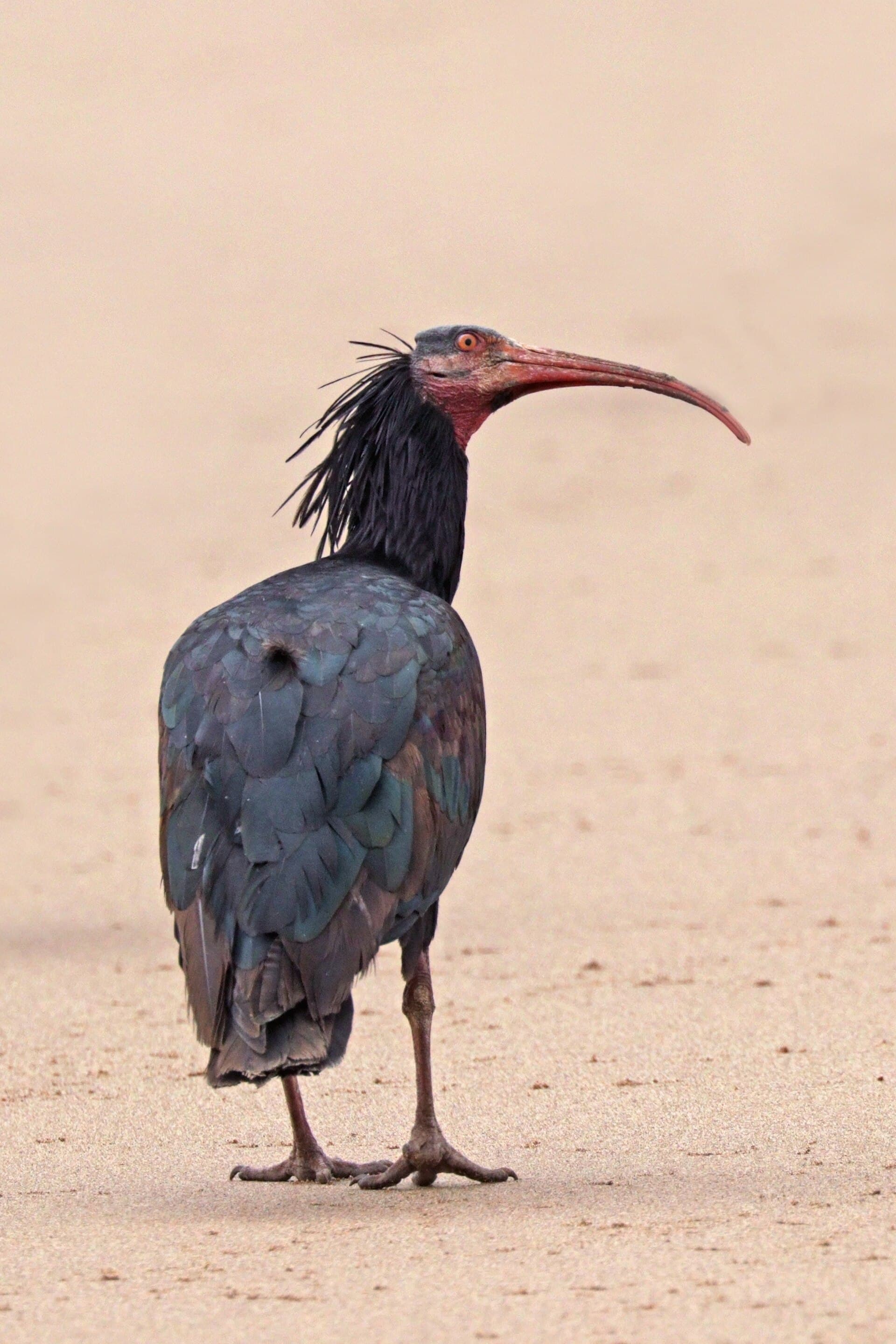
A northern bald ibis (Geronticus eremita) in Souss-Massa National Park, Morocco, in March 2019, home to the species' surviving wild population. Used for species identification; not one of the birds in the Catalonia or Waldrappteam projects. Photo: Charles J. Sharp, via Wikimedia Commons (CC BY-SA 4.0). Source page: https://commons.wikimedia.org/wiki/File:Northern_bald_ibis_(Geronticus_eremita).jpg
The birds hatched this spring in the colony at Rosegg Zoo in Carinthia, Austria, where the team collected 32 chicks and placed them with two first-season foster mothers, Eszter and Fabienne. The young ibises were moved to a training camp at Binningen airfield near Lake Constance, learned to follow the aircraft with a foster mother aboard, and set off on 23 August. Their route ran through Germany and France, with long waits for weather at Besançon and Narbonne, before the Pyrenees crossing.
The other 15 birds continued with the team across Spain. On 2 October, the Waldrappteam reported that they had reached their wintering grounds near Vejer de la Frontera in Andalusia after a journey of more than 2,500 kilometres, where they will be released this winter near the colony of Proyecto Eremita and are expected to stay until they return to their breeding grounds on reaching sexual maturity in their third year.
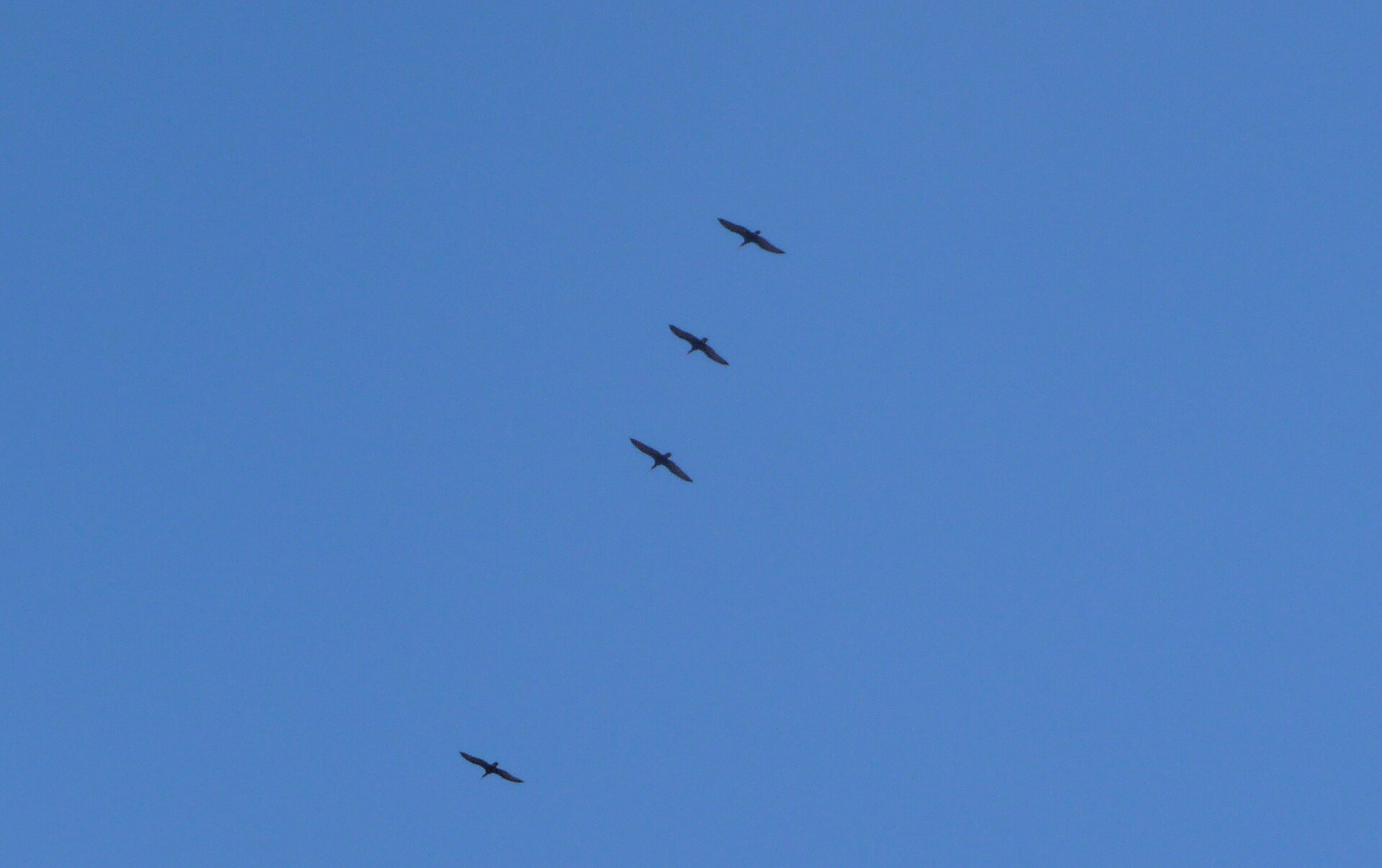
Northern bald ibises in flight near Cap Rhir, north of Agadir, Morocco, in March 2011. Wild birds shown for species context; not the Waldrappteam's migrating juveniles. Photo: gailhampshire, via Wikimedia Commons (CC BY 2.0). Source page: https://commons.wikimedia.org/wiki/File:Northern_Bald_Ibis_in_flight._Geronticus_eremita_-_Flickr_-_gailhampshire.jpg
The species, known in German as the Waldrapp, disappeared from Mediterranean territories in the 20th century, when just over 220 individuals survived in the wild in Morocco, Fundació Alive said. Populations have since been restored in Andalusia and in central Europe, at about 300 birds each, according to the foundation. The Waldrappteam began guiding young birds along a new corridor to Andalusia because, it says, birds from colonies in the northern Alpine foothills are having increasing difficulty crossing the Alps in autumn as the climate warms.
Catalonia sits roughly halfway along that route. Fundació Alive said the first release at the Aiguamolls de l'Empordà took place on the morning of 21 March, attended by Sílvia Paneque, the Generalitat's minister for territory, housing and ecological transition. Those 19 ibises were born in Andalusia, hand-reared in Jerez and brought to the Empordà as chicks of about a month old, then flown in controlled outings over the wetlands so they would learn the territory before their final release. Every released bird carries a tracking device, the foundation said.
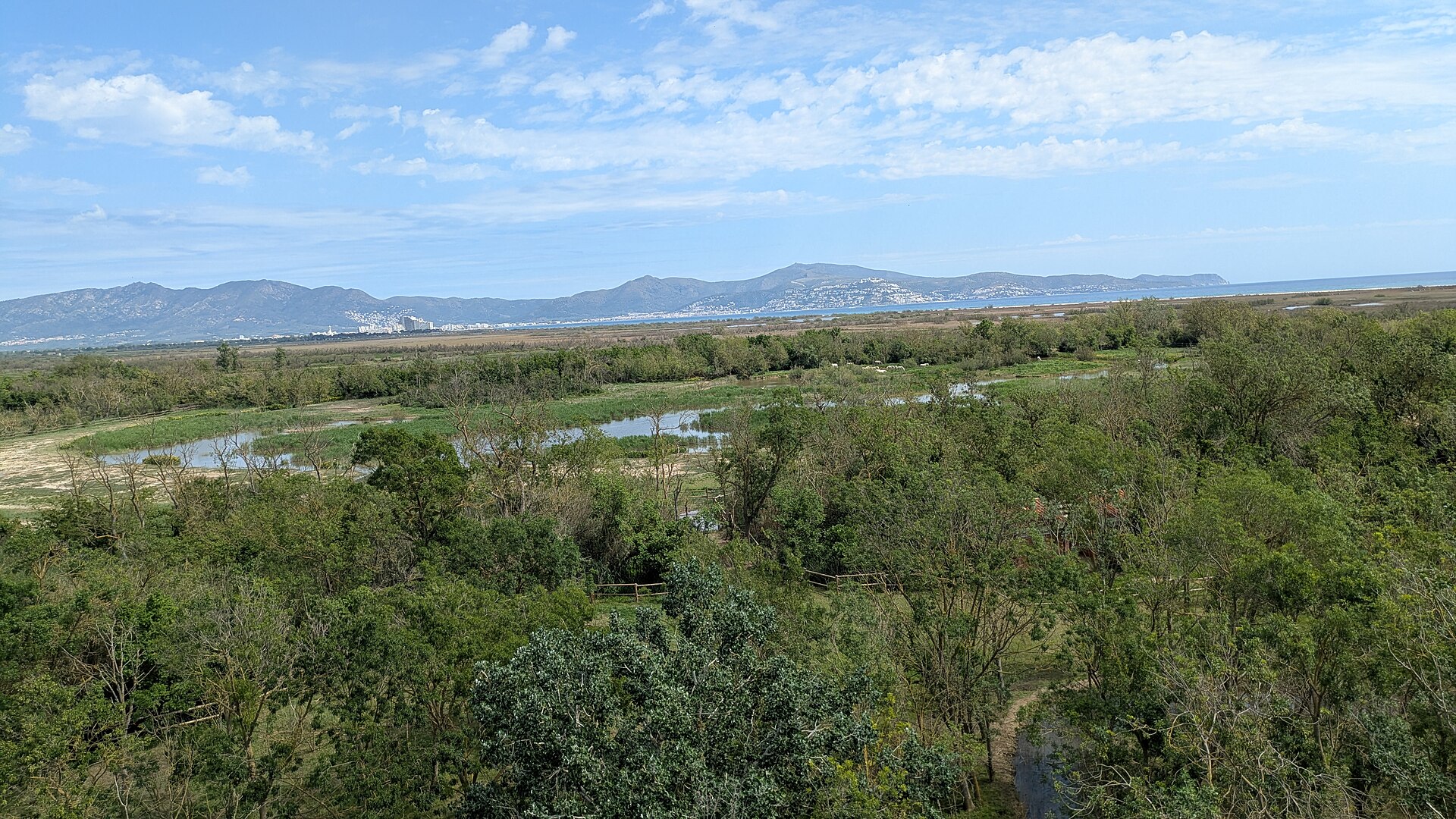
A view across part of the Aiguamolls de l'Empordà nature reserve toward the Gulf of Roses, Catalonia, April 2026. Habitat context for the reintroduction area; not a photograph of the project's aviary or birds. Photo: Alan Mattingly, via Wikimedia Commons (CC0 public domain dedication). Source page: https://commons.wikimedia.org/wiki/File:Aiguamolls_de_l%27Empord%C3%A0_i_Golf_de_Roses.jpg
"What we celebrate today is not just a release, it is the result of a community that believes in conservation," Bernat Garrigós, the foundation's president, said at the March release, according to Fundació Alive. The project, Projecte Ibis Ermità, is supported by the Generalitat de Catalunya, the Fundació Barcelona Zoo, the Zoobotánico de Jerez and the Aiguamolls de l'Empordà Natural Park, among other partners, and has drawn birds from zoos in the Czech Republic, the Netherlands, Austria and Germany for its breeding programme.
Mr. Garrigós told The Guardian, which reported on the new arrivals on 2 October, that the team had begun work in 2024 and had a first-generation flock of nearly 60 ibises by 2025. The project, he said, aims over the next decade for at least 50 breeding pairs and about 300 birds living wild in Alt Empordà, with a first breeding pair possible in a year or two, since the birds do not breed until they are at least three or four years old.
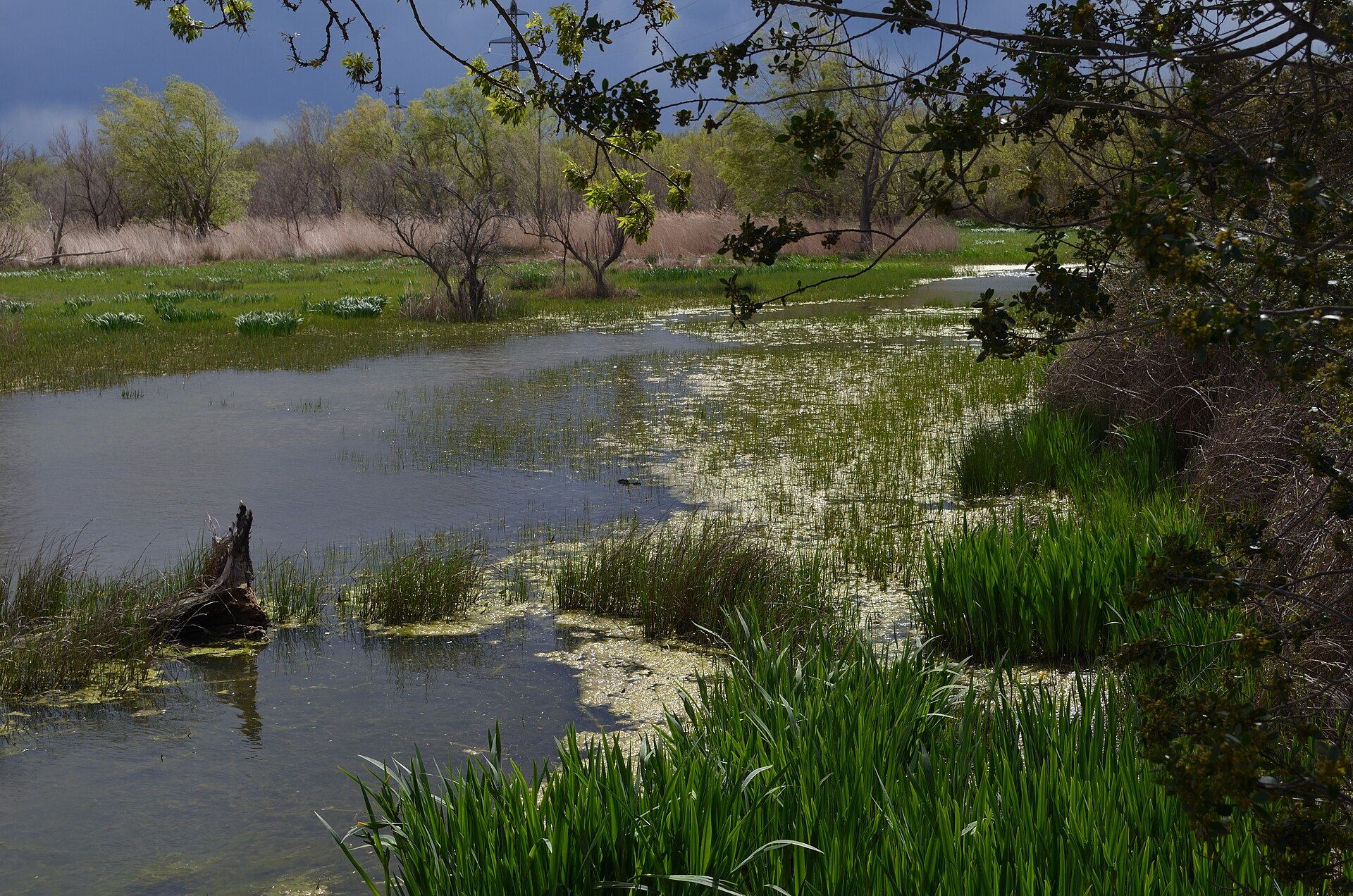
A lagoon in the Aiguamolls de l'Empordà, Catalonia, March 2018. Habitat context only; not the project site at Torre d'en Mornau. Photo: Manfred Schulenburg, via Wikimedia Commons (CC BY-SA 4.0). Source page: https://commons.wikimedia.org/wiki/File:Aiguamolls_Emporda_01.jpg
Both organisations describe the work as a long effort with hazards still ahead. Fundació Alive has cited the adaptation of electrical infrastructure to prevent electrocutions as crucial to safe releases, and The Guardian reported that the utility Endesa had begun retrofitting pylons to make them more visible and less dangerous to birds. The Guardian also reported that the Alt Empordà group remains in constant contact with the projects in Austria and Jerez, with the aim of linking colonies across Europe through migrating birds.
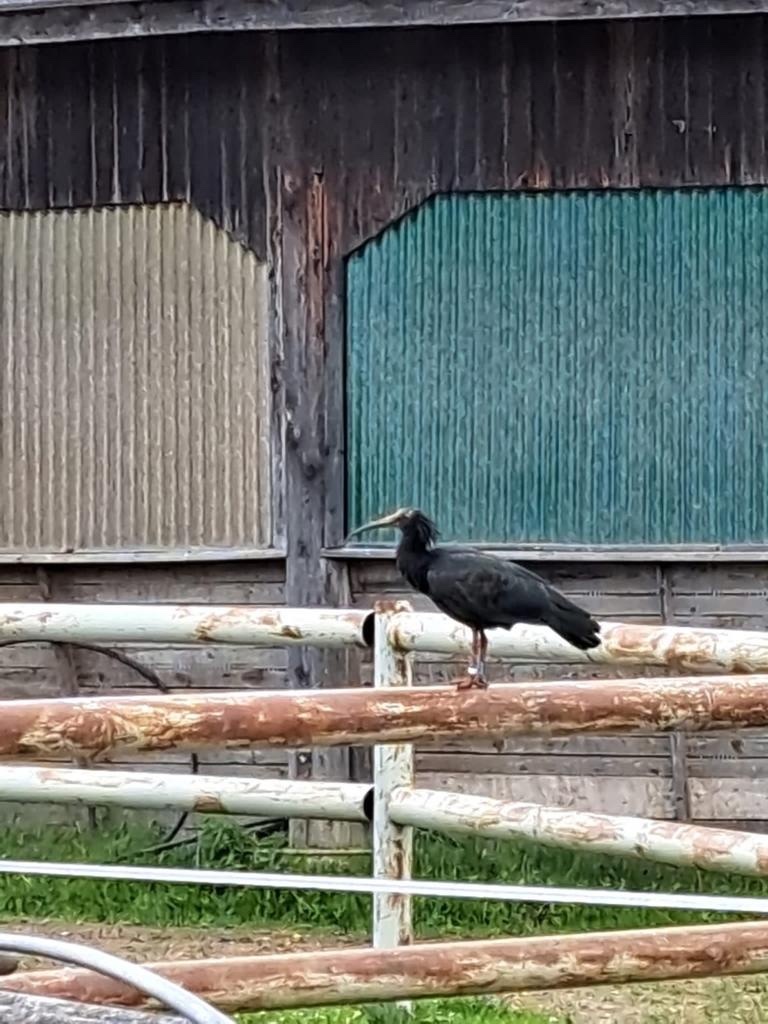
A northern bald ibis perched on a fence in Austria, June 2023, where the Waldrappteam has reintroduced a migratory population. Not one of the 2026 migration birds. Photo: Lukas Zangl, via Wikimedia Commons (CC BY 4.0). Source page: https://commons.wikimedia.org/wiki/File:Geronticus_eremita_288928455.jpg
"It's not enough to stop destroying our environment," Mr. Garrigós told the newspaper. "We need to make a positive, active effort to prevent extinctions and the destruction of habitats where this and many other species live."
The primary records are the Waldrappteam's Human-Led Migration 2026 diary (https://www.waldrappteam.at/en/migration-2026/) and Fundació Alive's account of the first release at the Aiguamolls de l'Empordà (https://alivefund.org/en/first-release-of-northern-bald-ibises-at-the-aiguamolls-de-lemporda-at-2026/). Photographs on those pages are not reproduced here; the images above are Wikimedia Commons files chosen for species and habitat context.
- environment
- conservation
- spain
- europe
- wildlife
- birds
- reintroduction
- migration
.jpg)


