An Experimental Precision T-Cell Drug Held Off Treatment-Resistant Cancers in an Early Trial, NIH Reports
In an early phase 1/2 trial led by researchers at the National Institutes of Health, Mass General Brigham and Memorial Sloan Kettering, an experimental drug called invika kept cancer from progressing in 16 of 27 patients treated at its optimal dose, most of whom had tumors that resisted standard immunotherapy. Four saw their tumors shrink by more than 30 percent. The drug is not approved, and the trial is continuing.
Just News Desk, Correspondent||4 min read
BETHESDA, Md. - For patients whose cancers have shrugged off standard immunotherapy, the options can narrow quickly. An experimental drug called invikafusp alfa, or invika, kept the disease from progressing in 16 of 27 such patients treated at its optimal dose in its first trial in humans, and shrank tumors in four of them, according to researchers at the National Institutes of Health, Mass General Brigham and Memorial Sloan Kettering.
The results, published Oct. 23 in Nature Medicine, come from the phase 1/2 START-001 trial, and the researchers are careful to call them early. The study is small, the drug has not been approved by the Food and Drug Administration, and the trial is still enrolling patients.
"Patients whose tumors are advanced, particularly tumors that don't respond well to immunotherapy, often have their backs against a wall," said James Gulley, a co-corresponding author and clinical director at the Center for Cancer Research, part of NIH's National Cancer Institute. "Few options remain once you reach that point, but these results highlight a more precise means of stimulating anti-tumor immunity that could provide another solution."
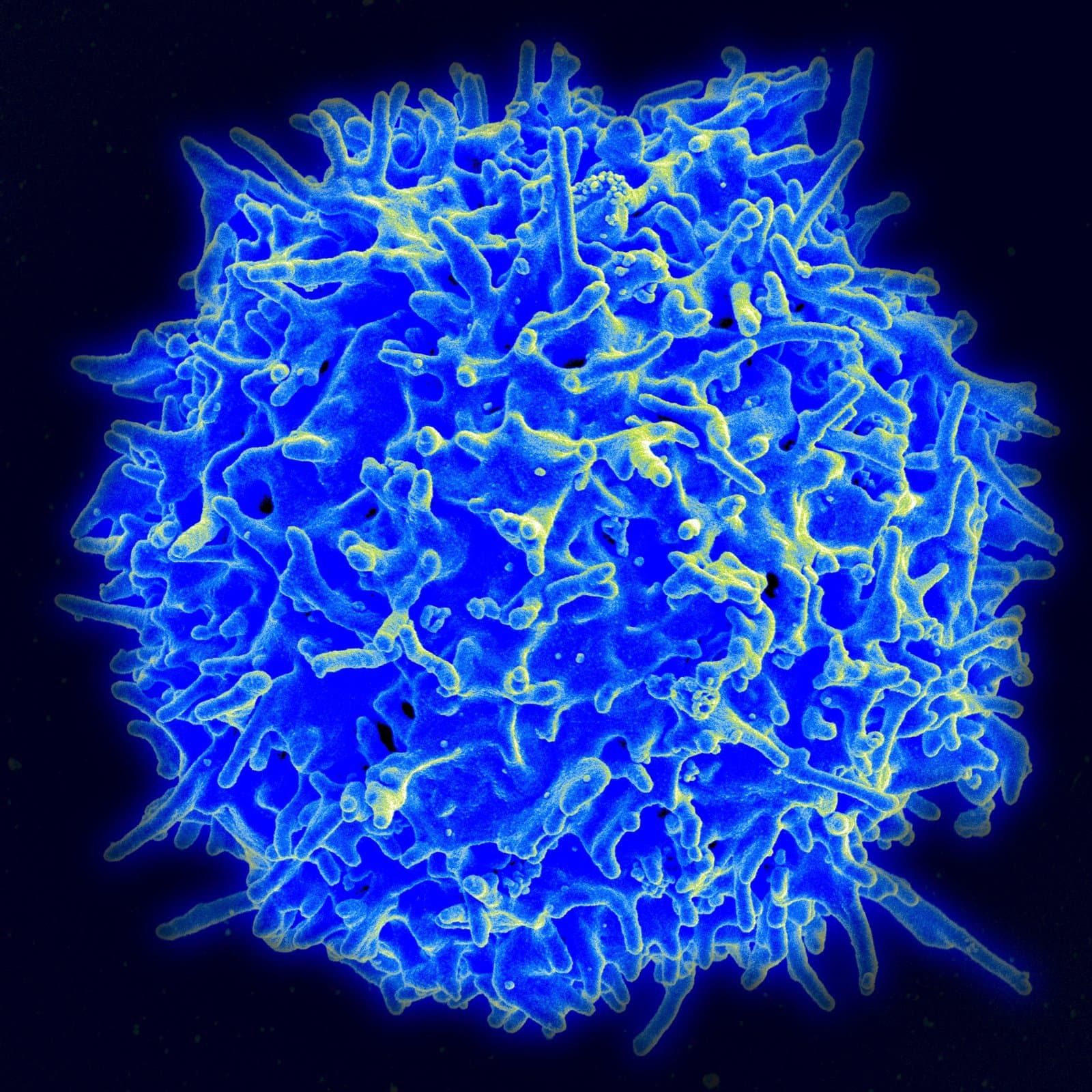
Immunotherapies known as immune checkpoint blockade, such as pembrolizumab, have transformed treatment for several cancers, but many patients benefit only briefly or not at all, NIH said. Other approaches try to rally the body's T cells, the frontline soldiers of adaptive immunity, but tend to do so indiscriminately, often causing severe side effects.
Invika was designed to be more selective. The protein engages only a small subset of T cells, two groups of tumor-infiltrating lymphocytes, with the aim of driving activity against the tumor while avoiding the harsh effects of broader stimulation. Earlier studies at the Center for Cancer Research found that the drug hit its intended targets and stimulated anti-tumor activity in animal models.
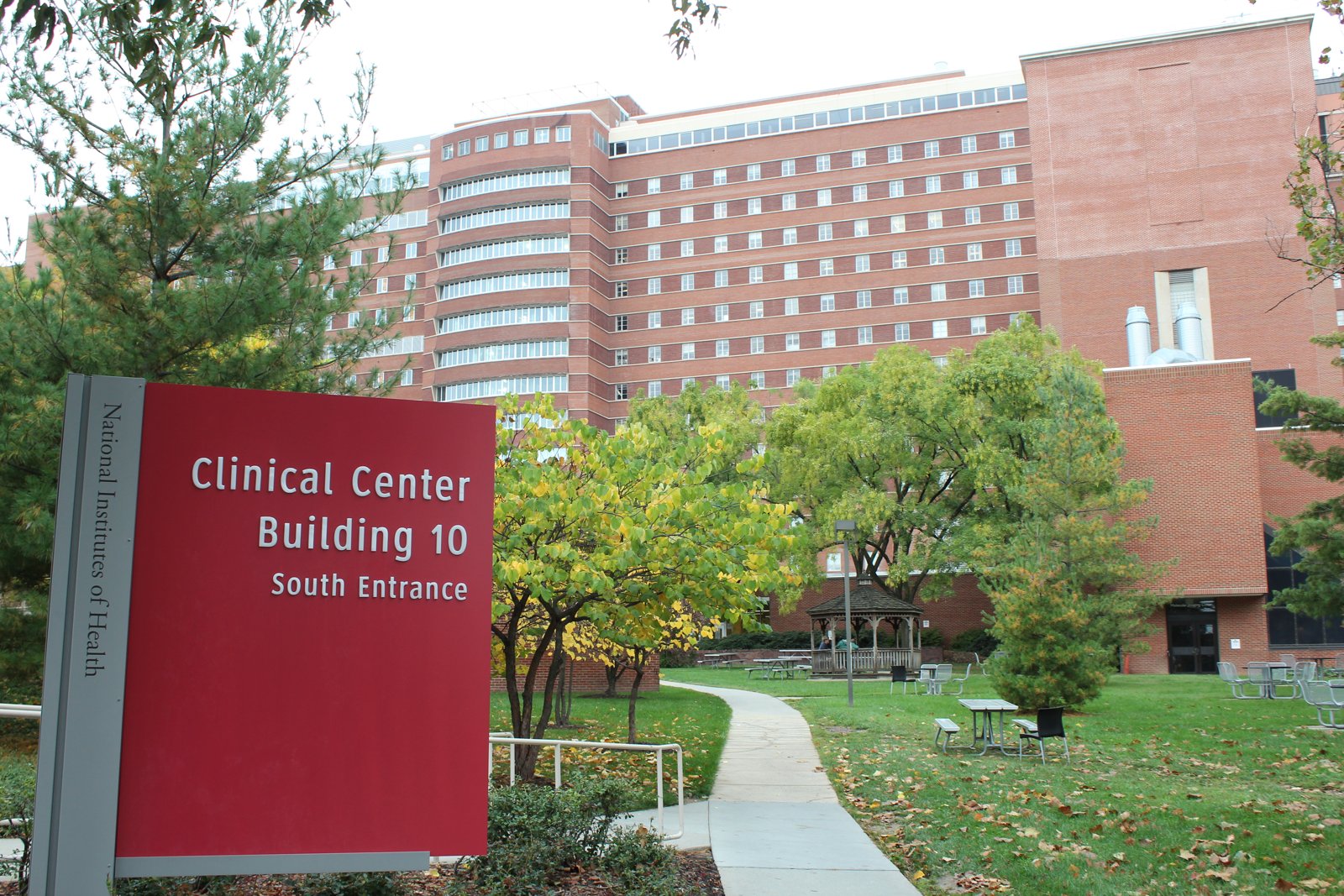
The south entrance of the NIH Clinical Center in Bethesda, Md., Oct. 16, 2014. Illustrative image of the NIH campus. Photo: Masm2016, CC BY-SA 4.0, via Wikimedia Commons. Source page: https://commons.wikimedia.org/wiki/File:NIH_Clinical_Center_South_Entrance.jpg
The trial recruited patients with a wide range of cancers, most of which had not responded well to checkpoint blockade. In the first phase, participants received varying doses every two weeks so that researchers could gauge safety and find the optimal dose. Several had flu-like side effects, which NIH said were expected and generally manageable with additional medication and supportive care. The paper reports that the most common treatment-related side effect was cytokine release syndrome, mainly of low grade, and that no treatment-related deaths were reported.
Across both phases, of the 27 participants treated at the optimal dose, disease did not progress in 16, or 59.3 percent. Four, or 14.8 percent, saw targeted tumors shrink by more than 30 percent. Two of those four had metastatic colorectal cancer of a notoriously treatment-resistant type and were receiving invika as their seventh line of therapy; another had stage 4 non-small cell lung cancer that had resisted several treatments, including checkpoint blockade. At lower doses, the drug did not appear to offer significant benefit.
The researchers found that invika expanded the targeted T-cell populations without affecting other T cells, and they linked the four cases of tumor shrinkage to the largest shifts in those populations. But, as they expected at this stage, immune activity alone did not always produce a measurable clinical response.
"These results are early, and although signs of immune activity don't always translate into benefit to patients at this stage, it is new and exciting to see activity in patients whose cancers had stopped responding to immunotherapy, a group of people with very few options left," said Nicholas Tschernia, a co-first author and physician-scientist early investigator at the Center for Cancer Research. "These findings give us a reason to keep studying this new type of immunotherapy, particularly by combining it with other cancer treatments to continue to seek improved results."
The treatment's sponsor, Marengo Therapeutics, previously announced that the FDA had granted invika Fast Track designation, which is meant to speed the agency's review, for antigen-rich metastatic colorectal cancer. The FDA has since granted the same designation for similar solid tumors, regardless of tissue type, after prior therapy that includes checkpoint inhibitors, according to NIH. Fast Track is not an approval.
The trial is still seeking participants. Patients interested in enrolling can call NCI's toll-free number, 1-800-4-CANCER (1-800-422-6237), or email NCIMO_referrals@mail.nih.gov, NIH said.
Sources: National Institutes of Health, "A precision T-cell therapy stalls treatment-resistant cancers in clinical trial," Oct. 23, 2026: https://www.nih.gov/news-events/news-releases/precision-t-cell-therapy-stalls-treatment-resistant-cancers-clinical-trial ; Ryan J. Sullivan, Nicholas P. Tschernia, Claire F. Friedman et al., "Bispecific dual T cell agonist invikafusp alfa in solid tumors: the phase 1/2 START-001 trial," Nature Medicine, Oct. 23, 2026, DOI 10.1038/s41591-026-04711-0: https://www.nature.com/articles/s41591-026-04711-0 (ClinicalTrials.gov NCT05592626)
- health
- cancer
- immunotherapy
- science
- nih