FDA Clears an Immunotherapy That May Spare Some Rectal Cancer Patients Chemotherapy, Radiation and Surgery
The Food and Drug Administration has granted accelerated approval to GSK's dostarlimab, sold as Jemperli, for adults with stage II or III rectal cancer whose tumors are MSI-H or dMMR, after a trial in which about seven in 10 patients needed no surgery, radiation or chemotherapy. Continued approval depends on longer follow-up.
Just News Desk, Correspondent||6 min read
SILVER SPRING, Md. - For most people with locally advanced rectal cancer, the standard path runs through chemotherapy, radiation and surgery, treatments that can leave lasting damage to bowel, urinary and sexual function and to fertility. On Monday, the Food and Drug Administration granted accelerated approval to an immunotherapy that may allow some of those patients to skip all three: GSK's dostarlimab, sold as Jemperli, for adults with stage II or III rectal cancer whose tumors carry a genetic signature known as MSI-H or dMMR.
The approval covers Jemperli used alone in previously untreated patients whose tumors are mismatch repair deficient (dMMR) or microsatellite instability-high (MSI-H), as determined by an FDA-authorized test, according to the agency. Both terms describe a fault in the way cancer cells correct errors when copying their DNA. As those errors accumulate, the FDA said, they produce proteins the immune system can recognize, which makes such tumors particularly vulnerable to immunotherapy. Jemperli blocks PD-1, a protein on immune cells that cancer cells exploit to shield themselves from attack.
GSK, which announced the decision from Philadelphia, described Jemperli as the first and only immunotherapy approved for this group of patients and said the biomarker is found in around 5 to 10 percent of rectal cancers. The FDA, citing published estimates, put the share of locally advanced rectal cancers that are dMMR or MSI-H at approximately 3 percent.
"Standard treatment for rectal cancer has major life-changing effects," said Dr. Angelo de Claro, director of the FDA's Oncology Center of Excellence. "For certain types of rectal cancer, this approval represents a groundbreaking option that avoids surgery, radiation and chemotherapy. This represents a significant benefit for patients and their families."
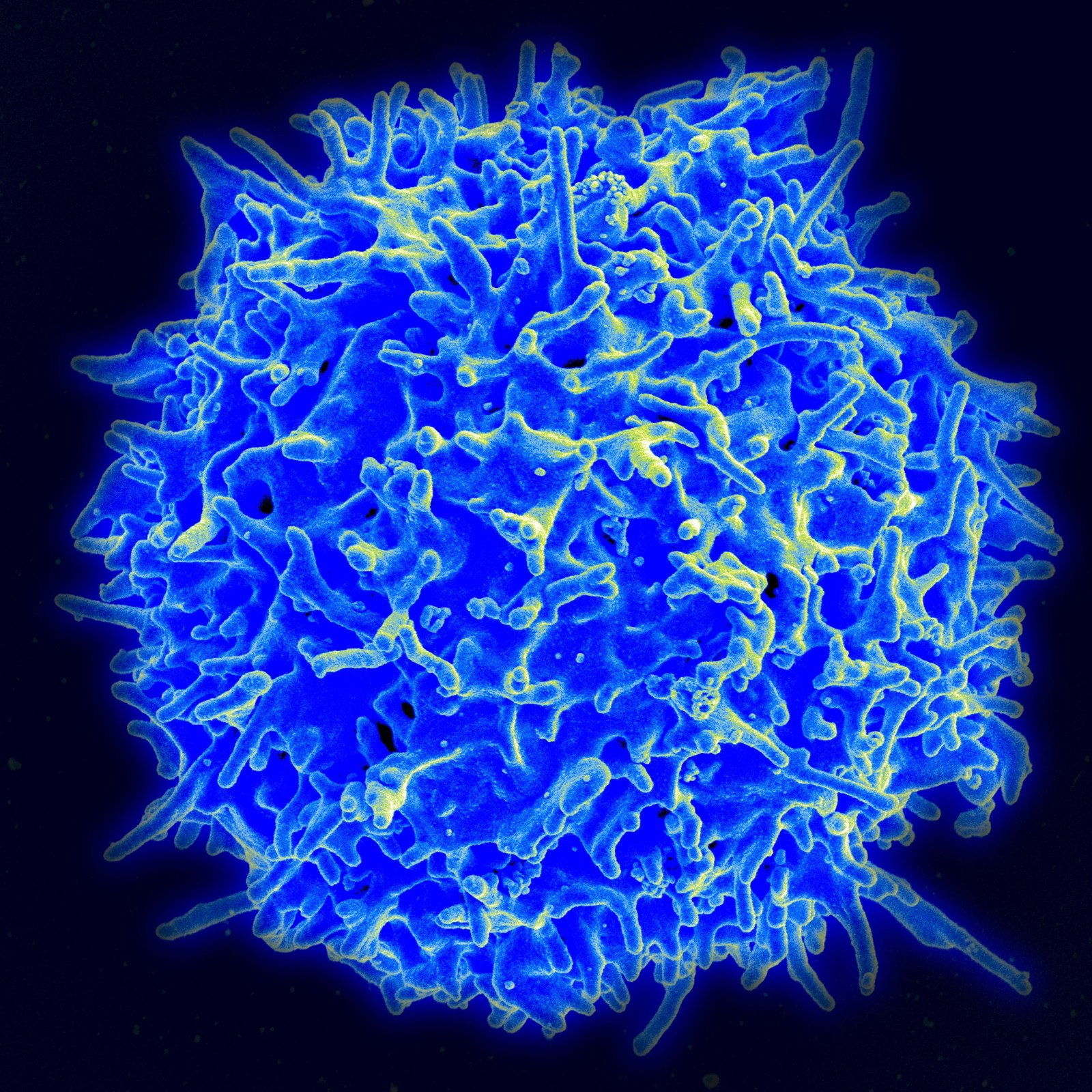
A human T lymphocyte, or T cell, from the immune system of a healthy donor, seen in a scanning electron micrograph. Drugs like dostarlimab block the PD-1 protein on immune cells such as these. Illustrative image, not from the AZUR-1 trial. Image: National Institute of Allergy and Infectious Diseases (NIAID/NIH), May 24, 2010, via Wikimedia Commons (public domain, U.S. government work). Source page: https://commons.wikimedia.org/wiki/File:Healthy_Human_T_Cell.jpg
The agency based its decision on interim results from AZUR-1, a single-arm, open-label phase 2 trial in 154 previously untreated patients, who received dostarlimab intravenously every three weeks for up to nine cycles over about six months. Of those 154 patients, 110, or 71 percent, were treated with dostarlimab alone, received no other form of treatment and did not see their disease progress, according to the FDA Twenty-six underwent surgery and 13 received additional systemic therapy or radiation.
Among 116 patients who could be evaluated by independent central review, 47 percent achieved a clinical complete response sustained for 12 months, the trial's primary measure, the FDA said, and 38 more had achieved a complete response but had not yet reached 12 months of follow-up at the data cutoff. By investigators' own assessment, 68 percent of 144 evaluable patients reached that sustained response. With a median follow-up of 26.3 months, none of the patients with a complete or near-complete response had seen their disease progress, according to the agency. GSK said no recurrences had been reported among responders after a median follow-up of more than two years.
The FDA also reviewed an earlier, investigator-led study at Memorial Sloan Kettering Cancer Center in New York, in which 50 patients received the drug alone. The response rate there was 100 percent, and 93 percent of patients kept a complete clinical response for at least 12 months, the agency said. None of the 50 received chemoradiation or rectal cancer surgery. Of the 27 followed for at least three years, one had a local recurrence.
"The AZUR-1 results demonstrate the potential for a fundamentally different treatment approach in this biomarker-defined patient population, and today's approval means MSI-H/dMMR patients can now access a licensed treatment tailored to the biology of their disease," said Dr. Andrea Cercek, the trial's principal investigator and section head of colorectal cancer at Memorial Sloan Kettering, in GSK's announcement. GSK disclosed that Dr. Cercek has financial interests related to the company.
Tony Wood, GSK's chief scientific officer, said that "for decades, treatment has relied on chemotherapy, radiation and surgery," and that the approval "offers a new treatment approach and represents an important step towards more personalized care for these patients."
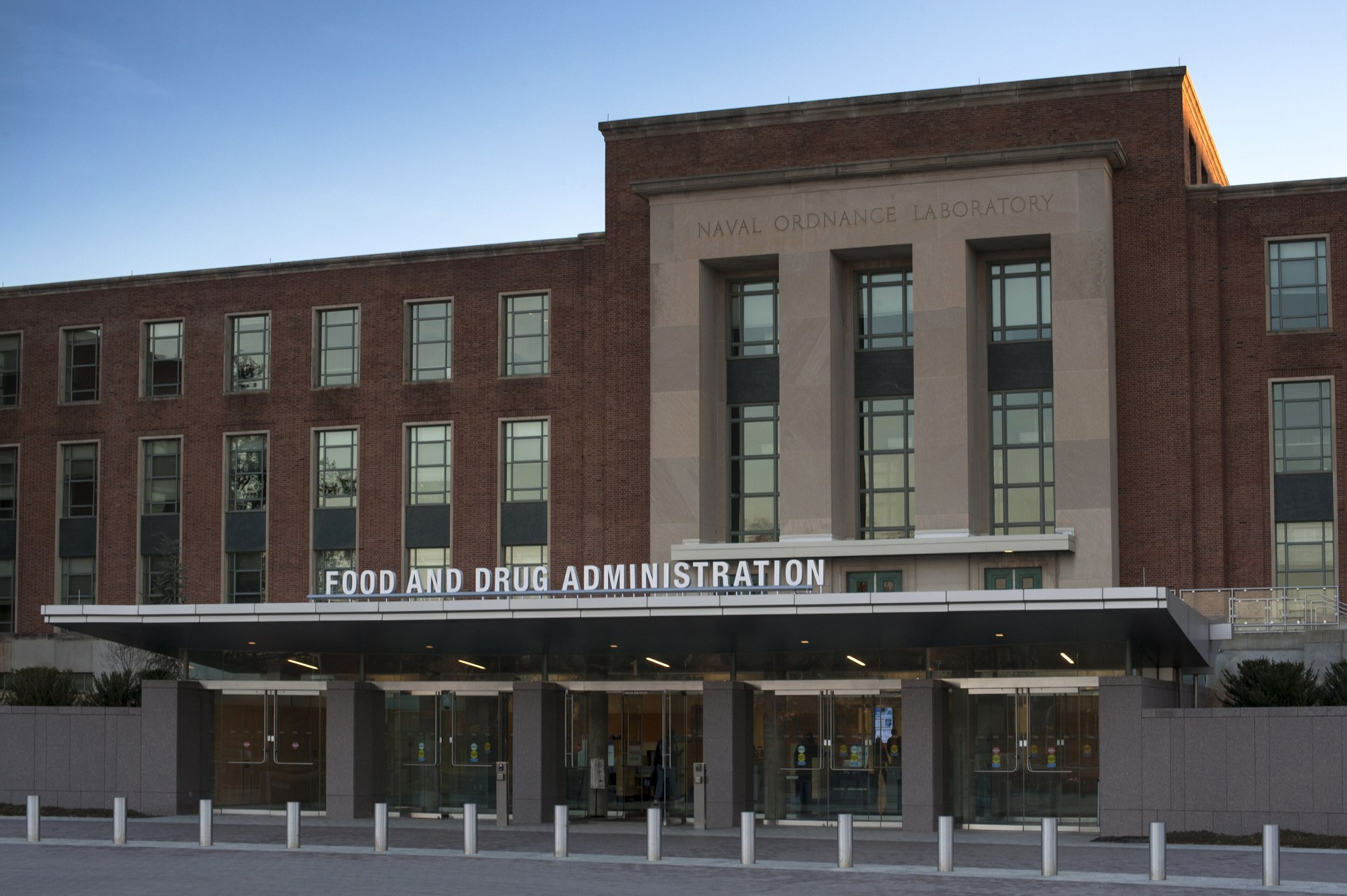
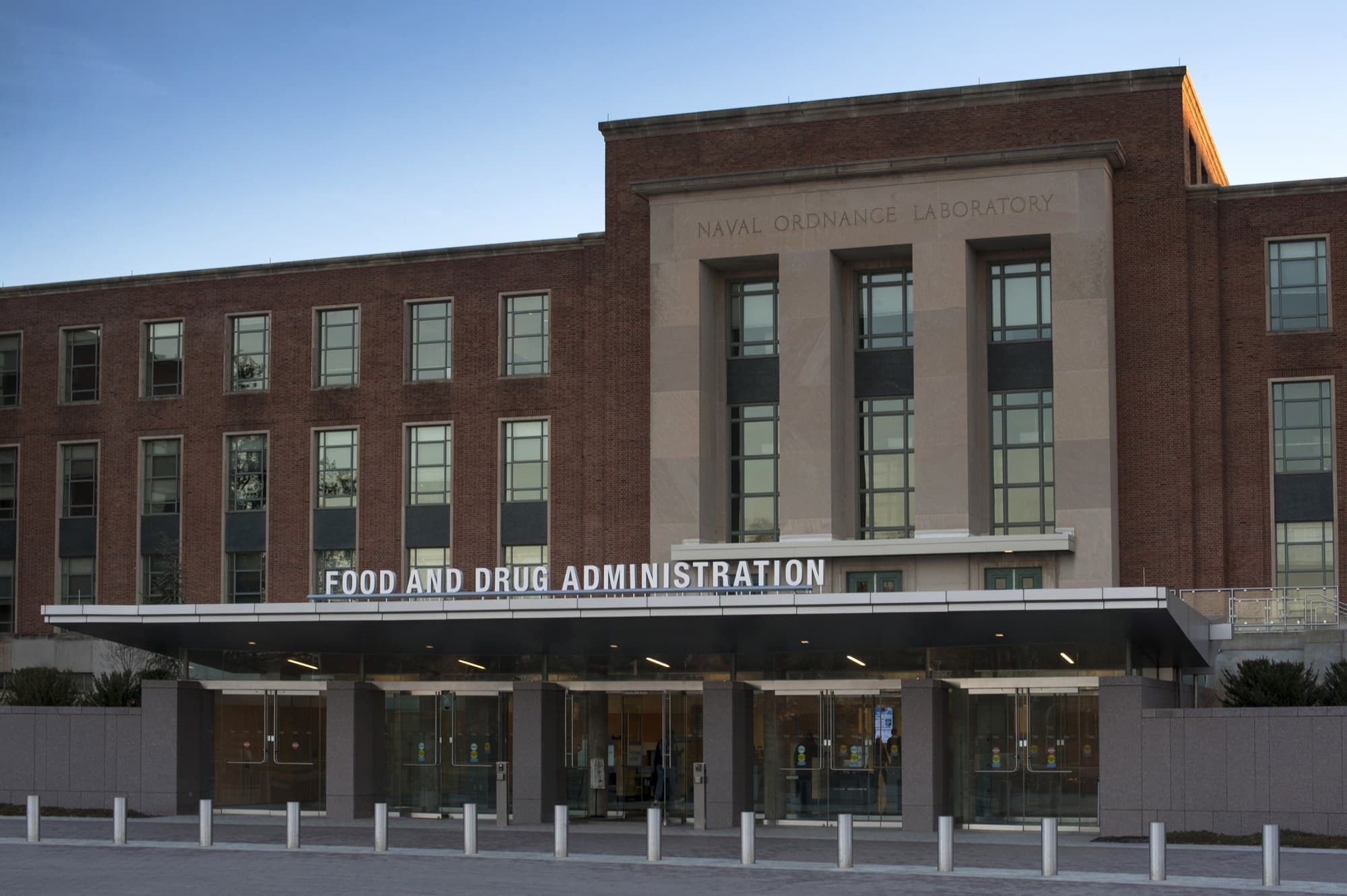
The main entrance of Building 1 on the Food and Drug Administration's White Oak campus in Silver Spring, Maryland, which houses the commissioner's and senior staff offices, photographed on March 12, 2015. Photo: U.S. Food and Drug Administration, via Wikimedia Commons (public domain, U.S. government work). Source page: https://commons.wikimedia.org/wiki/File:FDA_Entrance_(16792957331).jpg
The approval carries an important qualification. It was granted under the FDA's accelerated approval pathway, on the basis of interim trial results, and the agency said GSK must continue following patients to show that the responses translate into lasting clinical benefit. Continued approval may depend on that confirmatory evidence. "Longer follow-up is needed to understand the duration of response and how often the cancer returns," the FDA said.
The drug is not without risk. Jemperli can cause the immune system to attack healthy organs and tissues, reactions that can be severe or fatal, the agency warned. The most common side effects in patients treated for this type of rectal cancer were fatigue, rash, diarrhea and itching. GSK said serious adverse reactions occurred in 20 percent of AZUR-1 patients and that 3 percent stopped treatment because of side effects.
The review moved quickly. The FDA said it acted about four months ahead of its goal date, under priority review and a breakthrough therapy designation, and as part of the commissioner's National Priority Voucher pilot program. GSK said full interim data from AZUR-1 will be presented at the European Society for Medical Oncology Congress this month.
For patients, advocates said, the practical first step is a test. "Biomarker testing at diagnosis will be essential to identifying patients who may be eligible for this treatment and helping them understand their options," said Michael Sapienza, chief executive of the Colorectal Cancer Alliance, in GSK's announcement.
Sources: U.S. Food and Drug Administration, "FDA grants accelerated approval to dostarlimab for locally advanced rectal cancer," Oct. 19, 2026, https://www.fda.gov/drugs/resources-information-approved-drugs/fda-grants-accelerated-approval-dostarlimab-locally-advanced-rectal-cancer ; FDA news release, "FDA Approves Immunotherapy That May Allow Certain Patients with Rectal Cancer to Avoid Chemotherapy, Radiation and Surgery," Oct. 19, 2026, https://www.fda.gov/news-events/press-announcements/fda-approves-immunotherapy-may-allow-certain-patients-rectal-cancer-avoid-chemotherapy-radiation-and ; GSK press release, "Jemperli (dostarlimab-gxly) approved in US as first and only immunotherapy for adults with MSI-H/dMMR locally advanced rectal cancer," Philadelphia, Oct. 19, 2026, https://us.gsk.com/en-us/media/press-releases/jemperli-dostarlimab-gxly-approved-in-us-as-first-and-only-immunotherapy-for-adults-with-msi-hdmmr-locally-advanced-rectal-cancer/ . This article is news, not medical advice; patients should discuss treatment options with their doctors.
- health
- cancer
- immunotherapy
- fda
- united-states