One million children in West Africa have now received the new malaria vaccine
Ghana, Nigeria, and Burkina Faso have crossed a once-unthinkable threshold in routine childhood immunization. Hospital wards that used to fill after the rains are quieter — not empty, quieter.
Priya Raman, Global health correspondent||3 min read
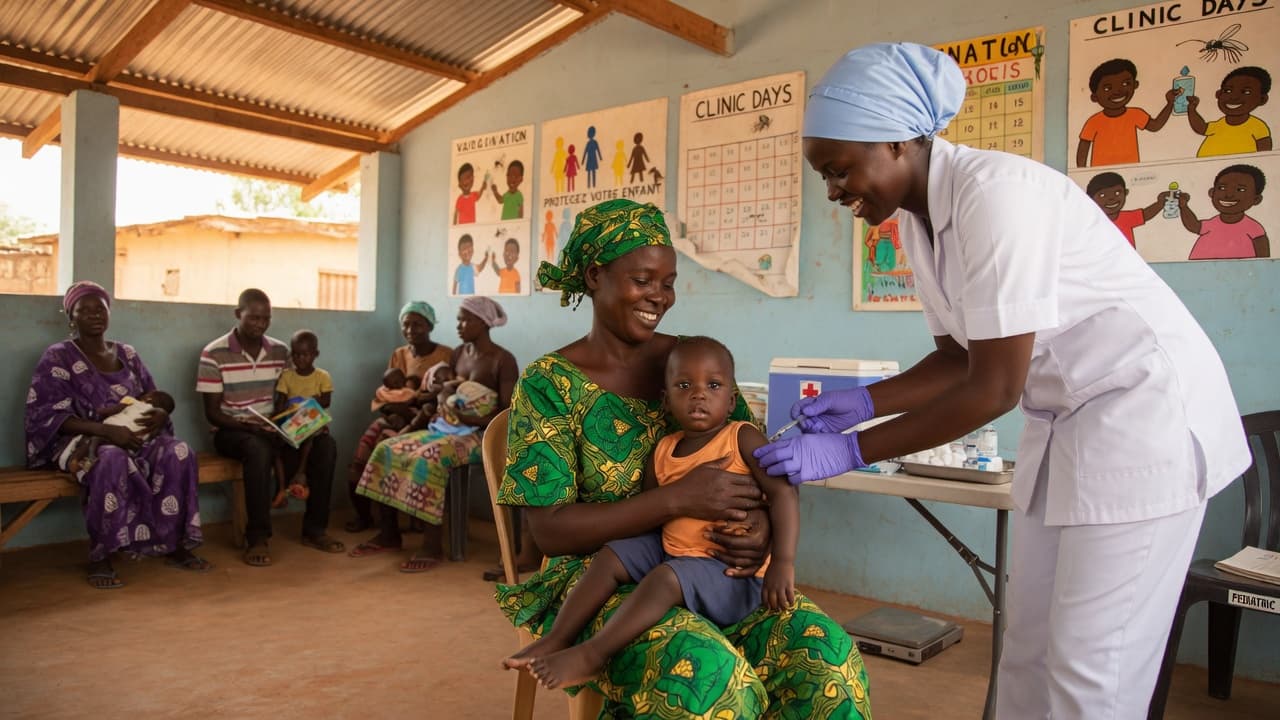
The millionth dose was not handed over at a podium. It went into the left thigh of a two-year-old named Amina, in a clinic outside Tamale, Ghana, on a morning that smelled of rain and antiseptic. Her mother, Fati Mohammed, had already sat through the talk about fever after the shot. She had also sat through rainy seasons when the pediatric ward was a corridor of drips.
Ghana’s national immunization program, together with counterparts in Nigeria and Burkina Faso, confirmed this month that combined deliveries of the R21 malaria vaccine in routine childhood schedules have now passed one million children. The World Health Organization had prequalified the vaccine in 2023. The slow, unglamorous work since then has been refrigerators, training, and Tuesdays at the clinic.
“We do not celebrate a million the way a company celebrates a million,” said Dr. Kwame Mensah, who coordinates the northern Ghana rollout. “We celebrate a Tuesday when the fridge is working and the mothers still come.”
A vaccine in a system, not a campaign poster
Malaria remains a leading killer of young children in the region. Bed nets, seasonal chemoprevention, and better testing had already bent some curves. A vaccine was never going to be a switch. It is another layer.
What is new in 2026 is the embedding. In the three countries, R21 is offered alongside measles and yellow fever at scheduled visits, not as a standalone circus. That choice has tradeoffs — a missed measles appointment is also a missed malaria dose — but it uses a machine that already exists.
Nurses in Tamale keep a simple tally on the wall: doses, refusals, fevers reported. Refusals are low, they said, in part because families have watched the ward. “You do not need a brochure if you have buried a neighbor’s child,” said community health nurse Akosua Boateng. “You need a day you can walk here and a nurse who is not out of stock.”
Stockouts still happen. Two districts in Burkina Faso paused for nine days in July after a cold-chain failure. The pause is in the public report, which is how you can tell the program is being run like a program.
Quieter wards
At Tamale Teaching Hospital, the pediatric malaria admissions for the eight weeks after the peak rains were down 31 percent compared with the same window in 2024, according to figures the hospital provided. Doctors refuse to call it a miracle, and they are right. Year-to-year weather moves the numbers. So does testing. So does a vaccine.
What they will say, on the record, is that they have beds. “Last year I was choosing who got the last oxygen concentrator,” said Dr. Ama Serwaa. “This year I am teaching. I prefer teaching.”
Independent modelers at the London School of Hygiene & Tropical Medicine, using early coverage data, had projected substantial drops in uncomplicated cases if rollout stayed on track. The on-the-ground picture is consistent with that direction, and still incomplete. Nigeria’s numbers are largest and noisiest; urban Lagos and rural Kebbi are not the same campaign.
The next million
Funders will now argue about the second million, and the third, and whether Gavi’s budget can hold as other outbreaks compete. That argument is real. It should not obscure the first fact: a vaccine that existed mostly in papers three years ago is in the arms of a million children who were born into a disease their grandparents assumed was weather.
Mohammed waited the required 15 minutes after Amina’s shot, then tied the child’s wrapper and walked home before the afternoon storm. “If it helps, I will come for the next one,” she said. “I come anyway. I do not like the rains.”
- world
- children
- vaccines
- africa