
India Returns Its First Captive-Bred Great Indian Bustards to the Thar Desert
Two captive-bred male great Indian bustards were released at Sam in Rajasthan's Desert National Park on 4 October, moving India's decade-long breeding programme for the critically endangered bird into its rewilding phase, according to the Ministry of Environment, Forest and Climate Change.
Just News Desk, Correspondent||5 min read
JAISALMER, India - Two male great Indian bustards raised in captivity were released into the wild at Sam, in Rajasthan's Desert National Park, on 4 October, moving a decade-long effort to save the critically endangered bird from building a captive population to returning birds to the desert, according to India's Ministry of Environment, Forest and Climate Change.
Bhupender Yadav, the Union environment minister, carried out the release with Sanjay Sharma, Rajasthan's minister of state for forest and environment, in attendance, the ministry said in a statement issued through the Press Information Bureau. Mr. Yadav called it the outcome of "nearly a decade of unwavering dedication of our scientists, researchers and ground staff," and the ministry described the release as a pilot whose lessons would be used to refine protocols for later releases.
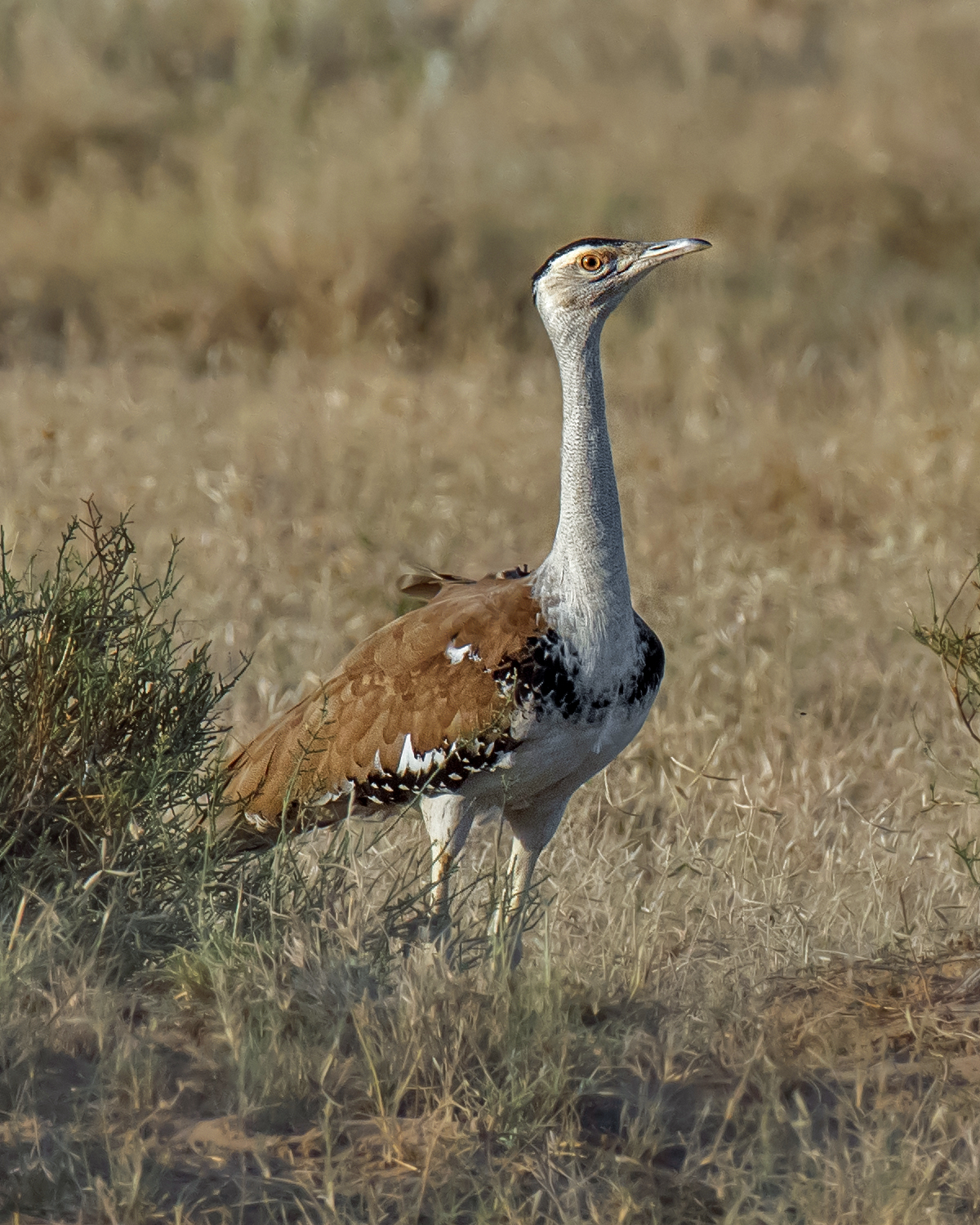
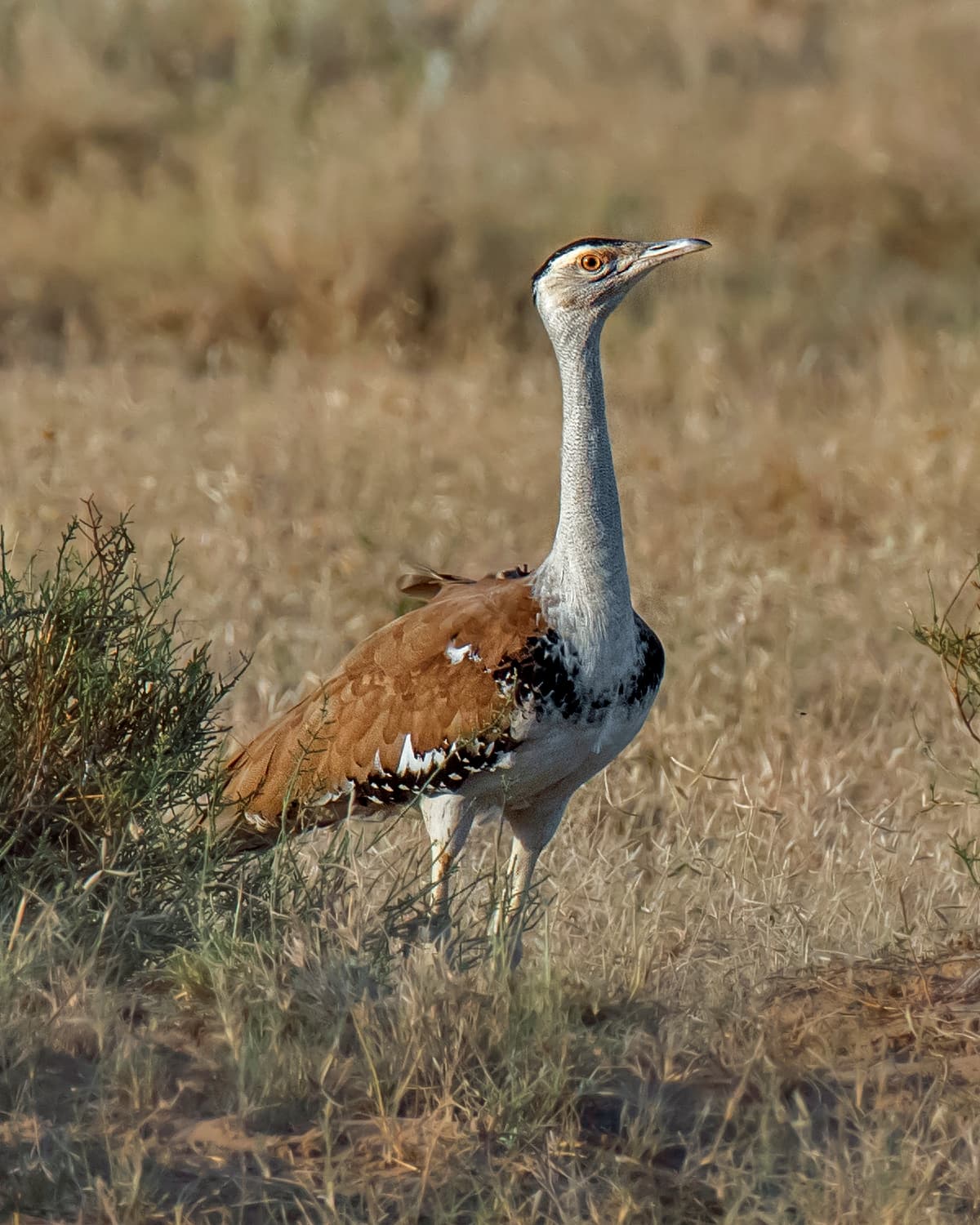
A wild great Indian bustard (Ardeotis nigriceps) in Desert National Park, Rajasthan, 22 October 2021. Shown for species and habitat context; not one of the captive-bred birds released in October 2026. Photo: SVKMBFLY, cropped and colour-adjusted by MPF, via Wikimedia Commons (CC BY-SA 4.0). Source page: https://commons.wikimedia.org/wiki/File:Ardeotis_nigriceps,_Desert_National_Park,_Rajasthan,_India_1.jpg
The release followed a ceremony the previous day at which Mr. Yadav and Rajasthan's chief minister, Bhajan Lal Sharma, who joined by video link, began the process of moving the two birds out of a soft-release facility, the ministry said. They also inaugurated a new Rewilding Aviary at Ramdevra, a pillar-less enclosure measuring 160 metres by 64 metres and 14 metres high, built by the Rajasthan Forest Department with a sanctioned budget of 9.25 crore rupees from the state government, where captive-bred bustards can build flight muscles before release.
The great Indian bustard, known locally as the godawan, is Rajasthan's state bird, and its last breeding population is found around Jaisalmer, Gobind Sagar Bhardwaj, director of the Wildlife Institute of India, told The Times of India. The chief minister called the rewilding of the state bird "a day of pride for the whole State," according to the ministry.
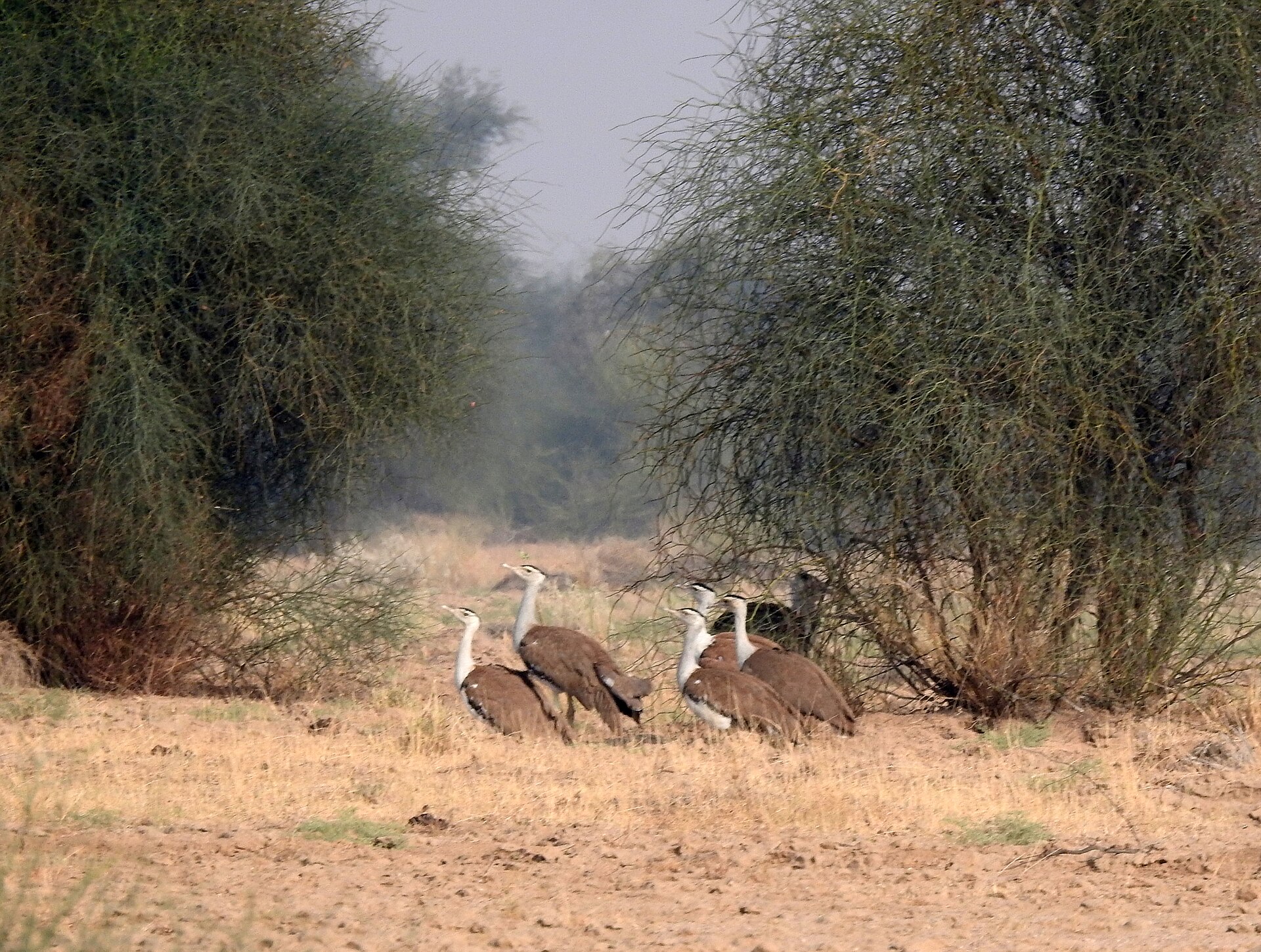
A group of wild great Indian bustards beneath scrub trees in Desert National Park, Rajasthan, 29 December 2021. Wild birds shown for context; not birds from the captive-breeding programme. Photo: Dr. Raju Kasambe, via Wikimedia Commons (CC BY-SA 4.0). Source page: https://commons.wikimedia.org/wiki/File:Great_Indian_Bustard_Ardeotis_nigriceps_by_Raju_Kasambe_DSCN9716_06.jpg
The breeding programme's numbers explain why officials were prepared to take the step. The facilities at Sam and Ramdevra now hold 97 birds, the ministry said, 40 of them hatched from wild-laid eggs and 57 bred in captivity. Eighty-six are being kept for captive breeding and 11 have been earmarked for release, of which the two males were the first. Captive reproduction produced 24 live chicks in 2025 and 29 this year.
Scientists have also tried what the ministry called a "jumpstart" approach, placing captive-laid eggs in the nests of wild birds. Incubating females accepted them, the ministry said, and six chicks hatched in Rajasthan and two in Gujarat.
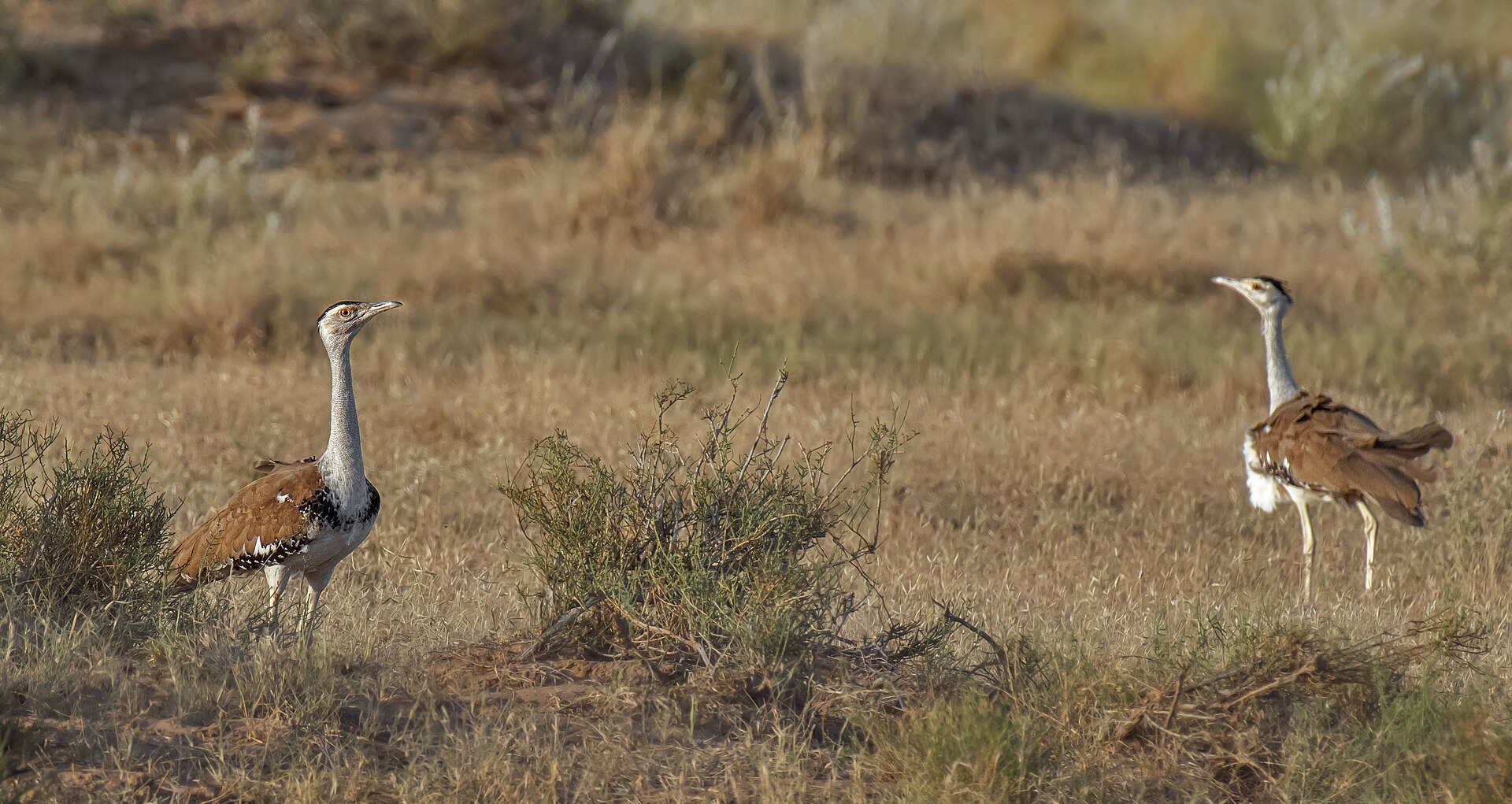
A pair of wild great Indian bustards in Desert National Park, Rajasthan, 22 October 2021. Species context only; not the birds released in 2026. Photo: SVKMBFLY, via Wikimedia Commons (CC BY-SA 4.0). Source page: https://commons.wikimedia.org/wiki/File:The_Great_Indian_Bustard_(Ardeotis_nigriceps).jpg
The Bustard Recovery Programme is run by the ministry, the Rajasthan Forest Department and the Wildlife Institute of India, with technical collaboration from the International Fund for Houbara Conservation and funding from the National Compensatory Afforestation Fund (CAMPA). The forest department has fenced about 200 square kilometres of grassland inside the national park, enclosures that long-term telemetry studies by the institute have identified as prime breeding habitat, and the species' conservation is being guided by a Supreme Court of India judgment based on an expert committee's recommendations, the ministry said.
Both birds, about seven months old and weighing roughly five kilograms each, were fitted with satellite tags before release, The Times of India reported. Two days later the newspaper reported that they remained safe and healthy and were flying within the park, and that one had drunk from an artificial water source, according to Dr. Bhardwaj. The Indian Express reported that the transmitters send location alerts three times a day.
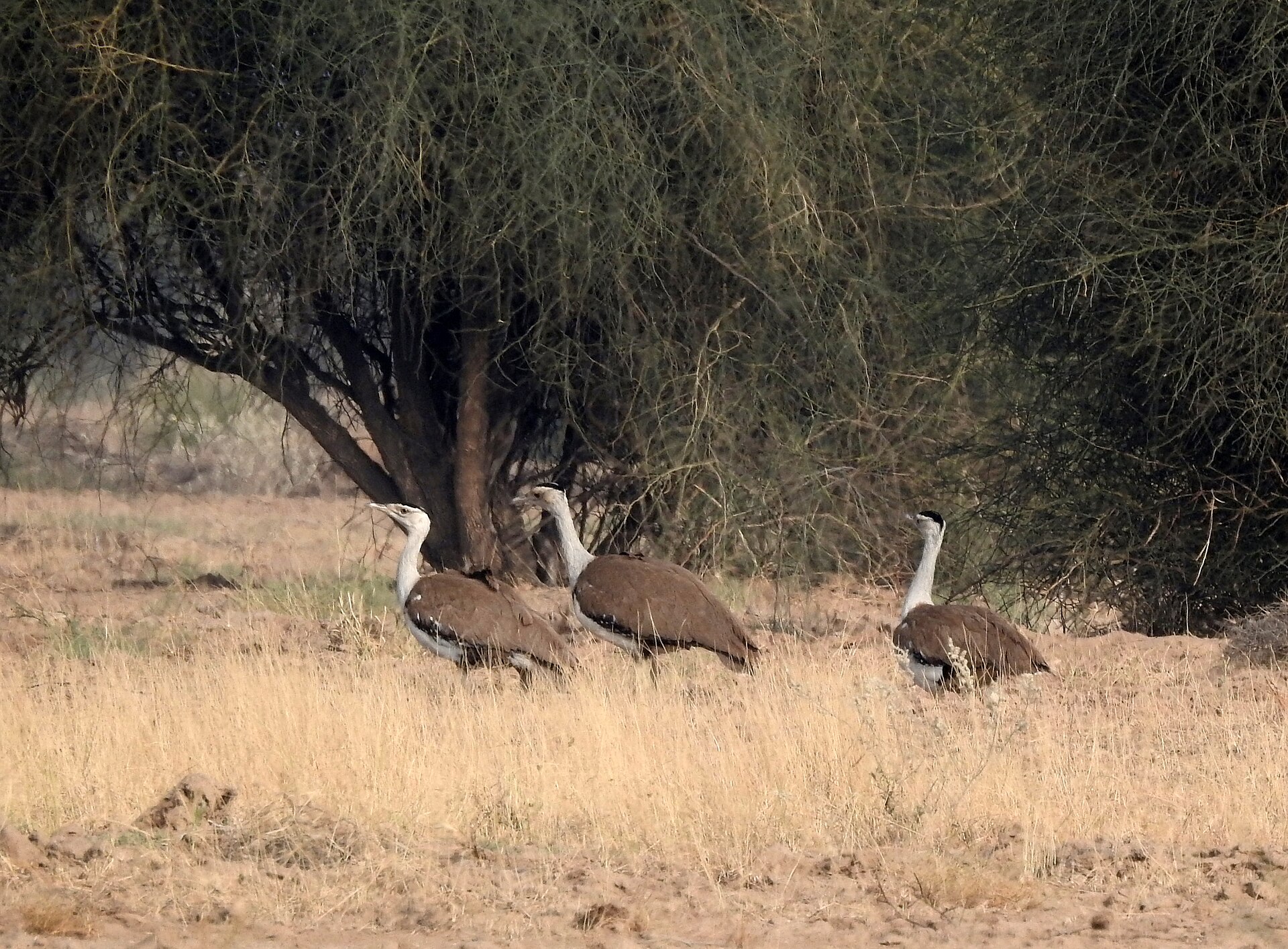
Wild great Indian bustards in the shade of a tree in Desert National Park, Rajasthan, 29 December 2021. Context only; not programme birds. Photo: Dr. Raju Kasambe, via Wikimedia Commons (CC BY-SA 4.0). Source page: https://commons.wikimedia.org/wiki/File:Great_Indian_Bustard_Ardeotis_nigriceps_by_Raju_Kasambe_DSCN9716_10.jpg
The road ahead is long. Survival in the open desert is not assured, and The Times of India reported that officials are working to limit grazing and disturbance in the birds' range and to watch for hazards such as overhead power lines. Dr. Bhardwaj described the release to India Today as a learning exercise rather than a mass restocking. "We take it as a training process and will learn how captive-bred birds behave in the open, besides ensuring how better we can safeguard them," he said. Still, the ministry framed the moment as a turning point: the first captive-bred bustards are back on the grasslands they were bred to reclaim, with nine more already earmarked to follow.
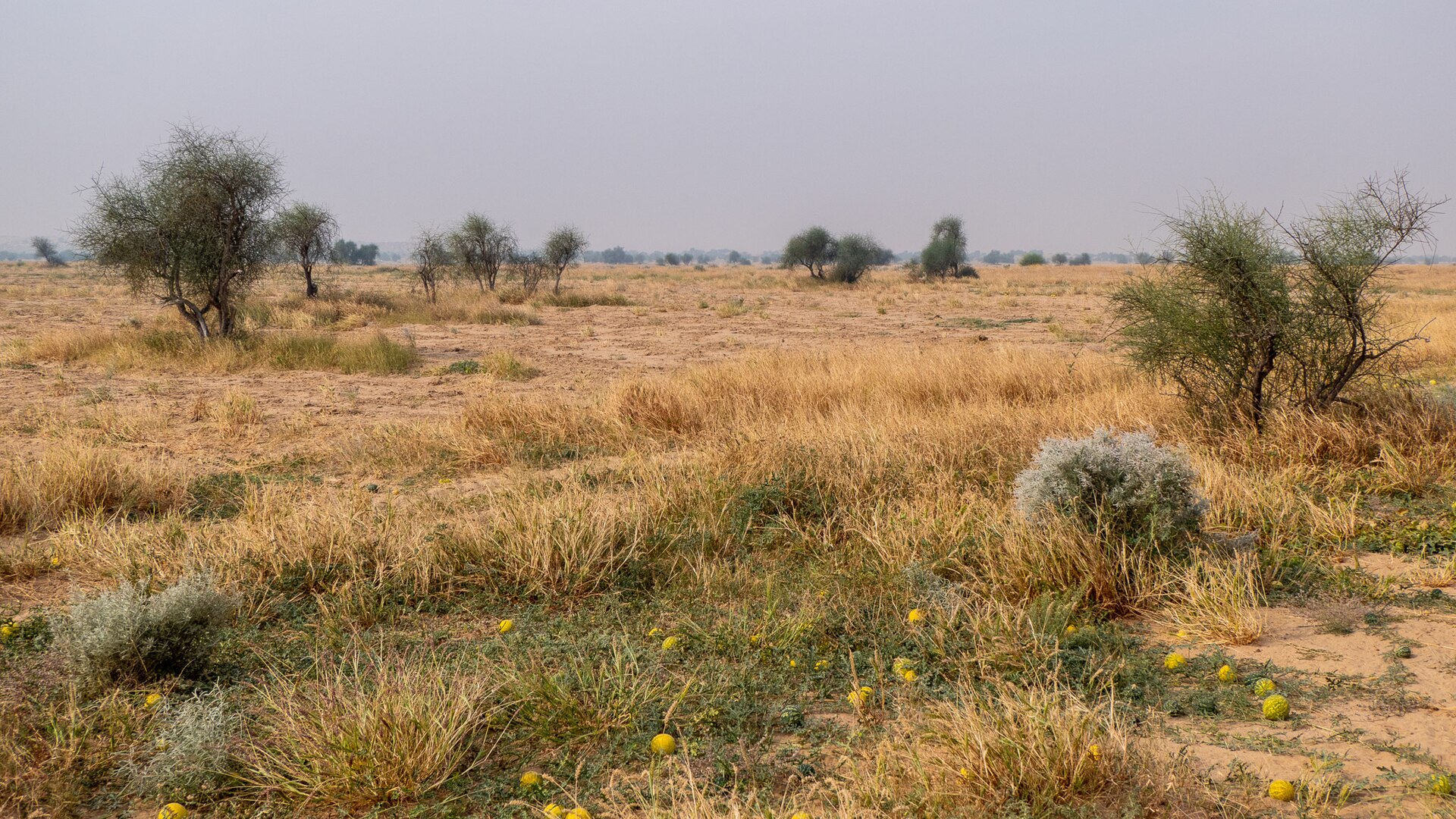
Open grassland in Desert National Park, Rajasthan, 24 November 2020. Habitat context; not the release site or the fenced enclosures. Photo: Mike Prince, via Wikimedia Commons (CC BY 2.0). Source page: https://commons.wikimedia.org/wiki/File:Desert_National_Park_(50861830528).jpg
The primary records are the Press Information Bureau statements of the Ministry of Environment, Forest and Climate Change of 3 October 2026 (https://www.pib.gov.in/PressReleasePage.aspx?PRID=2318629&lang=2®=48) and 4 October 2026 (https://www.pib.gov.in/PressReleseDetailm.aspx?PRID=2318842&lang=1®=3). Follow-up details are from The Times of India (4 and 6 October 2026), India Today (5 October 2026) and The Indian Express (9 October 2026). Photographs from the release are not reproduced here; the images above are Wikimedia Commons files chosen for species and habitat context.
- environment
- conservation
- india
- asia
- wildlife
- birds
- reintroduction
- rewilding


.jpg)

.jpg)