
A Tigress Returns to Buxa as India Begins Bringing Tigers Back to North Bengal
A tigress moved from Bihar's Valmiki Tiger Reserve was released into West Bengal's Buxa Tiger Reserve on 2 October, the first phase of a programme to restore a breeding, self-sustaining tiger population to a reserve that had long lacked one, according to India's Ministry of Environment, Forest and Climate Change.
Just News Desk, Correspondent||4 min read
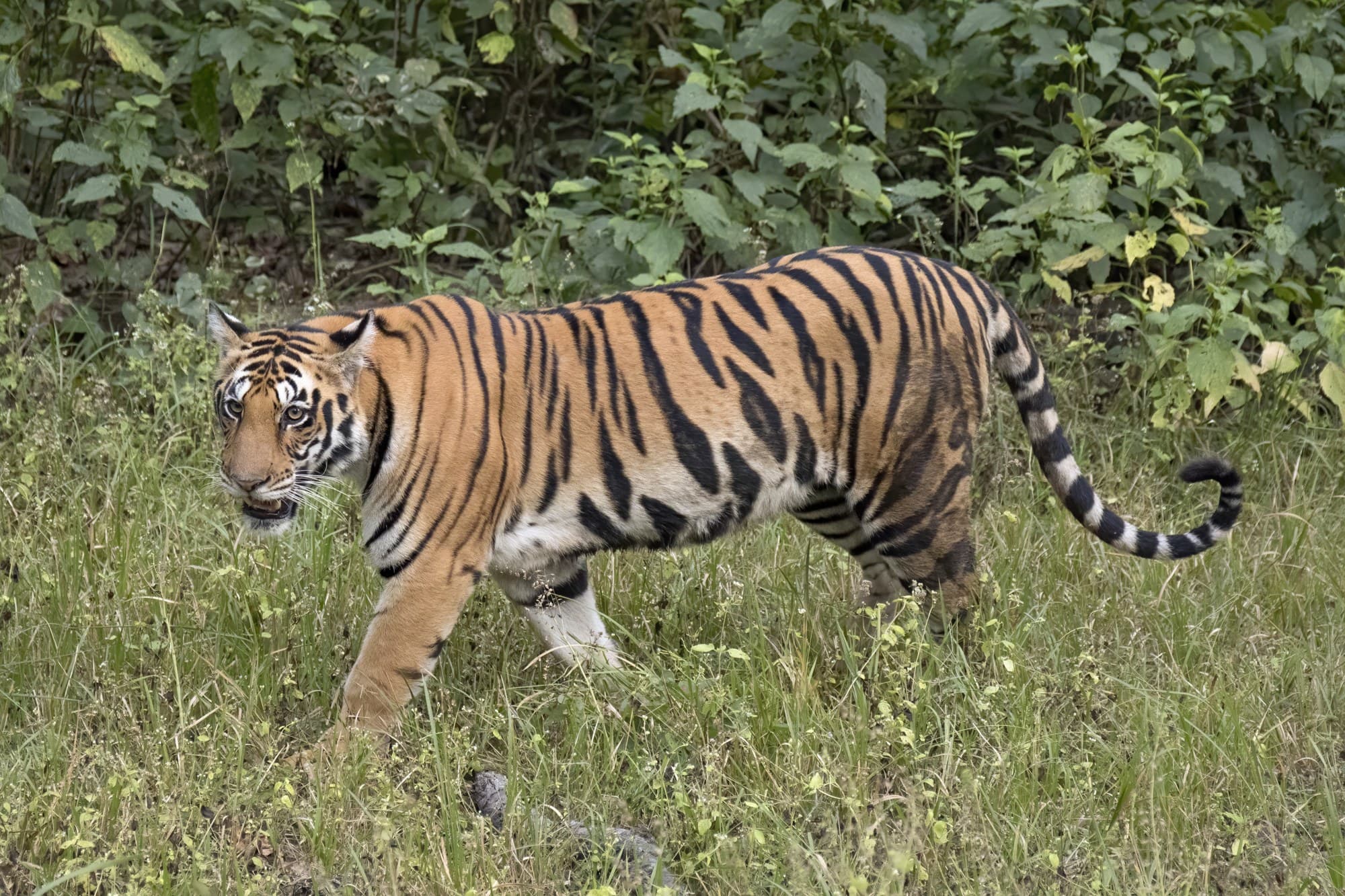
ALIPURDUAR, India - A tigress translocated from Bihar's Valmiki Tiger Reserve was released into Buxa Tiger Reserve in West Bengal on 2 October, the first phase of a programme to restore a breeding, self-sustaining tiger population to a forest that had for years gone without a stable resident one, according to India's Ministry of Environment, Forest and Climate Change.
The release was carried out in the presence of Bhupender Yadav, the Union environment minister, and Suvendu Adhikari, West Bengal's chief minister, the ministry said in a statement issued through the Press Information Bureau. It opened India's Wildlife Week 2026. In a social media post afterward, Mr. Yadav identified the animal as T138 and said that "the significant promise to reintroduce tiger in Buxa has been fulfilled," thanking Mr. Adhikari and Samrat Choudhary, Bihar's chief minister, for their support.
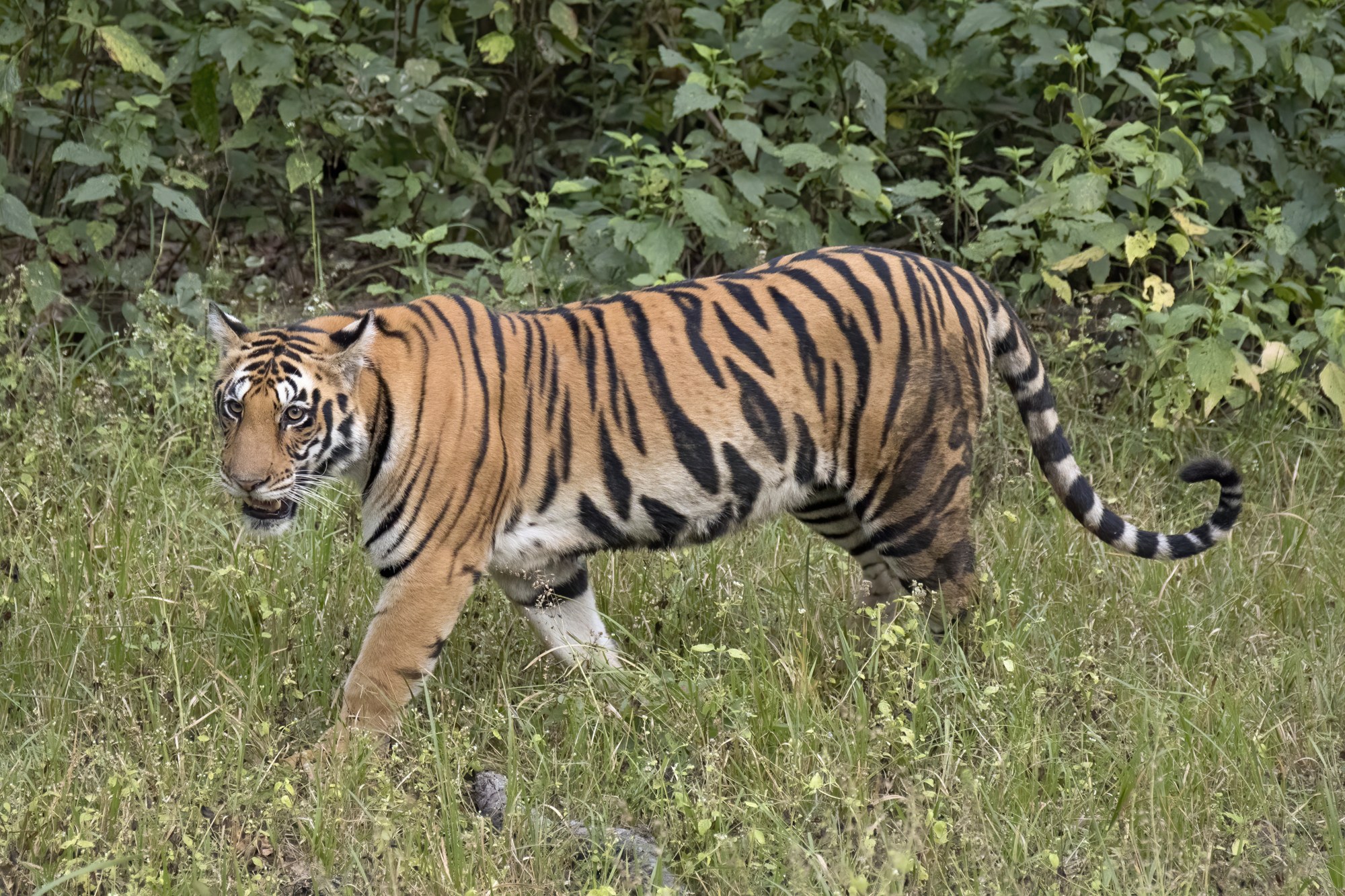
A Bengal tigress (Panthera tigris tigris) in Kanha National Park, Madhya Pradesh. Shown for species context; not T138, the tigress released at Buxa. Photo: Charles J. Sharp, via Wikimedia Commons (CC BY-SA 4.0). Source page: https://commons.wikimedia.org/wiki/File:Bengal_tiger_(Panthera_tigris_tigris)_female_3_crop.jpg
Buxa, declared a tiger reserve in 1983, sits in the forests of North Bengal and connects to protected areas in Bhutan and Assam. Over the decades, the ministry said, habitat degradation and fragmentation, changing land use and a decline in prey eroded the conditions a resident tiger population needs, and the reserve went through a prolonged absence of one.
The groundwork for the tigress's arrival was laid over eight years. Since 2018 the West Bengal government has run a Tiger Augmentation and Recovery Project with the National Tiger Conservation Authority and the Wildlife Institute of India, concentrating on habitat, prey, protection and monitoring. More than 800 chital, or spotted deer, have been released to rebuild the prey base, and about 380 hectares of grassland have been restored or converted, the ministry said, adding that monitoring shows prey abundance trending upward.
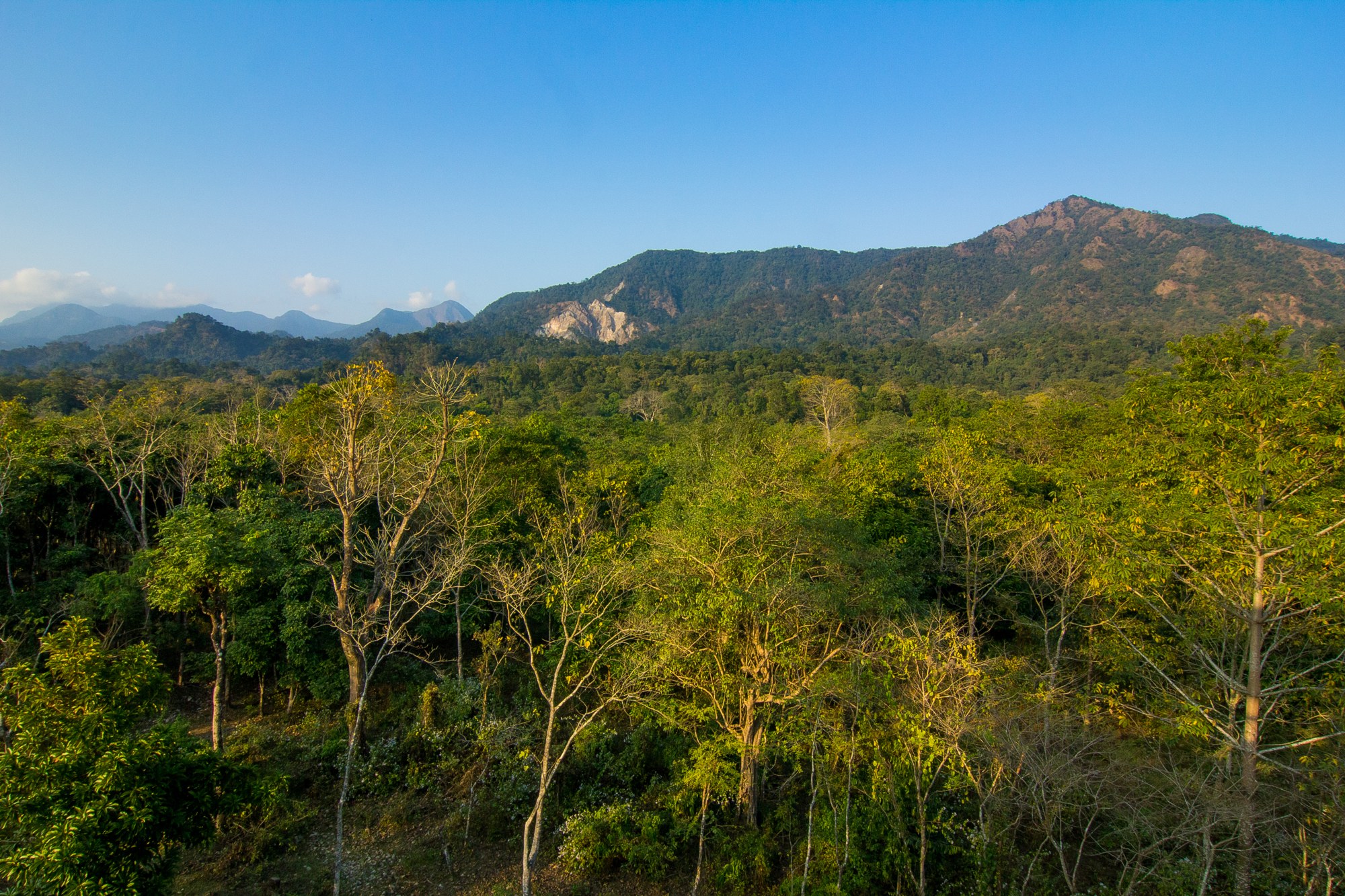
Forest inside Buxa Tiger Reserve, Alipurduar district, West Bengal, 16 December 2014. Habitat context; not the release site. Photo: Swaroop Singha Roy, via Wikimedia Commons (CC BY-SA 4.0). Source page: https://commons.wikimedia.org/wiki/File:Buxa_Tiger_Reserve_forest_2014.jpg
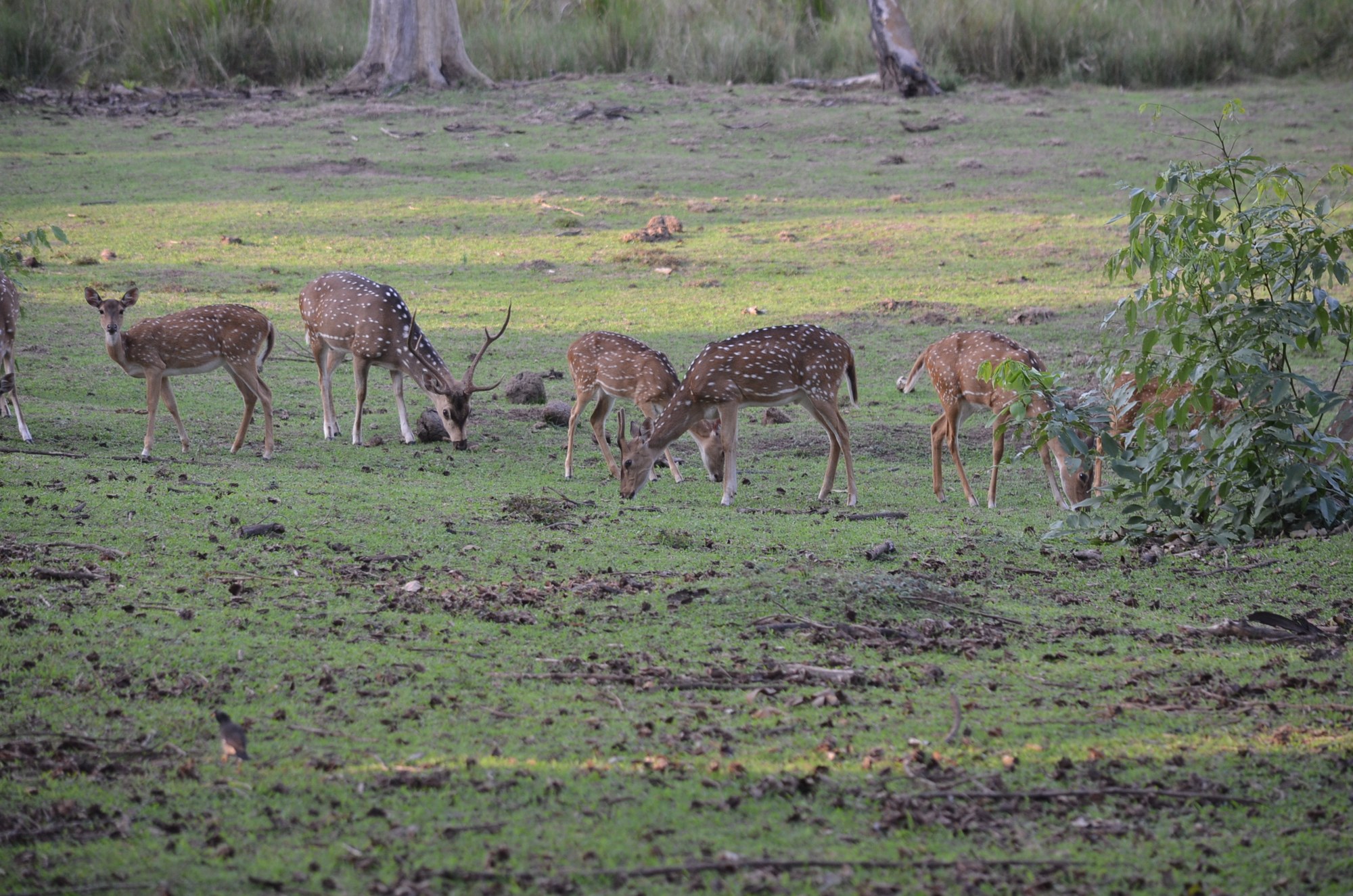
A herd of chital (Axis axis) grazing in Nagarhole National Park, Karnataka, 22 May 2016. Species context for Buxa's prey-augmentation work; these are not Buxa animals. Photo: Sanjeevrs2000, via Wikimedia Commons (CC BY-SA 4.0). Source page: https://commons.wikimedia.org/wiki/File:A_herd_of_chital.jpg
Tigers had not abandoned the landscape entirely. Camera traps recorded tigers in Buxa in 2021, 2023 and 2026, the ministry said, and an animal photographed in 2023 was matched to a tiger from Manas Tiger Reserve in Assam, evidence that big cats were moving on their own between the two reserves. Officials describe the reintroduction as a way to complement that natural recovery rather than replace it.
The tigress was selected and moved after assessments of ecological, veterinary and management factors and in line with established protocols, according to the ministry. She will be followed closely through telemetry, camera trapping and field monitoring to track her movement, adaptation, health and behaviour.
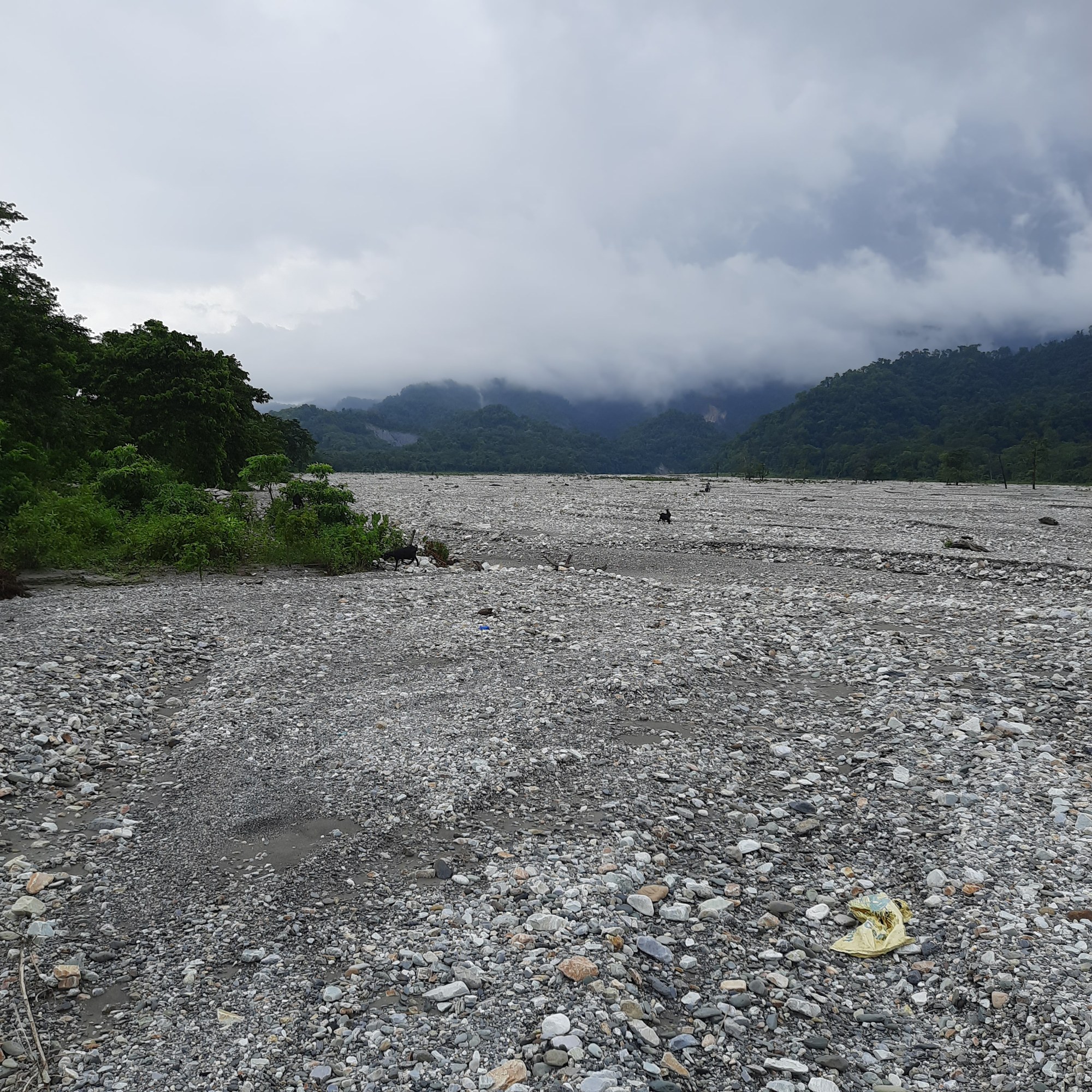
The Jayanti river in Buxa Tiger Reserve, West Bengal, 30 June 2023. Landscape context. Photo: Jprojit, via Wikimedia Commons (CC BY-SA 4.0). Source page: https://commons.wikimedia.org/wiki/File:Jayanti_river_at_Buxa_tiger_reserve_01.jpg
The programme is designed to proceed cautiously. Further releases will be made in phases only where scientifically justified, the ministry said, depending on habitat and prey, protection readiness, population viability, monitoring results and expert advice. Sixty-four eco-development and joint forest management committees have been drawn into the effort, with a focus on livelihoods, community dialogue and reducing conflict between people and wildlife.
The ministry was careful about what would count as success. "The measure of success will not be the number of tigers released," it said, "but the establishment, over time, of a healthy, free-ranging and self-sustaining tiger population supported by secure habitat, adequate prey, effective protection, ecological connectivity, scientific monitoring and meaningful participation of local communities." For now, a single tigress is walking the forests of Buxa, the first of what officials hope will be many.
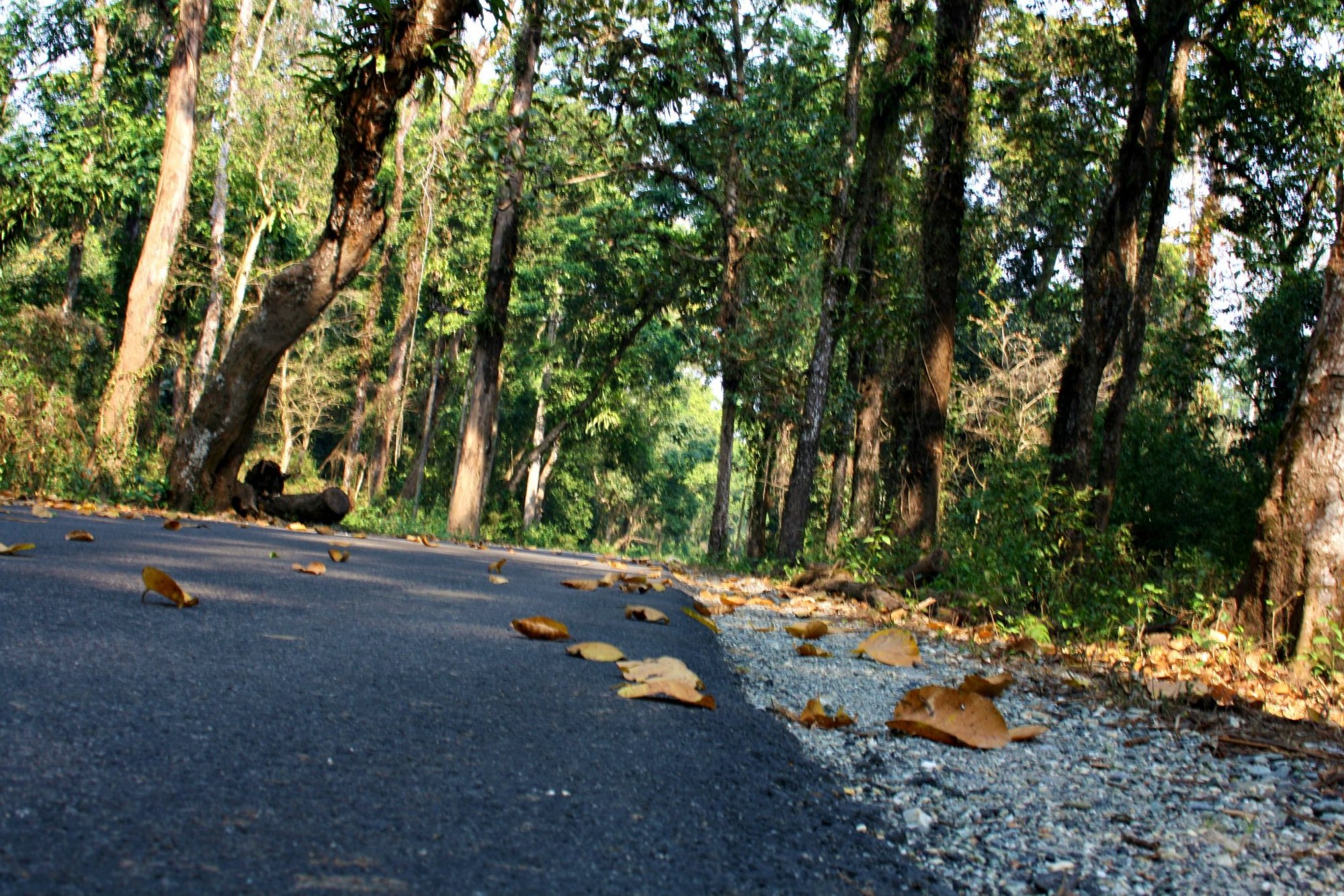
Inside Buxa Tiger Reserve, West Bengal, 13 February 2012. Habitat context. Photo: Kaustav Dutta, via Wikimedia Commons (CC BY-SA 4.0). Source page: https://commons.wikimedia.org/wiki/File:Buxa_Tiger_Reserve,_West_Bengal.jpg
The primary record is the Press Information Bureau statement of the Ministry of Environment, Forest and Climate Change of 2 October 2026 (https://www.pib.gov.in/PressReleasePage.aspx?PRID=2318110&lang=1®=3), which reproduces Mr. Yadav's social media post. Photographs of the release are not reproduced here; the images above are Wikimedia Commons files chosen for species and habitat context.
- environment
- conservation
- india
- asia
- wildlife
- tigers
- reintroduction
- rewilding
_female_3_crop.jpg)


