
Healthy Reef Sounds Draw Four to Fourteen Times More Larval Fish in Kāneʻohe Bay
In Kāneʻohe Bay, Oʻahu, Scripps and Hawaiʻi Institute of Marine Biology researchers found that nighttime playback of healthy reef soundscapes attracted four to fourteen times more settlement-stage fish larvae than silent controls across three spawning deployments in 2023 and 2024, according to a Scientific Reports study published 26 June 2026.
Just News Desk, Correspondent||5 min read
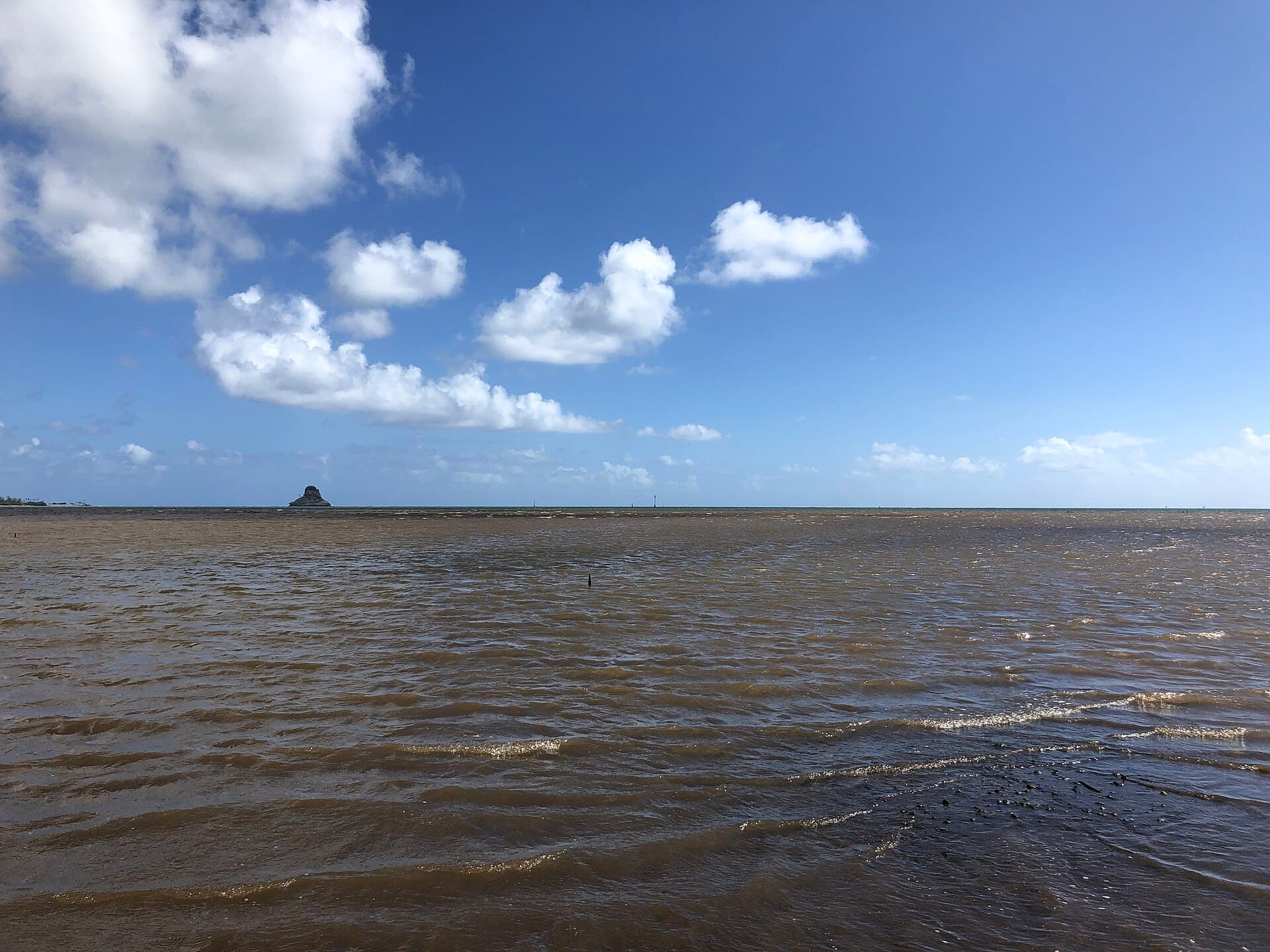
KĀNEʻOHE BAY, Hawaiʻi - On a sandy flat northwest of Moku o Loʻe Island, researchers broadcasting recordings of a healthy coral reef through an underwater speaker drew four to fourteen times more settlement-stage fish larvae than an identical silent control site, according to a peer-reviewed study in Scientific Reports published on 26 June 2026.
The work, led by Océane Boulais and Aaron Thode of the Scripps Institution of Oceanography at the University of California San Diego, with collaborators at the Hawaiʻi Institute of Marine Biology of the University of Hawaiʻi at Mānoa and the Applied Research Laboratory at the University of Hawaiʻi, tested acoustic enrichment across three spawning windows in August 2023 and June and July 2024. Treatment and control designations were swapped between deployments to reduce the chance that one patch of seabed simply attracted more fish.
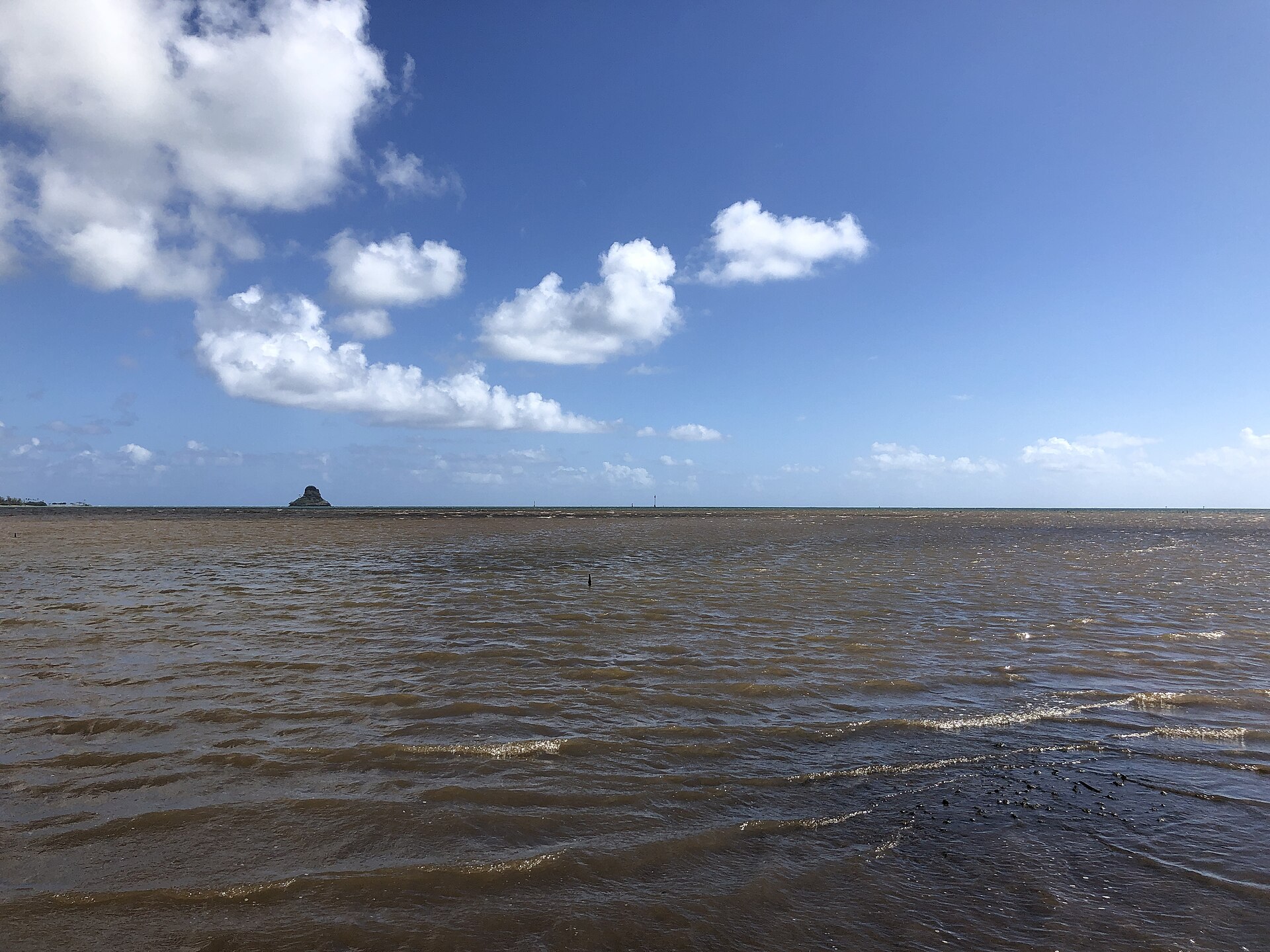
View northeast across Kāneʻohe Bay toward Mokoliʻi from Waiāhole Beach Park, Oʻahu, Hawaiʻi. Landscape context for the bay where the trials took place; not a photograph of the experimental speakers, cameras, or artificial reef modules. Photo: Famartin, via Wikimedia Commons (CC BY-SA 4.0). Source page: https://commons.wikimedia.org/wiki/File:2021-10-06_09_58_30_View_northeast_across_K%C4%81ne%CA%BBohe_Bay_towards_Mokoli%CA%BBi_(Chinaman%27s_Hat)_from_Wai%C4%81hole_Beach_Park_in_Waik%C4%81ne,_Oahu,_Hawaii.jpg
Acoustic enrichment is the underwater playback of ambient sound recorded from a healthy reef at a quieter or artificial site. Healthy reefs hum with snapping shrimp and fish choruses; degraded reefs are often quieter, and prior laboratory and field studies have shown that settlement-stage larvae can hear and orient toward those acoustic cues. In this experiment, a Lubell underwater speaker at the treatment site played dusk-to-dawn recordings collected in August 2022 from a vibrant reef about 300 meters from the test area, while an identical but silent speaker sat at the control site. Both sites rested on sand roughly four to five meters deep, about 15 meters from natural fringe reef, and held matching artificial habitat structures and monitoring gear.
Instead of daily diver surveys or light traps, the team relied on open-source autonomous cameras that took burst photographs from dawn to dusk for up to three weeks without servicing. Manual and semi-automated image review found that larval counts at both sites rose around the new moon, a familiar settlement rhythm, yet the active-speaker site consistently returned higher MaxN population proxies. After accounting for lunar phase in a zero-inflated Poisson model, the estimated acoustic-enrichment multiplier for mean MaxN ranged from about 4 to 14 across the three deployments, the authors reported. Mature fish appeared in similar numbers at both sites, a result the paper linked to adult foraging ranges that can span tens of meters, larger than the 42-to-65-meter gap between the paired sites.
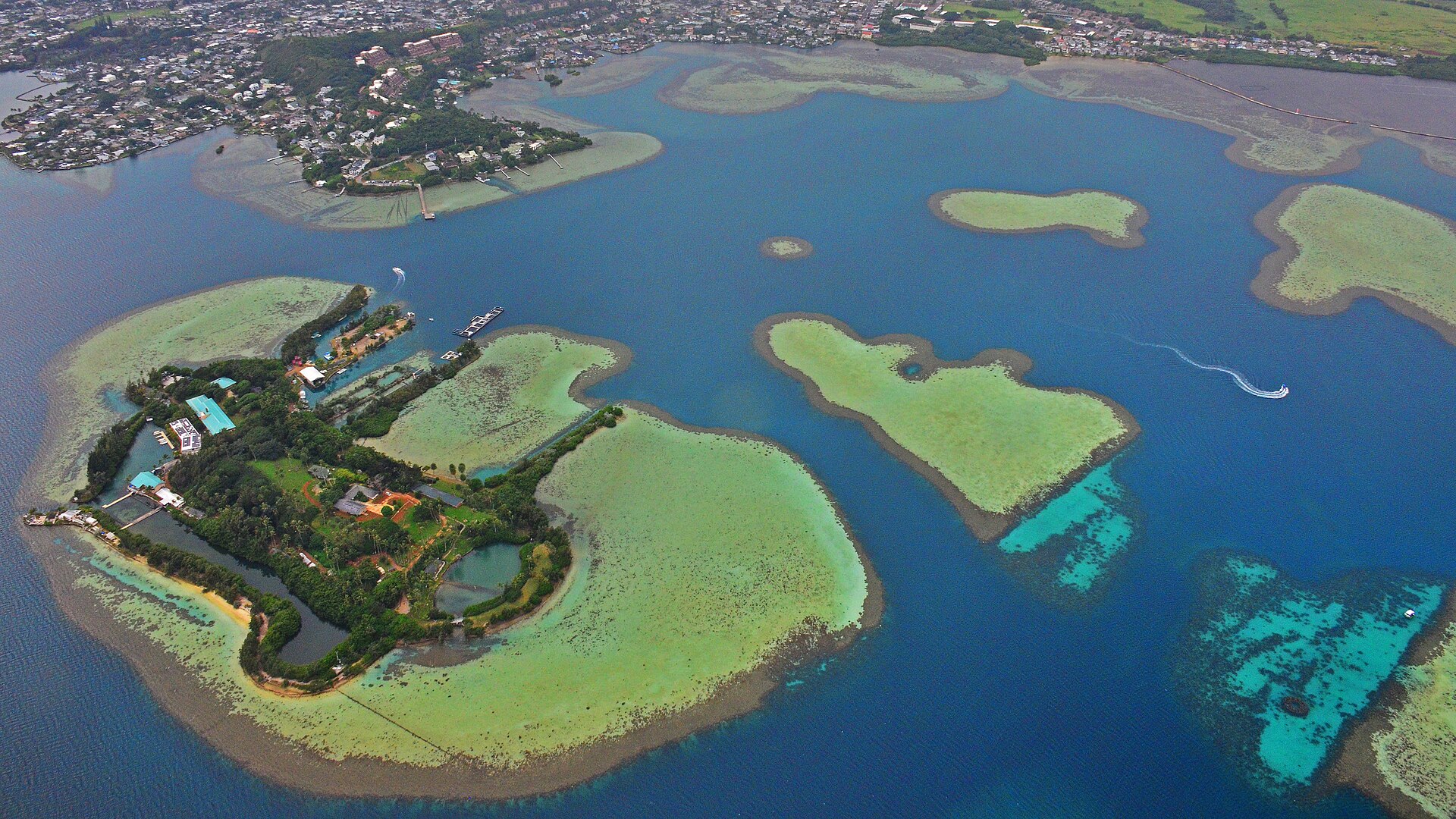
Moku o Loʻe, also called Coconut Island, in Kāneʻohe Bay, Oʻahu, near the Hawaiʻi Institute of Marine Biology field area described in the study. Illustrative location context; not a photograph of the sandy experimental flats or equipment. Photo: Edmund Garman, via Wikimedia Commons (CC BY 2.0). Source page: https://commons.wikimedia.org/wiki/File:Coconut_Island_Oahu_Hawaii_(16273972225).jpg
The Hawaiian damselfish Dascyllus albisella and snapping shrimp were among the organisms that dominated the healthy-reef recordings used for playback, the paper said. Cameras at both sites also documented ringtail surgeonfish, yellowfin surgeonfish, green sea turtles and other bay fauna. The authors stressed that attraction was not the same as lasting recruitment: larvae generally lingered only a few days after the new-moon peak, underscoring the need for suitable small-scale shelter if acoustic enrichment is to translate into longer-term residency.
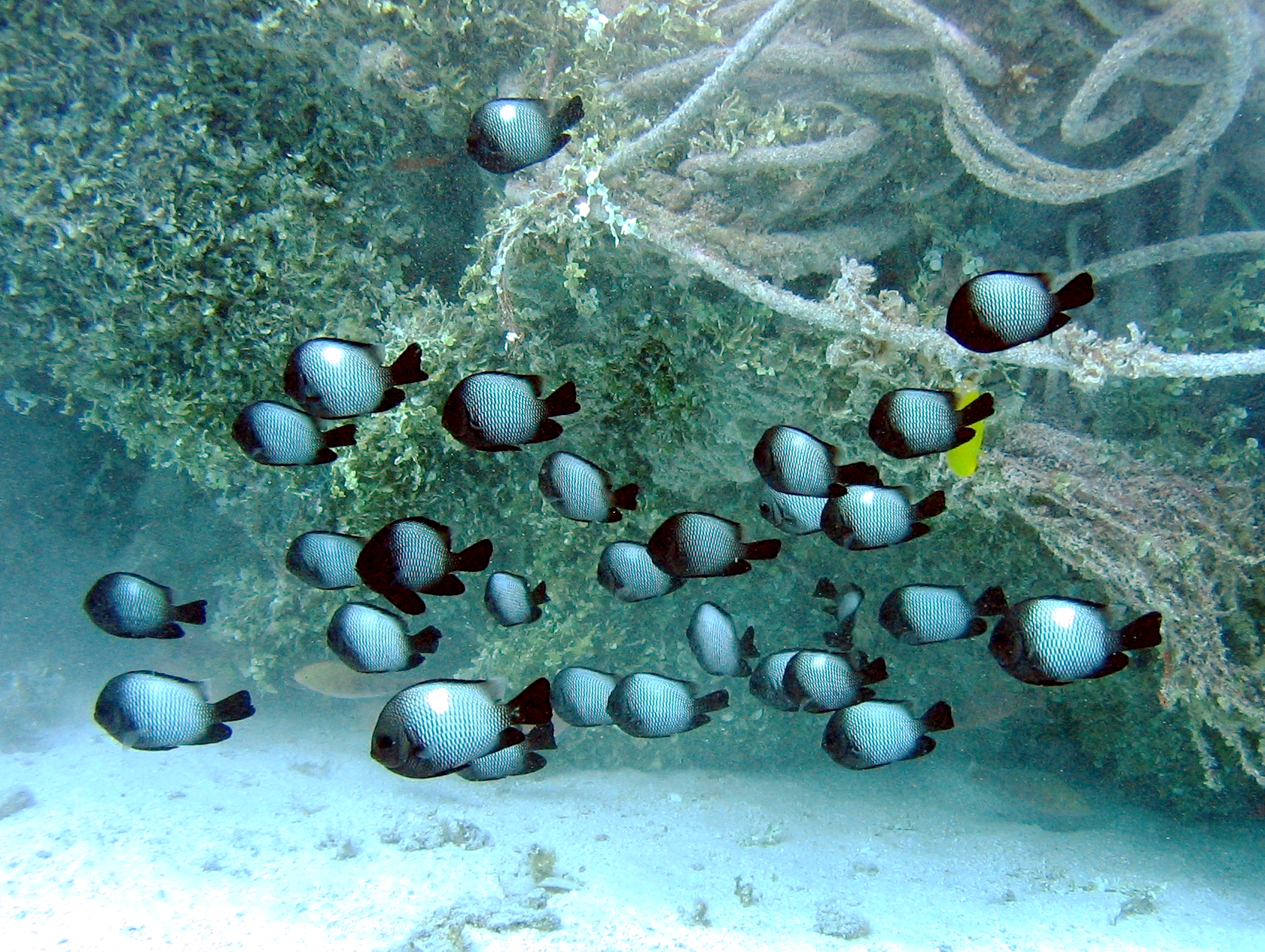
Hawaiian damselfish (Dascyllus albisella), a species whose calls helped shape the healthy-reef soundscape broadcast in the trials, according to the Scientific Reports paper. Species illustration for identification; not a field photograph from the 2023–2024 acoustic-enrichment deployments. Photo: Dr. Dwayne Meadows, NOAA/NMFS/OPR, via Wikimedia Commons (public domain). Source page: https://commons.wikimedia.org/wiki/File:Dascyllus_albisella_1.jpg
Funding came from a Defense Advanced Research Projects Agency award. The study builds on earlier Kāneʻohe Bay demonstrations and on a wider literature showing that reef soundscapes can guide larval fishes. Point-source speakers fade into background noise within tens of meters, the authors noted, so arrays that better mimic a spatially extended reef soundscape may be needed before managers treat the method as a large-scale restoration tool. Autonomous cameras, despite hardware failures in one deployment, offered a less invasive way to watch larval presence over full lunar cycles without constant SCUBA support.
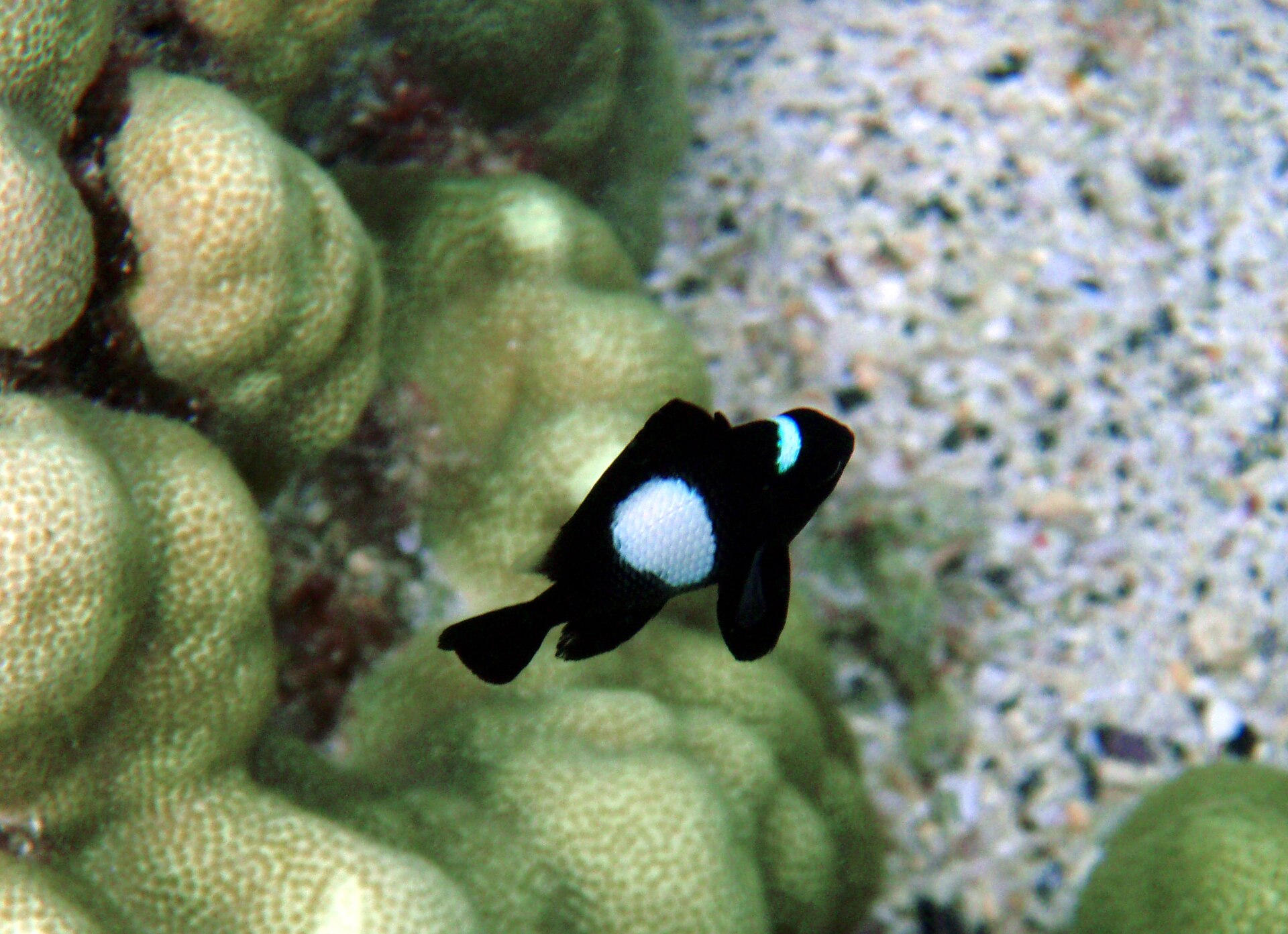
A juvenile Hawaiian damselfish (Dascyllus albisella) swimming near Kona, Hawaiʻi, illustrating a settlement-stage reef fish of the type acoustic enrichment seeks to attract. Not a photograph from the Kāneʻohe Bay experimental cameras. Photo: Brocken Inaglory, via Wikimedia Commons (CC BY-SA 3.0). Source page: https://commons.wikimedia.org/wiki/File:Dascyllus_albisella_juvenile.jpg
The Times of India and other outlets summarized the findings in late September 2026 after the journal publication. The primary record remains the open-access Scientific Reports article (DOI 10.1038/s41598-026-57857-9), which reports methods, statistics and limitations in full. Playing a healthier soundscape will not rebuild a reef by itself. In Kāneʻohe Bay, it did show, under controlled conditions and with passive cameras watching, that settlement-stage larvae still answer the call of a living reef.
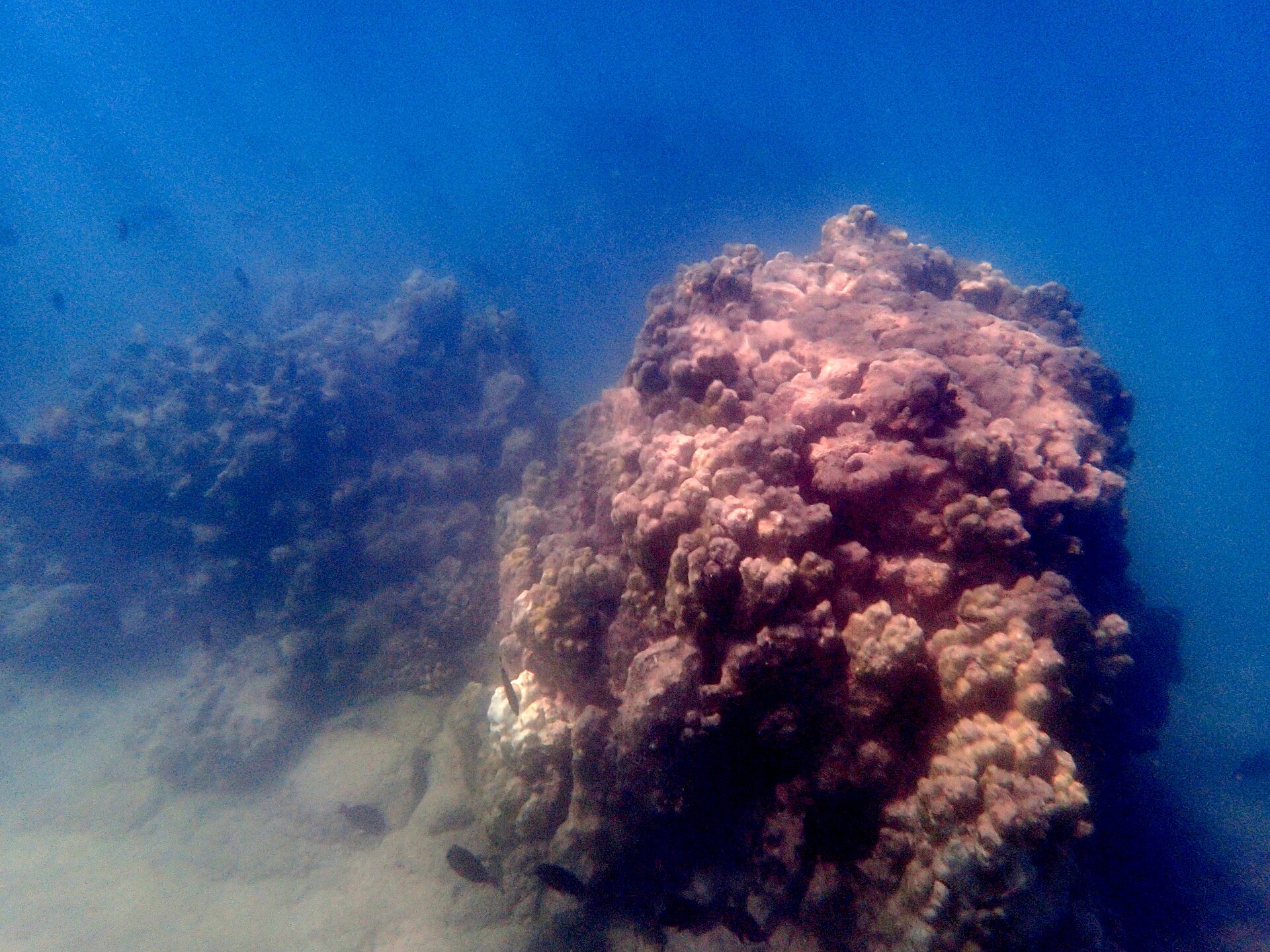
Coral reef habitat on Hawaiʻi's Big Island, illustrative of Hawaiian shallow-reef structure and the kinds of sound-producing communities that generate enrichment playbacks. Not Kāneʻohe Bay and not the experimental site. Photo: incidencematrix, via Wikimedia Commons (CC BY 2.0). Source page: https://commons.wikimedia.org/wiki/File:Big_Island_Reef_(23757740770).jpg
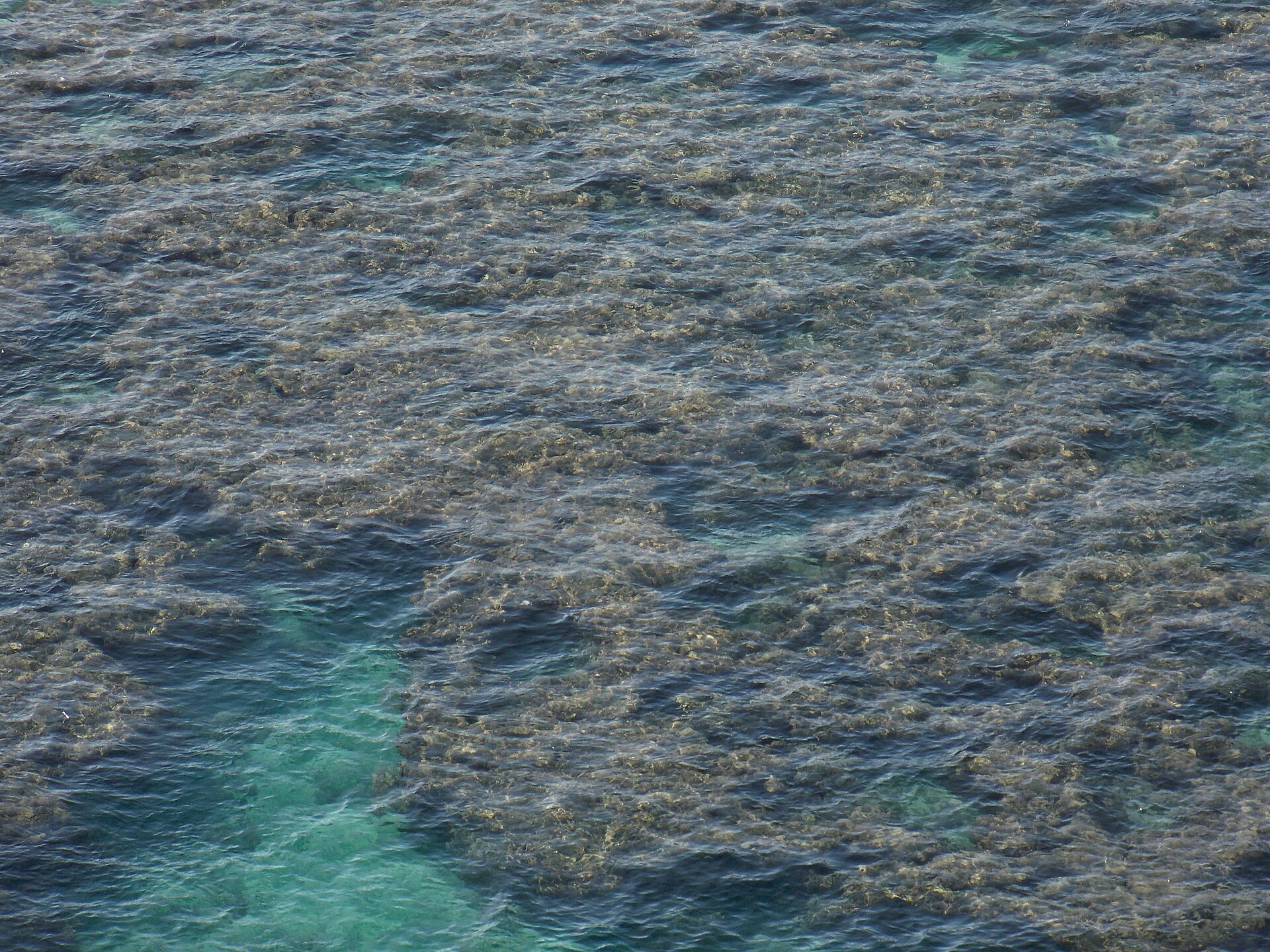
Part of the coral reef at Hanauma Bay on the southeast coast of Oʻahu, Hawaiʻi. Habitat context for Oʻahu reef systems; not the Kāneʻohe Bay experimental flats. Photo: Farragutful, via Wikimedia Commons (CC BY-SA 4.0). Source page: https://commons.wikimedia.org/wiki/File:2016_Hanauma_Bay_05.JPG
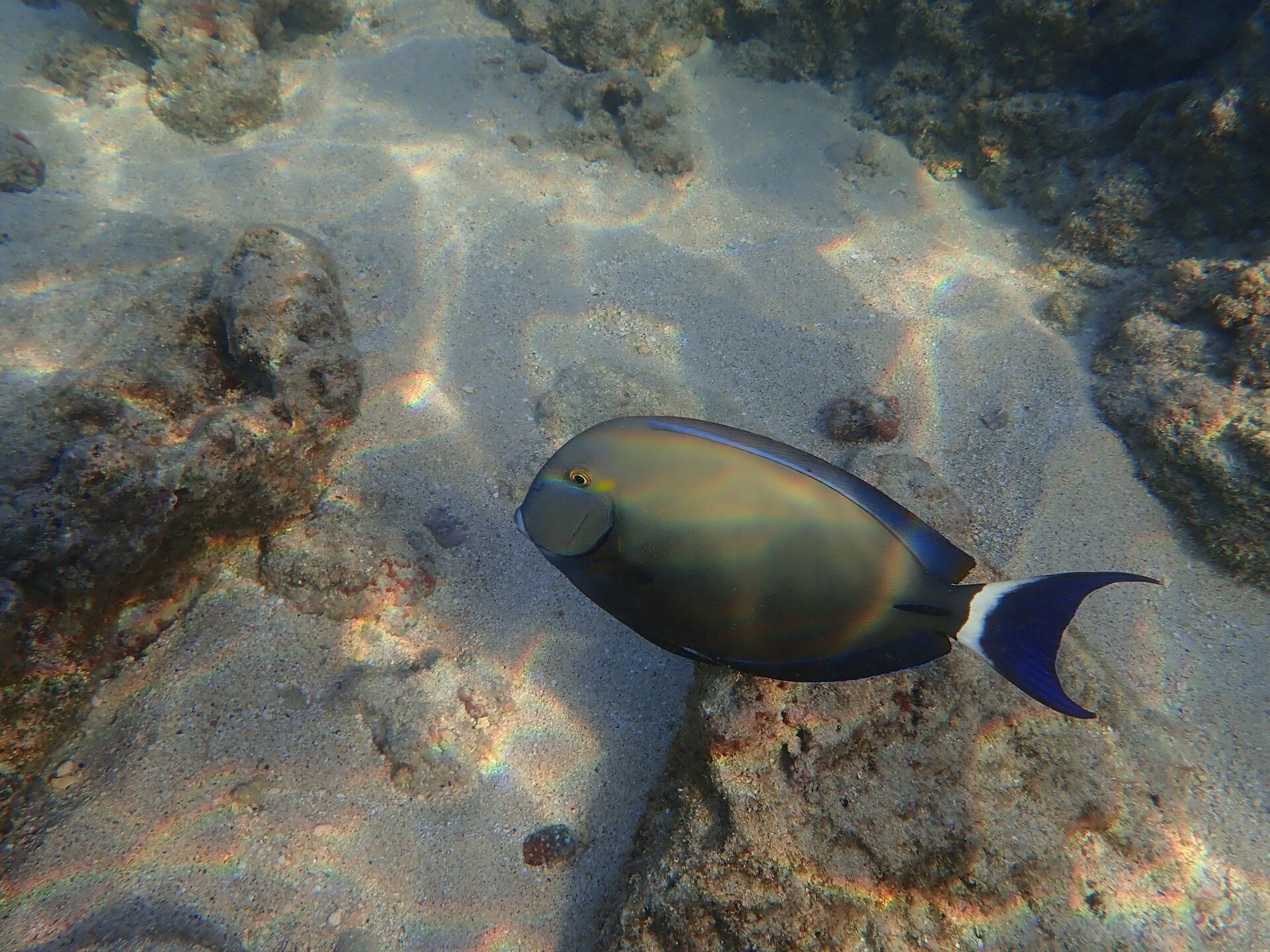
Ringtail surgeonfish (Acanthurus blochii) at Hanauma Bay Beach Park, Honolulu County, Hawaiʻi. The Scientific Reports paper listed this species among mature fishes frequently sighted by autonomous cameras at both treatment and control sites in Kāneʻohe Bay; this image is not from those cameras. Photo: humanbyweight, via Wikimedia Commons (CC BY-SA 4.0). Source page: https://commons.wikimedia.org/wiki/File:Acanthurus_blochii_Honolulu.jpg
- environment
- conservation
- hawaii
- coral-reefs
- marine-science
- ocean
- restoration
- fish
_from_Wai%C4%81hole_Beach_Park_in_Waik%C4%81ne,_Oahu,_Hawaii.jpg)
.jpg)


.jpg)

