
Aldabra's Giant Tortoises Number About 180,000, the Highest Count Ever Recorded
A survey led by the Seychelles Islands Foundation and the University of Exeter puts the Aldabra giant tortoise population on Aldabra Atoll at about 180,000, the highest figure ever recorded for the species, which was reduced to fewer than 1,000 animals in the 19th century.
Just News Desk, Correspondent||5 min read
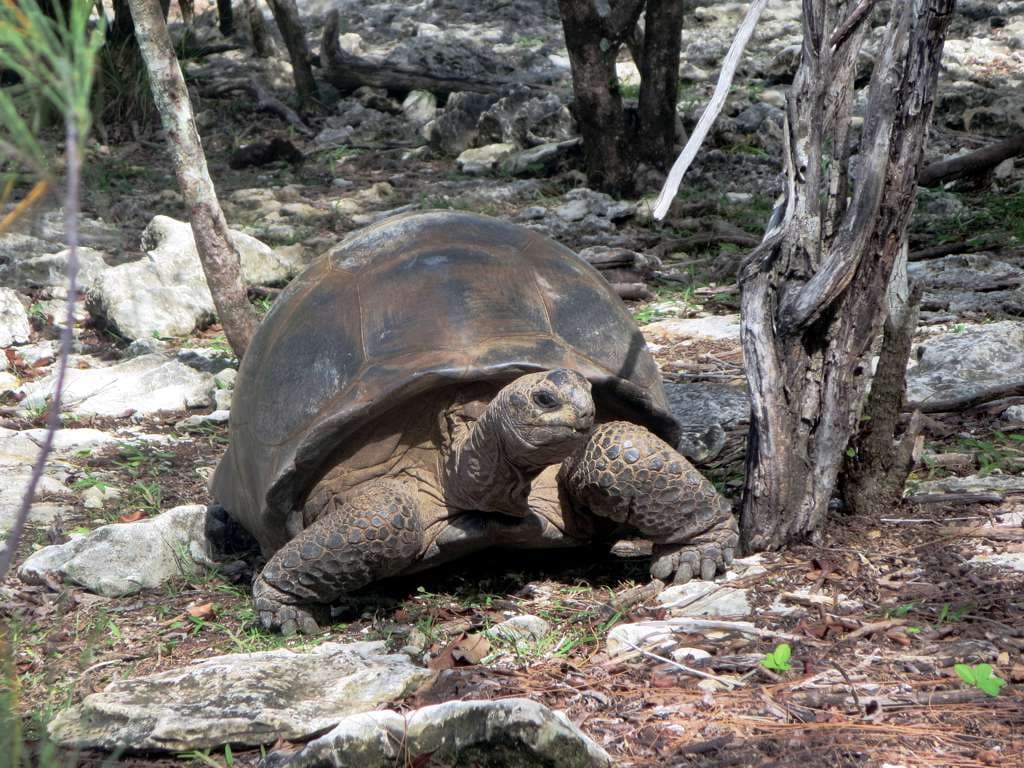
ALDABRA ATOLL, Seychelles - About 180,000 giant tortoises roam this remote coral atoll in the Indian Ocean, the highest figure ever recorded for the species, according to a survey led by the Seychelles Islands Foundation and the University of Exeter. The estimate, published in the journal Ecology and Evolution and announced by the university on 7 October, describes a population that is thriving and stable, a long way from the 19th century, when heavy exploitation left fewer than 1,000 of the animals alive.
The new figure comes from five years of tortoise counts collected by the foundation's research staff on the atoll between 2018 and 2022. According to the university, it is the first rigorous, atoll-wide estimate of the population and the first update since the widely cited figure of 100,000 tortoises from the late 1990s. The study's best estimate was almost 183,000 adult and sub-adult tortoises, a number that the university noted exceeds the human population of the Seychelles.
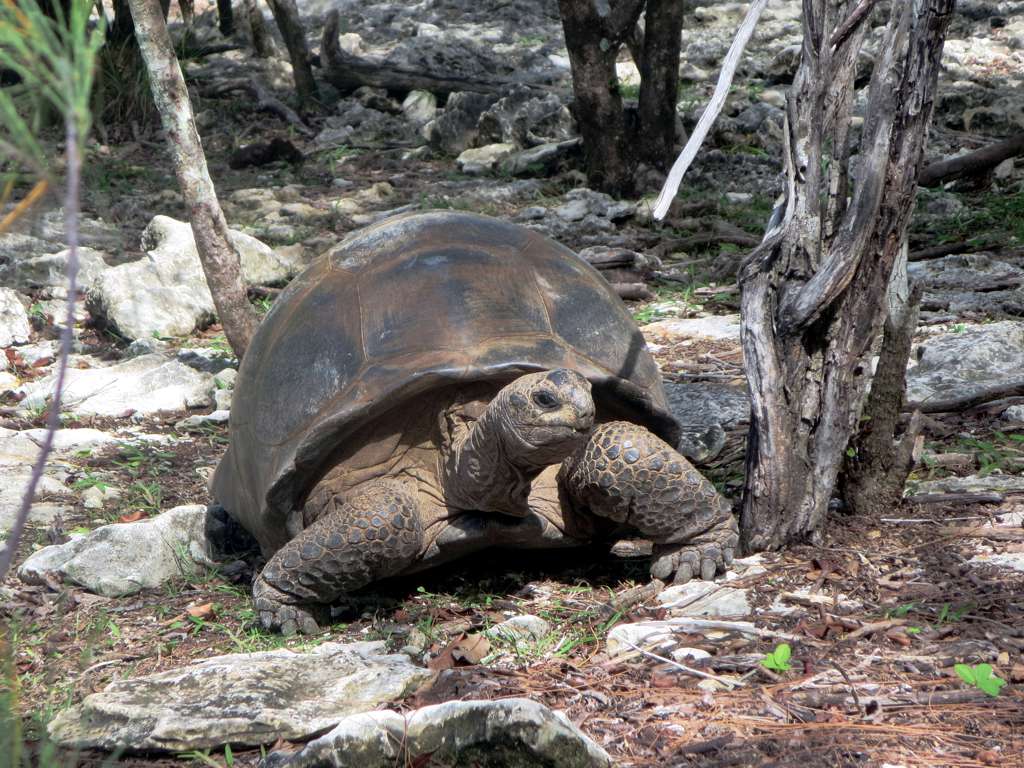
An Aldabra giant tortoise (Aldabrachelys gigantea) on Aldabra Atoll, Seychelles, photographed 27 December 2016. Photo: David Stanley, via Flickr and Wikimedia Commons (CC BY 2.0). Source page: https://commons.wikimedia.org/wiki/File:Giant_Tortoise_(32862290160).jpg
Aldabra is one of only two places in the world where giant tortoises are found in the wild, the university said; the other, with a much smaller population, is the Galapagos. The atoll became a strict nature reserve in 1981 and a UNESCO World Heritage site in 1982, protections that the university credited with aiding a recovery it called one of the greatest conservation success stories of the Indian Ocean.
"The monitoring data in this study were collected by SIF staff living and working on the atoll, year after year," said Dr. Frauke Fleischer-Dogley, chief executive of the Seychelles Islands Foundation. "More than 180,000 giant tortoises roaming freely on our atoll is proof of what long-term commitment to conservation can achieve. This is wonderful news for Seychelles, for the world, and for everyone who has worked to protect Aldabra."
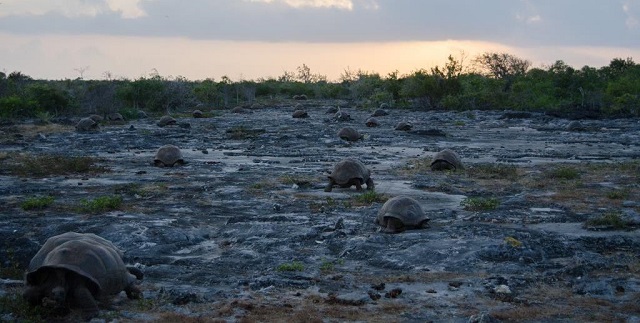
Aldabra giant tortoises on Aldabra Atoll, Seychelles, photographed 20 July 2017. Photo: Seychelles Islands Foundation (SIF), via Wikimedia Commons (CC BY 4.0). Source page: https://commons.wikimedia.org/wiki/File:Aldabra_giant_tortoises.jpg
The researchers were careful about what the number does and does not show. The headline figure, they cautioned, does not mean the population has nearly doubled since 1999. Earlier surveys did not account for tortoises that were present but unseen, hidden in dense scrub or shade. The new study used a statistical technique known as Bayesian hierarchical distance sampling, which corrects for missed animals and for differences in visibility across the atoll's habitats. Previous figures were therefore probably underestimates, the study suggests, while still pointing to a population that has genuinely grown.
"By modelling what we didn't see, as well as what we did, we've produced the most reliable baseline yet for this iconic Seychelles species, establishing a benchmark we can use to track the population for decades to come," said Dr. Nancy Bunbury, one of the study's co-authors.
The tortoises were found at their highest densities in Aldabra's grasslands, known as "tortoise turf," followed by open exposed surfaces and open mixed scrub. They were harder to detect in dense scrub, mangrove and Pemphis habitats, where the new modelling helps correct for reduced visibility.
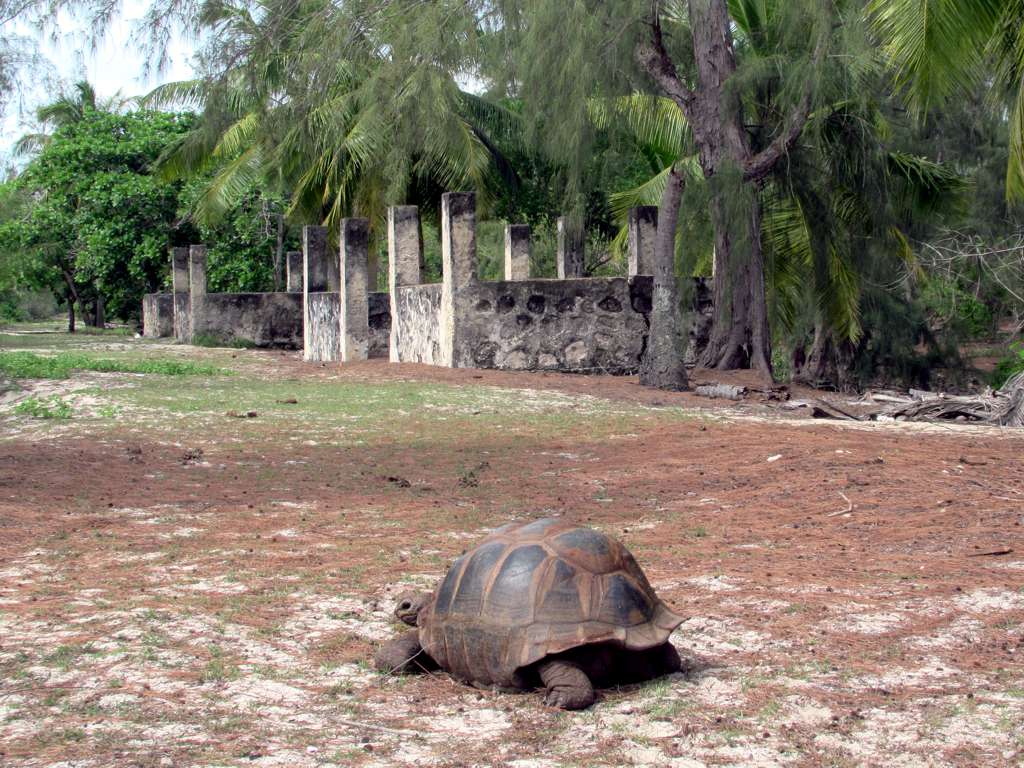
A giant tortoise moves toward the ruins of the old settlement on Picard Island, Aldabra Atoll, photographed 28 December 2016. Photo: David Stanley, via Flickr and Wikimedia Commons (CC BY 2.0). Source page: https://commons.wikimedia.org/wiki/File:Tortoise_at_Old_Settlement_(32819279310).jpg
The authors also warned that vigilance remains essential. Aldabra's climate is changing, with longer and more frequent droughts predicted to reduce the shade and food available to tortoises, and rising sea levels threaten low-lying parts of the atoll. Feral goats, which devastated the atoll's vegetation, were eradicated in 2012, but feral cats and black rats still prey on tortoise eggs and hatchlings. A planned eradication of those remaining invasive mammals, the authors said, could lift the last barriers to further growth of the population and help it withstand future climate pressures.
"These results are great news for the tortoises and testament to the fantastic work done in the field," said Dr. Dave Hudson, a postdoctoral research associate at the University of Exeter's Cornwall campus who helped develop the statistical modelling framework. "Hopefully we have provided the conservation managers the evidence they need to track future change and act early as the tortoises face increasing pressures from climate change, drought and invasive species."
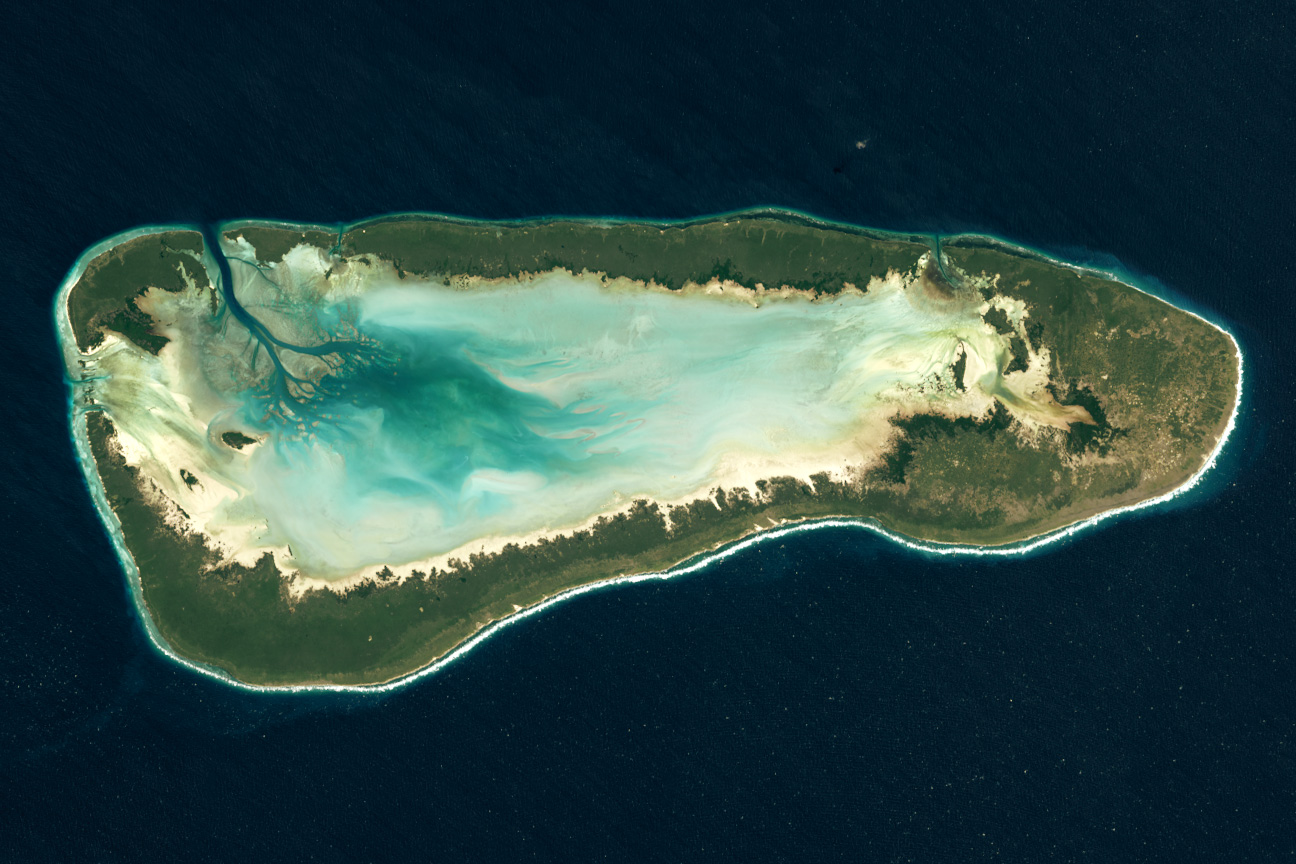
Aldabra Atoll in the Indian Ocean, one of the largest raised coral reefs in the world, seen in Landsat imagery published 24 June 2022. Image: NASA Earth Observatory image by Wanmei Liang, using Landsat data from the U.S. Geological Survey, via Wikimedia Commons (public domain). Source page: https://commons.wikimedia.org/wiki/File:An_Outpost_for_Evolution_at_Aldabra_Atoll.jpg
The primary account is the University of Exeter's 7 October 2026 news release, "New study reports largest-ever population estimate for Seychelles' giant tortoises" (https://news.exeter.ac.uk/faculty-of-environment-science-and-economy/ecology-and-conservation/new-study-reports-largest-ever-population-estimate-for-seychelles-giant-tortoises/). The paper, "Inferring the Abundance of an Island Megaherbivore From Semi-Structured Distance Sampling," by Lara B. Hillyard and colleagues, appears in Ecology and Evolution (https://doi.org/10.1002/ece3.74282). Photographs supplied with the university's release are not reproduced here; the images above are openly licensed files on Wikimedia Commons, captioned for what they show.
- environment
- conservation
- wildlife
- seychelles
- tortoises
- indian-ocean
.jpg)

.jpg)
