
London Zoo Breeds Critically Endangered Afia Birago's Puddle Frogs for the First Time
Fifteen Afia Birago's puddle frogs, a critically endangered species known from only two pools in Ghana's Atewa Hills, have been born at London Zoo, the first captive births of the species anywhere, according to the Zoological Society of London.
Just News Desk, Correspondent||4 min read
LONDON - Fifteen Afia Birago's puddle frogs have been born at London Zoo, the first of their species born under human care anywhere in the world, according to the Zoological Society of London, which announced the births on 13 October. The froglets, each about five millimeters long, are the latest step in an emergency programme with Ghanaian partners to keep a creature that survives in only two forest pools from vanishing.
Afia Birago's puddle frog (Phrynobatrachus afiabirago) was described as a new species in 2018. ZSL says it is now known only from two perennial pools in Ghana's Atewa Hills Forest Reserve, a habitat under pressure from mining. Twenty adult frogs were brought to London in September 2025 with Herp Conservation Ghana and the CSIR-Forestry Research Institute of Ghana so that keepers could develop care and breeding methods while there was still time.
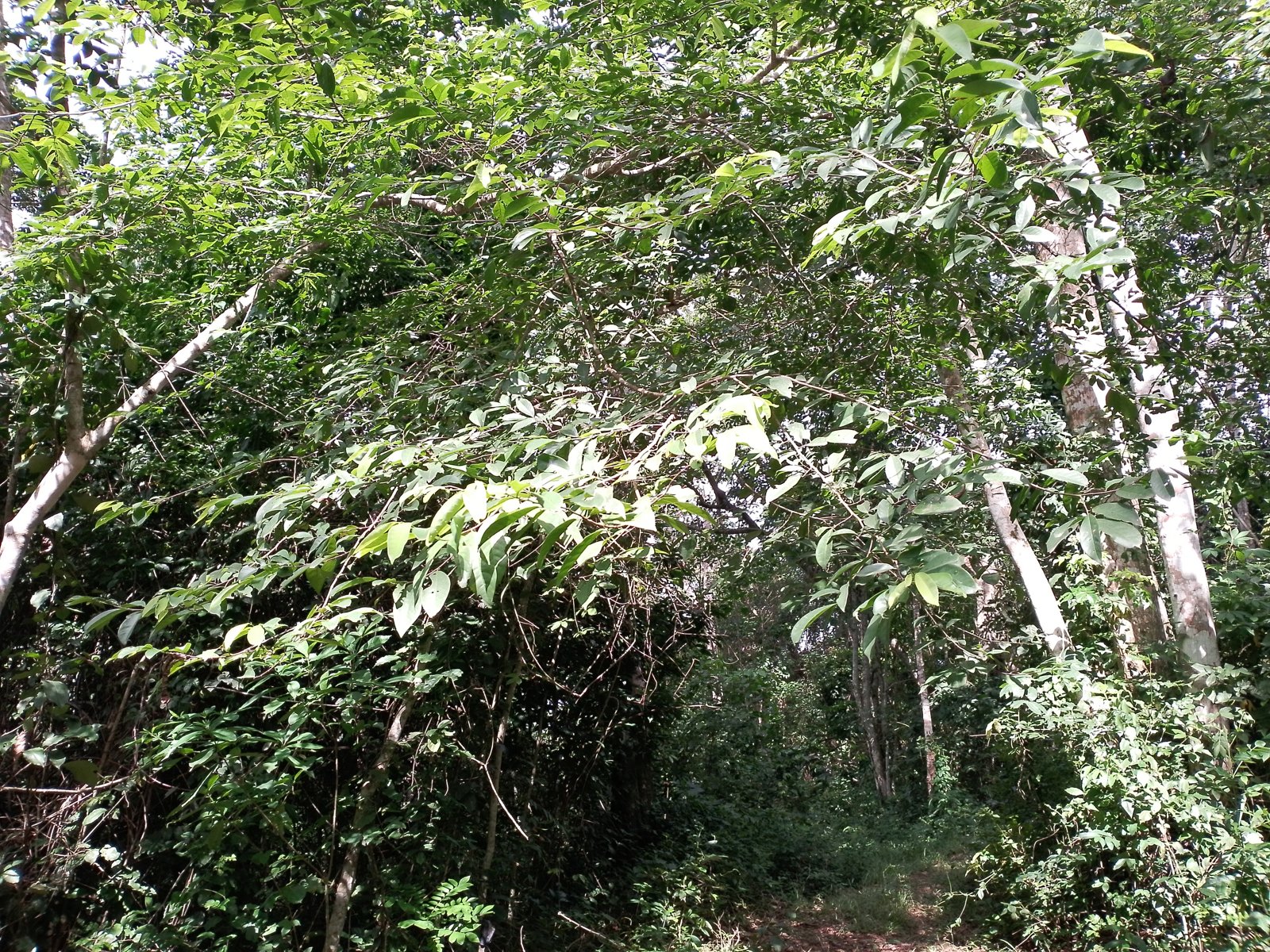
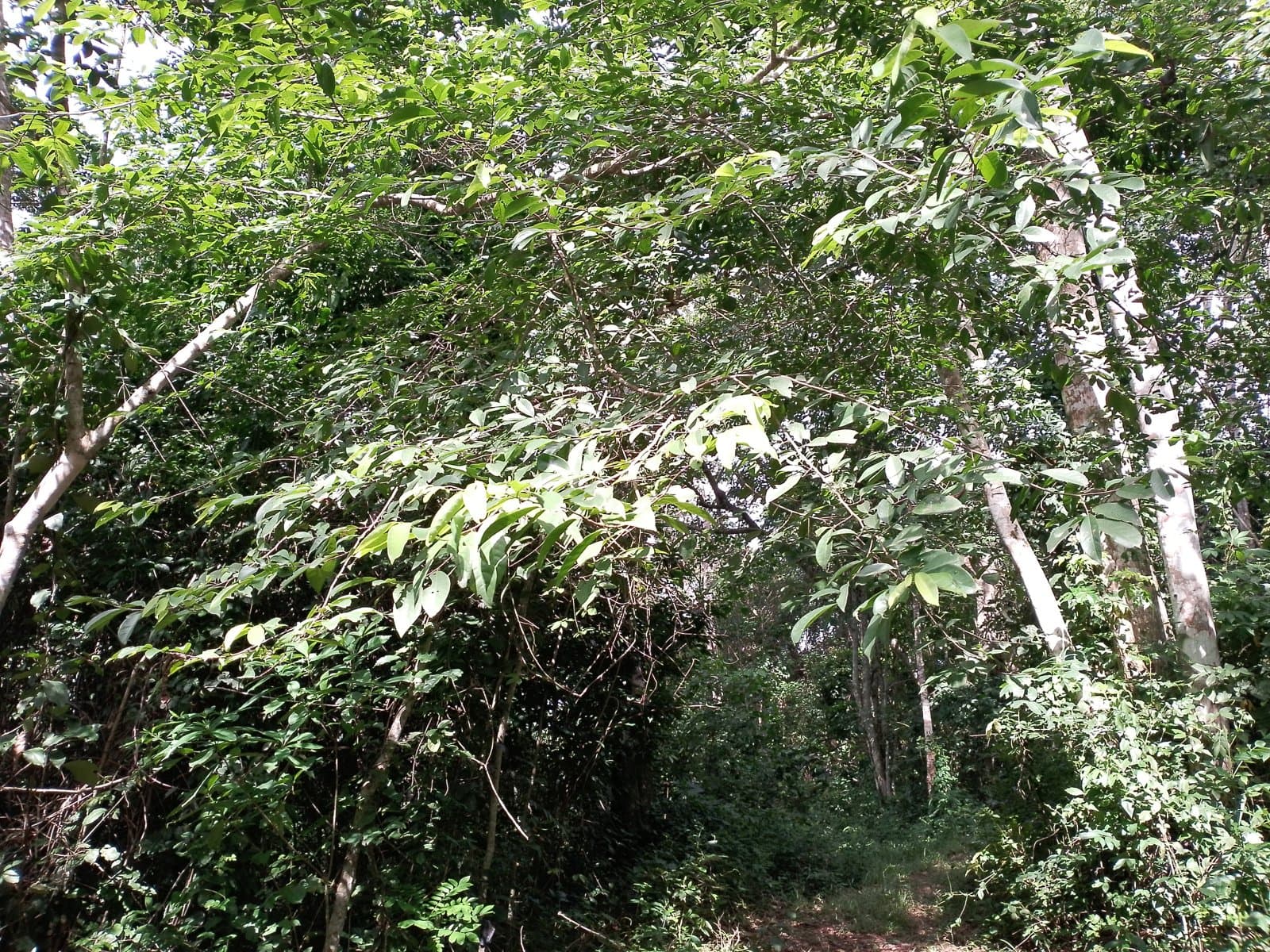
The Atewa Range Forest in Ghana, the only known home of Afia Birago's puddle frog, photographed on 8 June 2023. The species survives in two perennial pools in the reserve, ZSL says. Photo: Popezmens, via Wikimedia Commons (CC BY-SA 4.0). Source page: https://commons.wikimedia.org/wiki/File:ATEWA_RANGE_FOREST_(national_biodiversity_park).jpg
"These 15 frogs are the first Afia Birago's puddle frogs born as part of our emergency conservation programme for the species," Ben Tapley, ZSL's curator of reptiles and amphibians, said in the London Zoo statement. "They may be tiny enough to sit on your fingertip, but their arrival represents a huge step forward for an amphibian facing an uncertain future."
Fully grown, the frogs weigh less than 1.75 grams. When the adults arrived, ZSL amphibian keeper Unnar Aevarsson said, almost nothing was known about how to keep them. The team has since built breeding protocols that are being shared with Ghana's breeding centre in Kumasi, which Mr. Aevarsson helped establish before the frogs' move to London. That facility, ZSL says, is the first dedicated to amphibian conservation in West Africa.
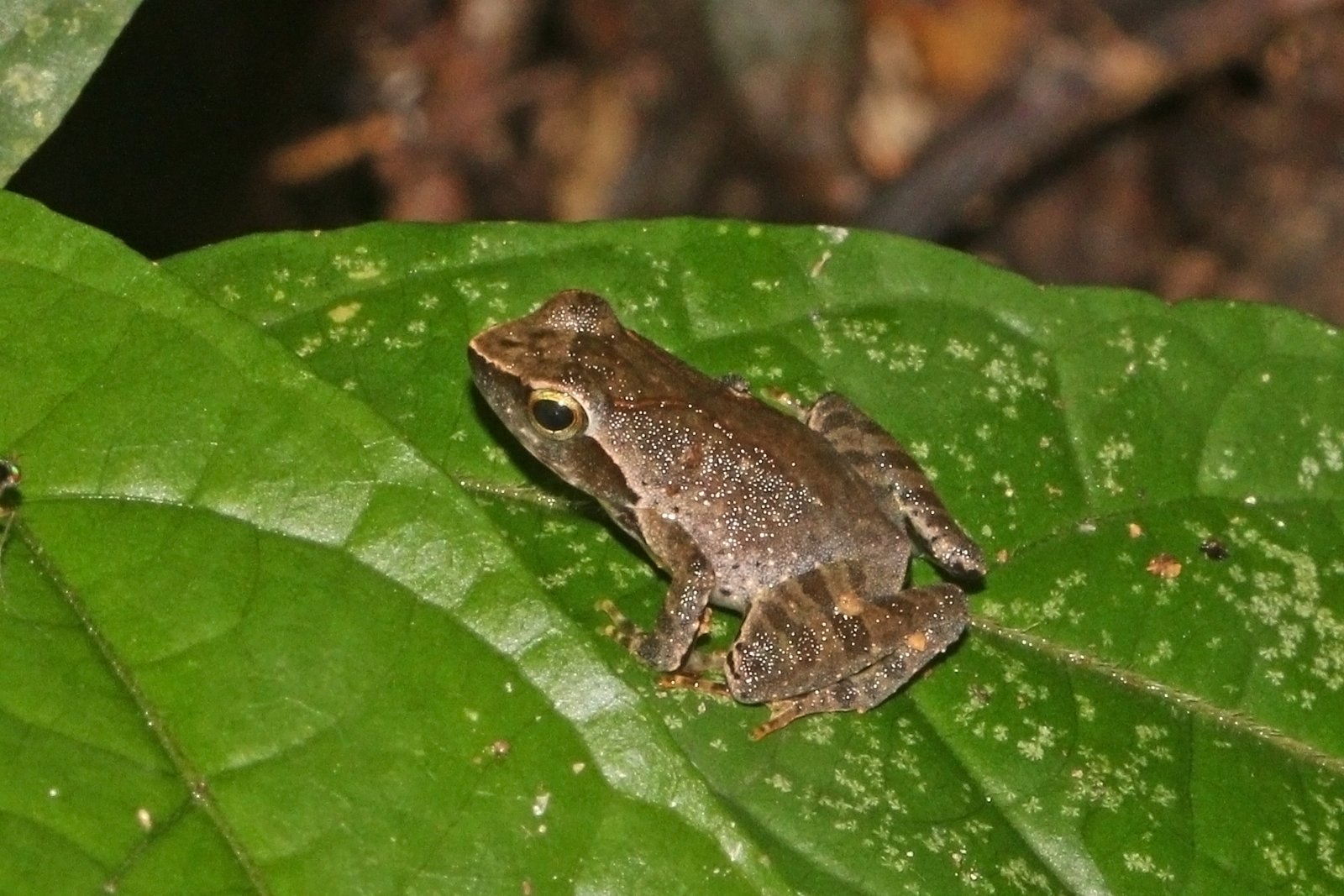
A coast river frog (Phrynobatrachus plicatus), a related West African puddle frog of the same genus, photographed in Kakum National Park, Ghana, on 10 April 2017. No freely licensed photograph of P. afiabirago was available; this image illustrates the genus only. Photo: Charles J. Sharp, via Wikimedia Commons (CC BY-SA 4.0). Source page: https://commons.wikimedia.org/wiki/File:Coast_river_frog_(Phrynobatrachus_plicatus).jpg
"These 5mm long froglets are cause for celebration, but our work to save Afia Birago's puddle frog has only just begun," Mr. Aevarsson said. "The wider goal now is for our partners to establish sustainable conservation populations in Ghana that can support their recovery in the wild."
Caleb Ofori-Boateng, a Ghanaian conservationist and ZSL EDGE Regional Project Manager who helped describe the species and named it after his mother, said: "I named this frog after my mother so that her legacy would live on. Thanks to this breeding programme, it will. Her name will be linked to a species we saved, not one we lost."
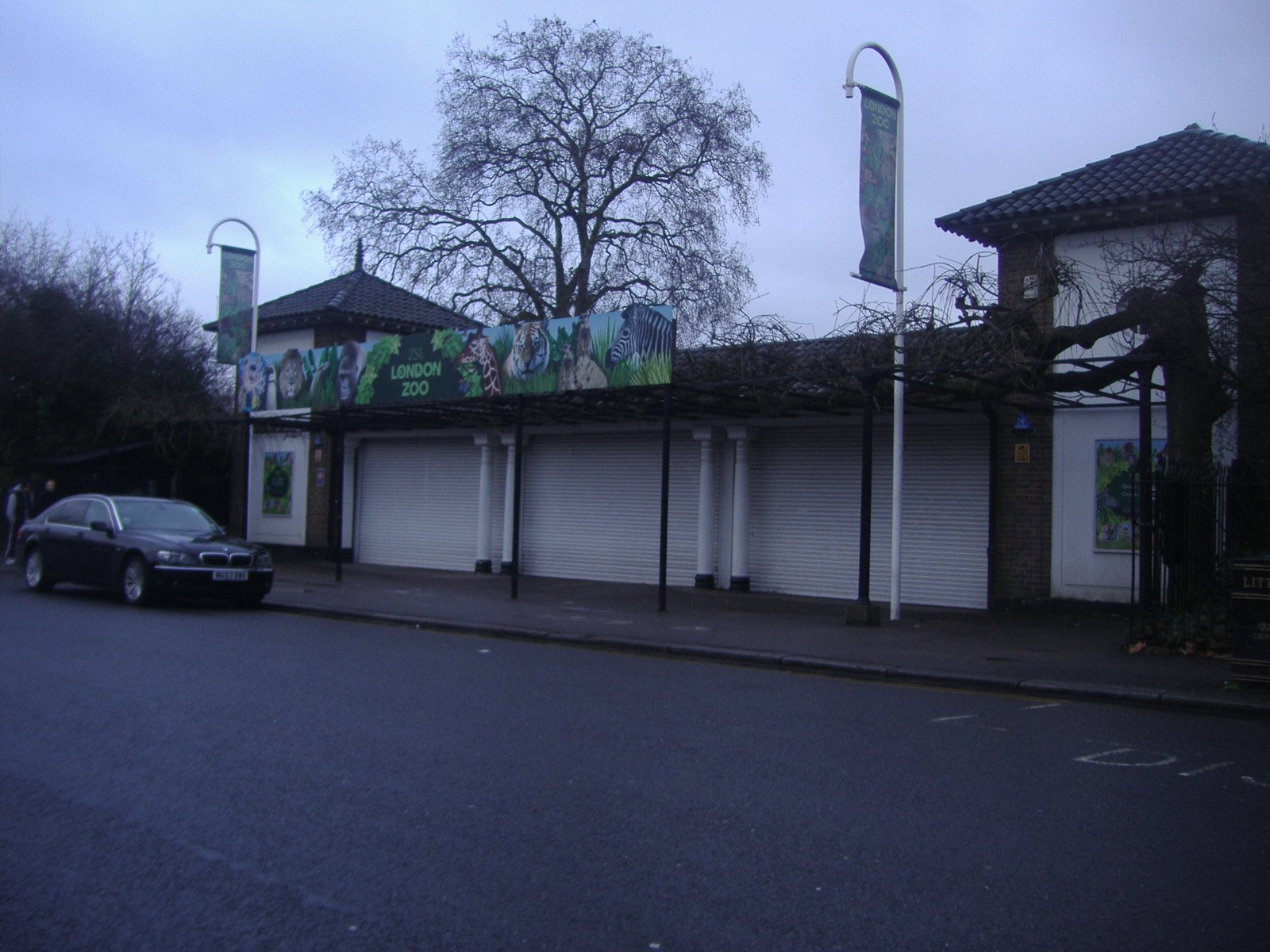
The entrance to London Zoo in Regent's Park, photographed on 15 February 2011. The Afia Birago's puddle frogs are cared for in the zoo's Secret Life of Reptiles and Amphibians exhibit. Photo: David Howard, via geograph.org.uk and Wikimedia Commons (CC BY-SA 2.0). Source page: https://commons.wikimedia.org/wiki/File:Entrance_to_London_Zoo_-_geograph.org.uk_-_2271535.jpg
ZSL EDGE Fellow Anthony Churcher, of Herp Conservation Ghana, is surveying private land around the Atewa Hills that might one day support releases of frogs bred in Ghana. The births follow London Zoo's success in November 2025 breeding another Atewa endemic, the Atewa slippery frog (Conraua sagyimase), also for the first time in captivity.
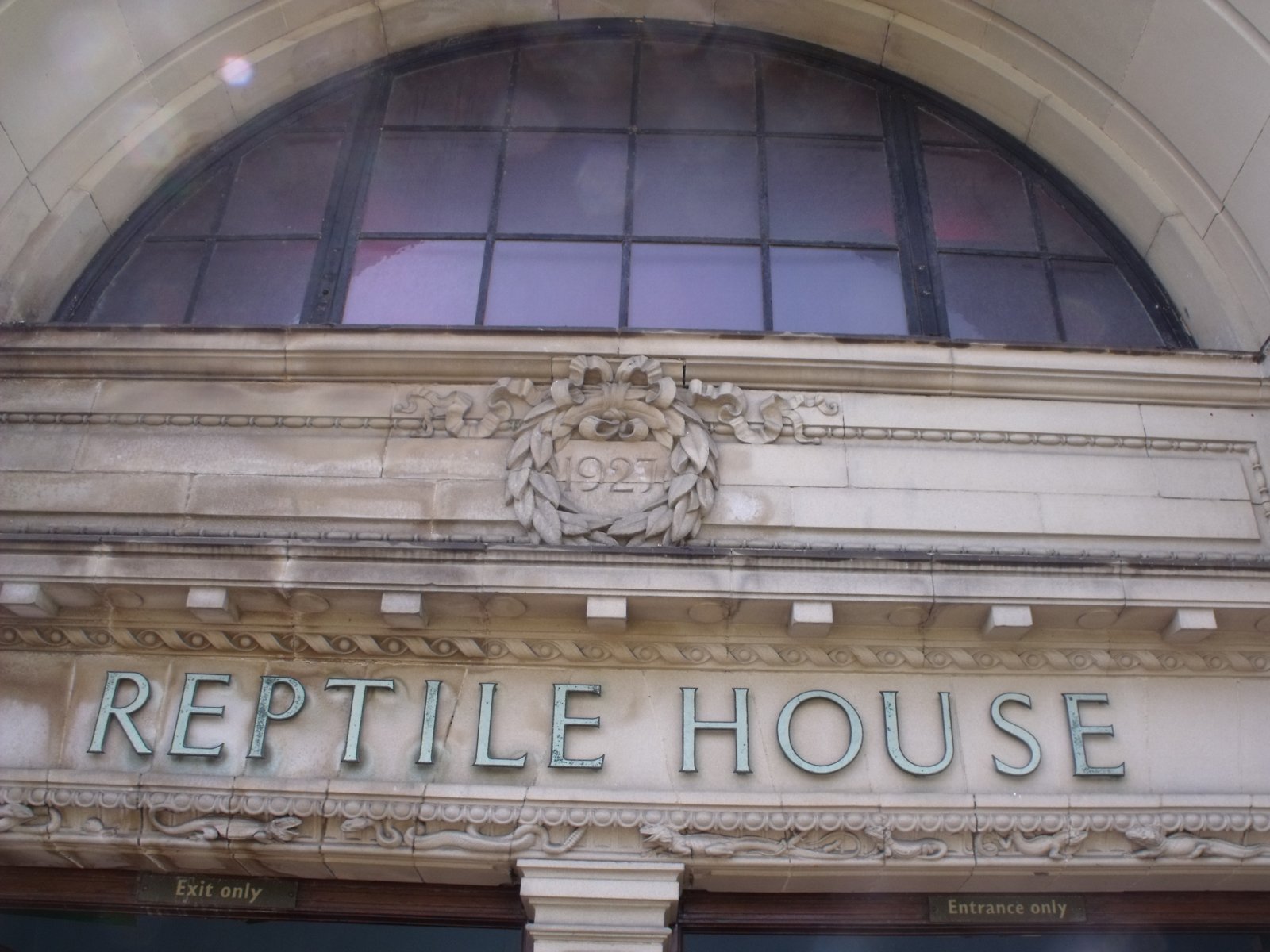
The Reptile House sign at London Zoo, photographed on 5 June 2010. Visitors can see the Afia Birago's puddle frog conservation programme in the Secret Life of Reptiles and Amphibians habitat. Photo: Elliott Brown, via Wikimedia Commons (CC BY 2.0). Source page: https://commons.wikimedia.org/wiki/File:London_Zoo_-_Reptile_House_-_sign-4682476825.jpg
The primary account is London Zoo's 13 October 2026 announcement, "Rare froglets born at London Zoo in a world first" (https://www.londonzoo.org/zoo-stories/news/rare-froglets-born-london-zoo-world-first). Background on the 2025 transfer and Kumasi facility is from ZSL's 15 May 2026 release (https://www.zsl.org/news-and-events/news/london-zoo-leaps-action-save-rare-ghanaian-frogs-extinction). Independent reporting by Adriana Elgueta for the BBC on 15 October 2026 (https://www.bbc.co.uk/news/articles/cr2keqxggx0wo) confirms the count, size and quotes. ZSL photographs are not reproduced here; the images above are freely licensed files on Wikimedia Commons, captioned for what they actually show.
- environment
- conservation
- amphibians
- ghana
- london-zoo
- zsl
- wildlife
.jpg)
.jpg)

