Western Bluebirds Return to Vancouver Island After Decades Declared Extinct
A cross-border reintroduction effort documented a record 30 nesting adults and 126 young in the Cowichan Valley this year, according to The Tyee and the Cowichan Bring Back the Bluebirds Project.
Just News Desk, Correspondent||4 min read
COWICHAN VALLEY, British Columbia - Western bluebirds, declared extinct on Vancouver Island and the southern Gulf Islands in the mid-1990s, nested again in record numbers this year after a cross-border reintroduction effort that documented 30 breeding adults and 126 young in the Cowichan Valley, according to reporting by The Tyee and the Cowichan Bring Back the Bluebirds Project.
The story, published by Sarah Cox in The Tyee on 16 September 2026, describes a recovery that depends on nest boxes, permits, volunteers, and mealworms as much as on the birds themselves. Project coordinator Jacquie Taylor, a biologist with the British Columbia Conservation Foundation, told The Tyee that one Cowichan Valley pair laid three clutches and hatched 15 young this season, a result she said "just blew us away."
Western bluebirds once returned each spring to southern Vancouver Island and the southern Gulf Islands in numbers large enough to mark the season. They nested in cavities in Garry oak trees that fringe camas meadows, an ecosystem tended by First Nations for millennia. As First Nations were displaced from the land and roughly 95 percent of the Garry oak ecosystem was lost to agriculture and urban development, the birds declined. Secondary pressures followed: cats, pesticides, removal of cavity-bearing dead trees, and competition from invasive European starlings and house sparrows. In the mid-1990s, bluebirds were declared extinct on Vancouver Island and the southern Gulf Islands.
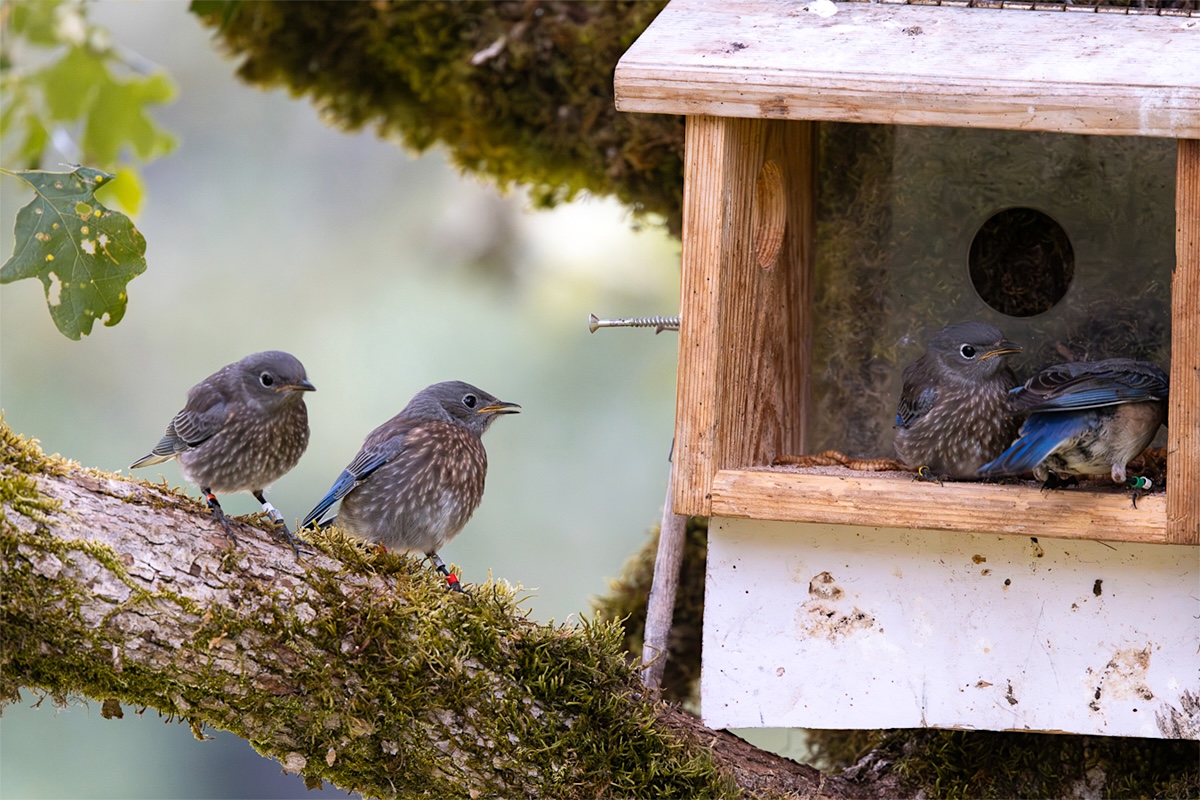
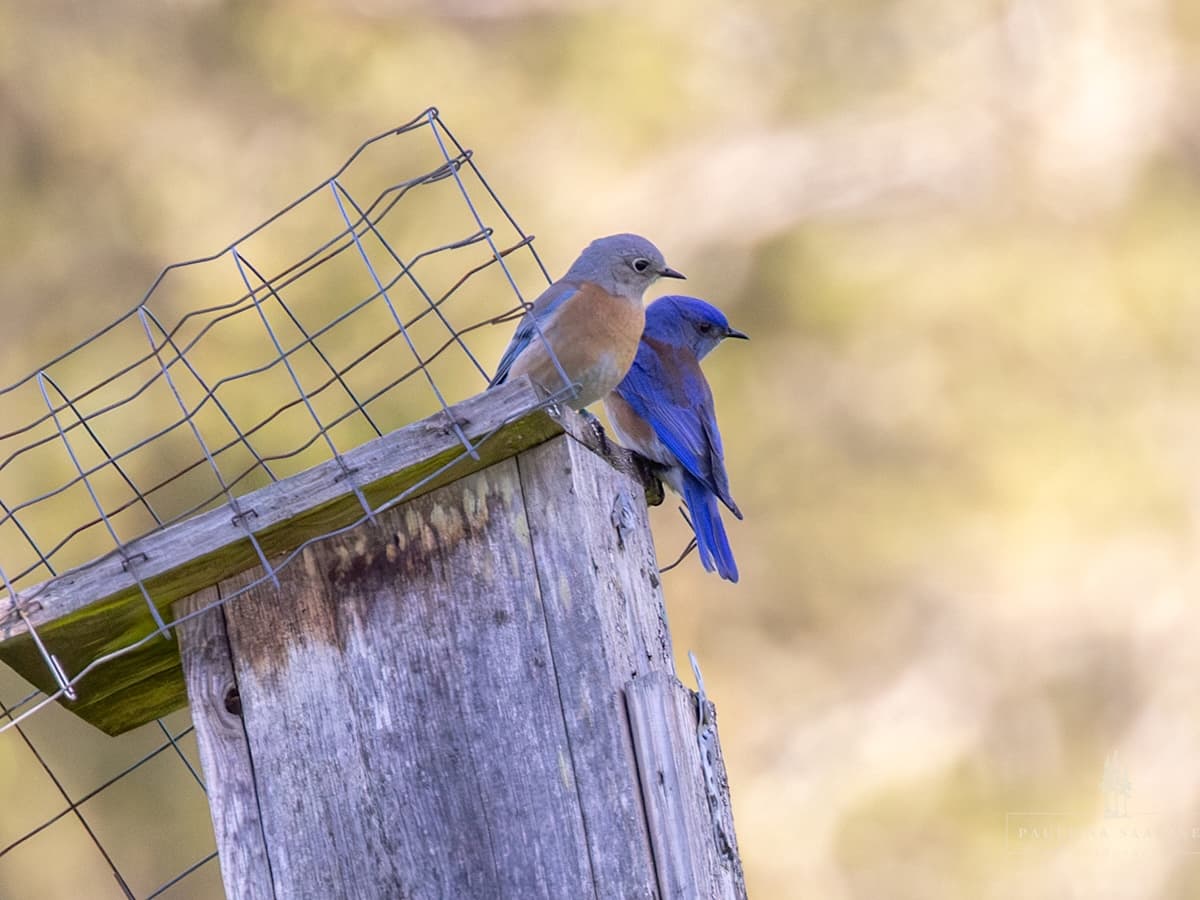
Bluebirds in the Cowichan Valley were translocated across the border from Joint Base Lewis-McChord, just outside Tacoma, Washington. Photo by Sarah Hughes. Source page: https://www.thetyee.ca/News/2026/09/16/Bluebirds-Extinct-Vancouver-Island-Now-Back/
The return began with work on San Juan Island, where U.S. wildlife ecologist Gary Slater and colleagues reintroduced bluebirds captured at Joint Base Lewis-McChord between 2007 and 2010. The base holds most of western Washington's remaining prairie and a healthy bluebird population. When Vancouver Island naturalists learned of that success, they contacted Slater. Starting in 2012, birds from the same military base were also moved to the Cowichan Valley.
The logistics remain exacting. Taylor told The Tyee that a June handover this year involved four adult bluebirds and 10 nearly fledged young, met near the Peace Arch border after a gas-station exchange with the U.S. crew. Permits spanned Environment and Climate Change Canada, the B.C. Wildlife Act, the Canadian Food Inspection Agency, and U.S. Fish and Wildlife scientific collection and banding authorizations. Newcomers spent time in aviaries before release once the young fledged.
About 70 private property owners and Cowichan Tribes host nest boxes. Volunteers logged roughly 1,000 hours this year alone, The Tyee reported. The project spent about $6,000 on mealworms, some raised by a local volunteer and others shipped from Saskatchewan, to signal abundant food and encourage extra clutches. Tin-foil "sparrow spookers" deter house sparrows once a bluebird nest is established. Tree swallows often share the same boxes after initial jostling; Taylor said the species can settle into a cordial arrangement.
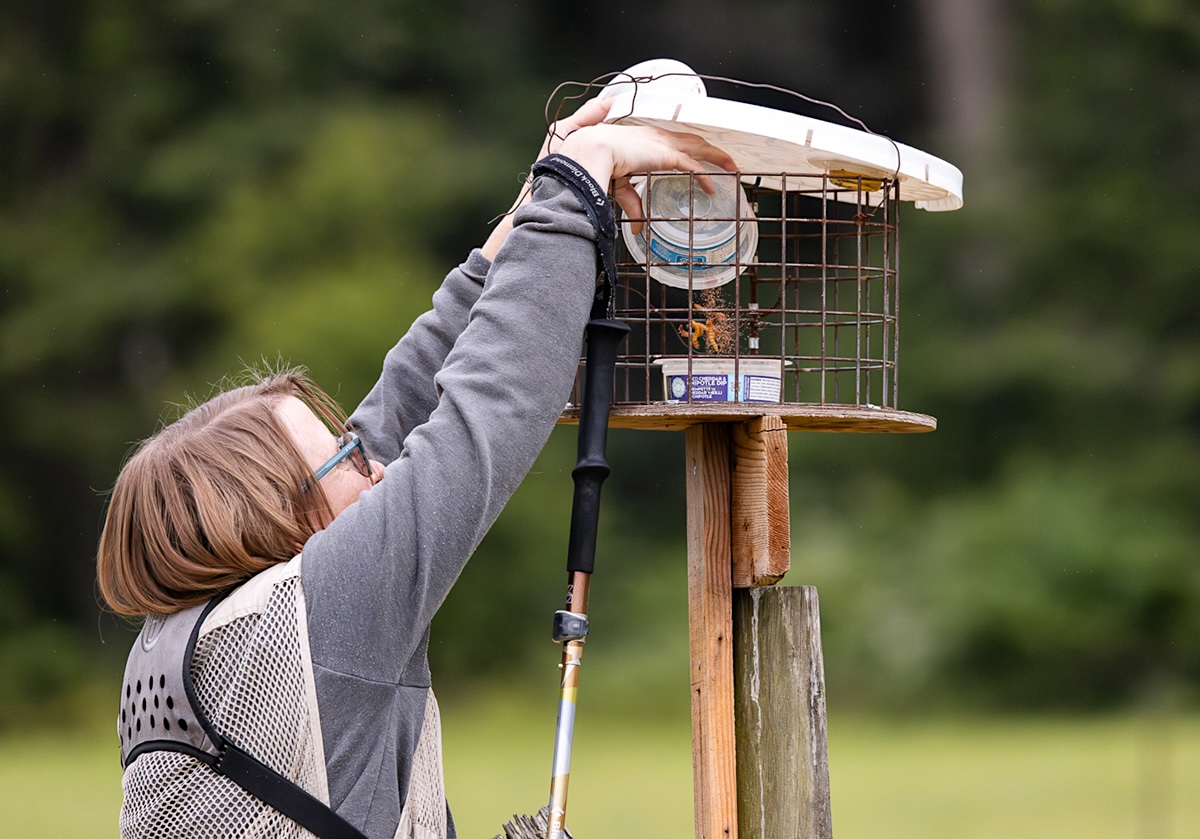
The Cowichan Bring Back the Bluebirds Project spent about $6,000 on mealworms this year to support breeding pairs. Photo by Sarah Hughes. Source page: https://www.thetyee.ca/News/2026/09/16/Bluebirds-Extinct-Vancouver-Island-Now-Back/
Taylor joined the effort in 2019 when the British Columbia Conservation Foundation took over from the volunteer-run Cowichan Valley Naturalists' Society. She told The Tyee she was first drawn by hands-on conservation and the endangered Garry oak ecosystem, of which less than five percent remains on southern Vancouver Island and the southern Gulf Islands. The birds themselves, she said, are "sweet little birds" with sociable personalities as well as bright colour.
Saltspring Island has about 200 nest boxes but no bluebirds yet. Victoria has about 50 boxes awaiting birds while the project scouts release sites. Banded birds show Cowichan juveniles settling on San Juan Island, Taylor said, a sign that populations are beginning to reconnect, which she called important for resilience.
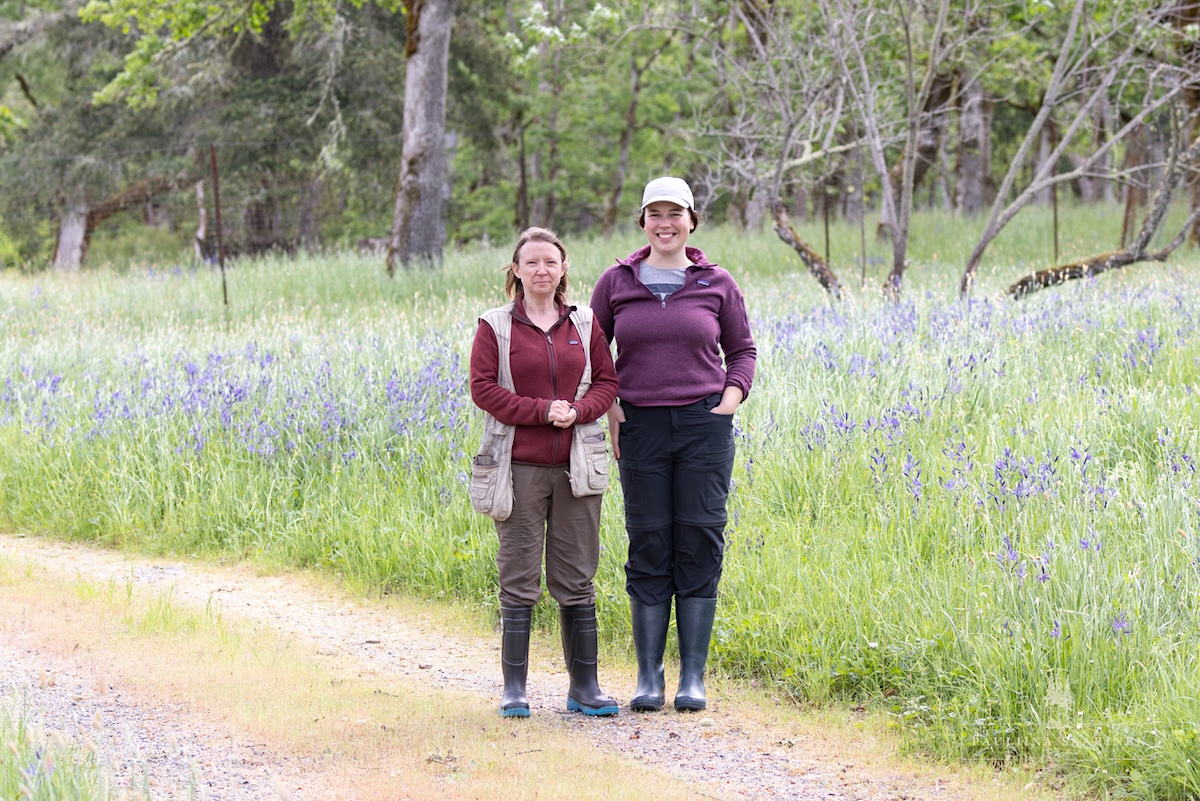
Jacquie Taylor, left, and a colleague from the Cowichan Bring Back the Bluebirds Project walk through a camas meadow. Bluebirds like to perch in Garry oak trees that fringe the meadows, diving down to catch insects. Photo by Pauliina Saarinen Photography. Source page: https://www.thetyee.ca/News/2026/09/16/Bluebirds-Extinct-Vancouver-Island-Now-Back/
The record remains carefully bounded. Recovery is unfinished. Habitat loss continues. Empty boxes outnumber occupied ones. House sparrows and starlings still compete. Taylor compared waiting too long on species recovery to waiting for heart-bypass surgery instead of acting on early warning signs. The verified public record, as of The Tyee's 16 September 2026 feature, is this: birds declared extinct locally in the mid-1990s are nesting again in the Cowichan Valley; this season's counts reached 30 adults and 126 young; the work is cross-border, permit-heavy, and volunteer-dependent; and band recoveries suggest populations are starting to link again.
"We need hands on to make that happen," Taylor told The Tyee. "And we can do it one species at a time."
Sources
- environment
- conservation
- biodiversity
- canada
- vancouver-island
- bluebirds