
Project Cheetah Marks Four Years as Indian-Born Female Delivers Four Cubs at Kuno
As Project Cheetah completed four years on 17 September 2026 with India's cheetah population at 52, Union Environment Minister Bhupender Yadav announced that Indian-born female KGP12 had given birth to four cubs at Kuno National Park.
Just News Desk, Correspondent||4 min read
SHEOPUR, India - Project Cheetah completed four years on 17 September 2026 with India's cheetah population standing at 52, according to an official status review, and a day later Union Environment Minister Bhupender Yadav announced that an Indian-born female, KGP12, had given birth to four cubs at Kuno National Park in Madhya Pradesh.
The four-year census figures, reported by IANS and PTI from "Four Years of Cheetahs in India - A Status Review" by Project Cheetah Director Uttam Kumar Sharma, predate the KGP12 litter. Of the 52 animals counted in the review, 49 were at Kuno and three at Gandhi Sagar Sanctuary; 32 were Indian-born. Yadav's announcement, covered by India Today Science Desk on 18 September 2026, framed the new births as a second-generation milestone a day after the anniversary.
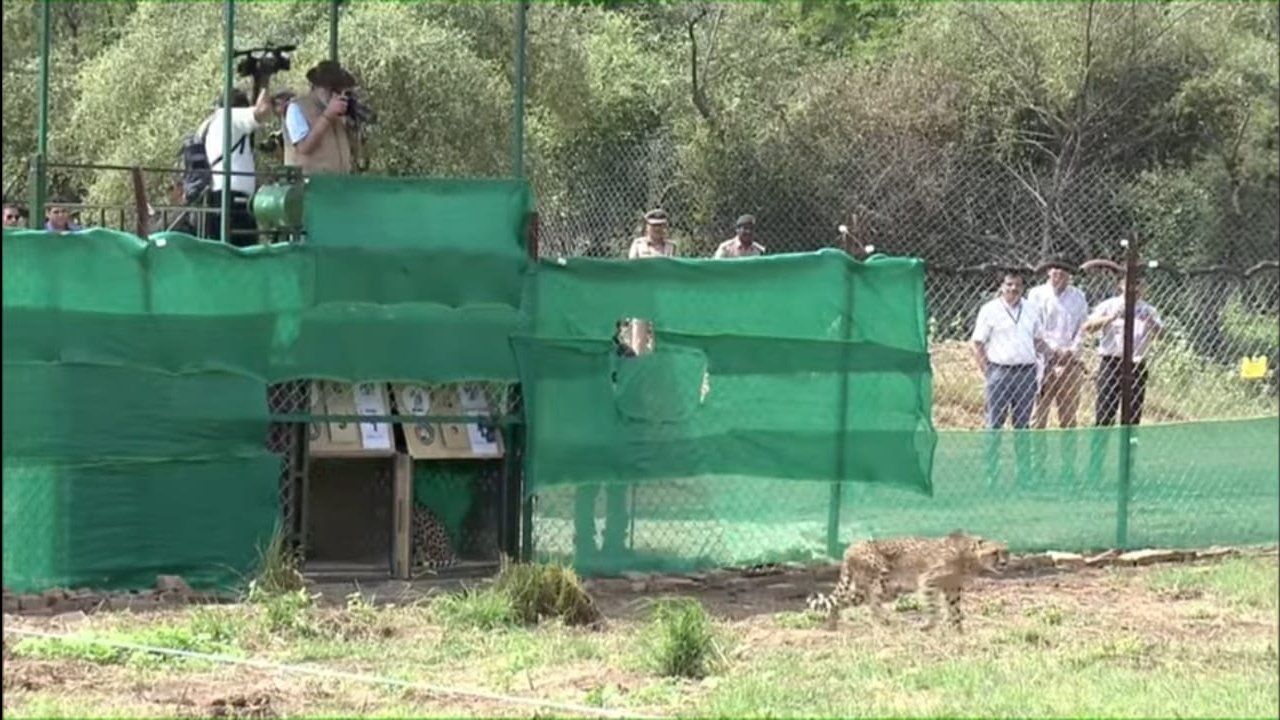
A cheetah photographed in connection with the Project Cheetah reintroduction at Kuno National Park. Photo: Prime Minister's Office (PMO India), via Wikimedia Commons (CC BY 3.0). Source page: https://commons.wikimedia.org/wiki/File:Cheetah_In_India.jpg
"Four years, four new lives - a beautiful symbol of hope, resilience and the growing success of cheetah conservation in India," Yadav wrote on X, congratulating the Kuno and Project Cheetah teams, India Today reported. The minister called the births a historic and joyous moment for the programme. Cheetahs were declared extinct in India in 1952. Project Cheetah launched on 17 September 2022, when Prime Minister Narendra Modi released eight wild Namibian cheetahs into special enclosures at Kuno.
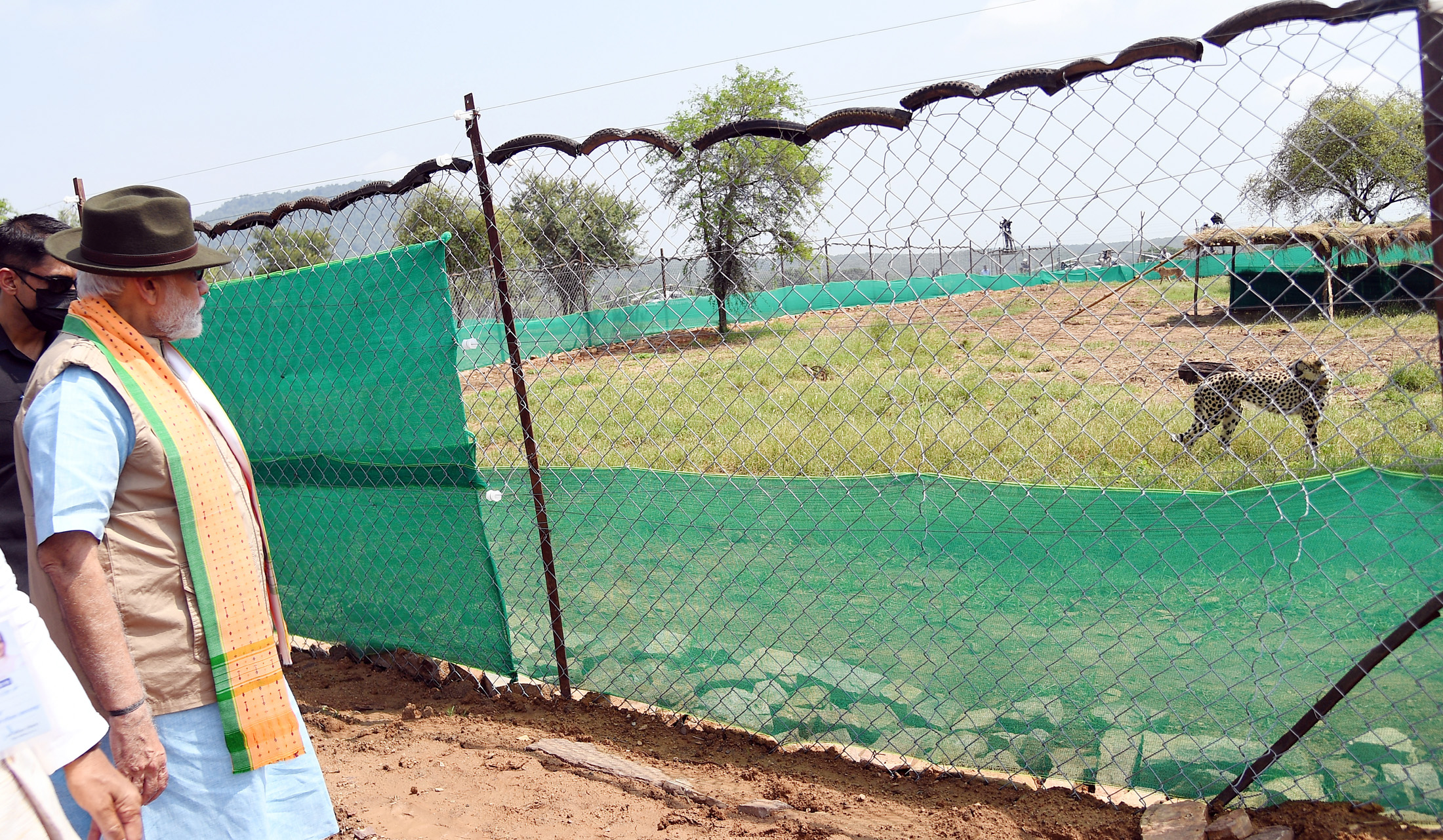
Prime Minister Narendra Modi releases wild cheetahs at Kuno National Park on 17 September 2022, launching Project Cheetah. Photo: Prime Minister's Office / Press Information Bureau (GODL-India). Source page: https://commons.wikimedia.org/wiki/File:The_Prime_Minister,_Shri_Narendra_Modi_releases_wild_Cheetahs_in_Kuno_National_Park,_in_Madhya_Pradesh_on_September_17,_2022_(1).jpg
At Kuno, the status review counted 17 free-ranging cheetahs (10 males and seven females) and 32 animals in soft-release enclosures (five males, eight females and 19 cubs under one year of age). On lineage, three of the original eight Namibian imports remain alive, together with 22 India-born offspring, for a Namibian-origin total of 25. Eight of 12 South African cheetahs brought on 18 February 2023 remain alive, with 10 India-born offspring, for 18 animals (15 at Kuno and three at Gandhi Sagar). Nine cheetahs from Botswana arrived on 28 February 2026, further widening the programme's African genetic base, IANS reported.
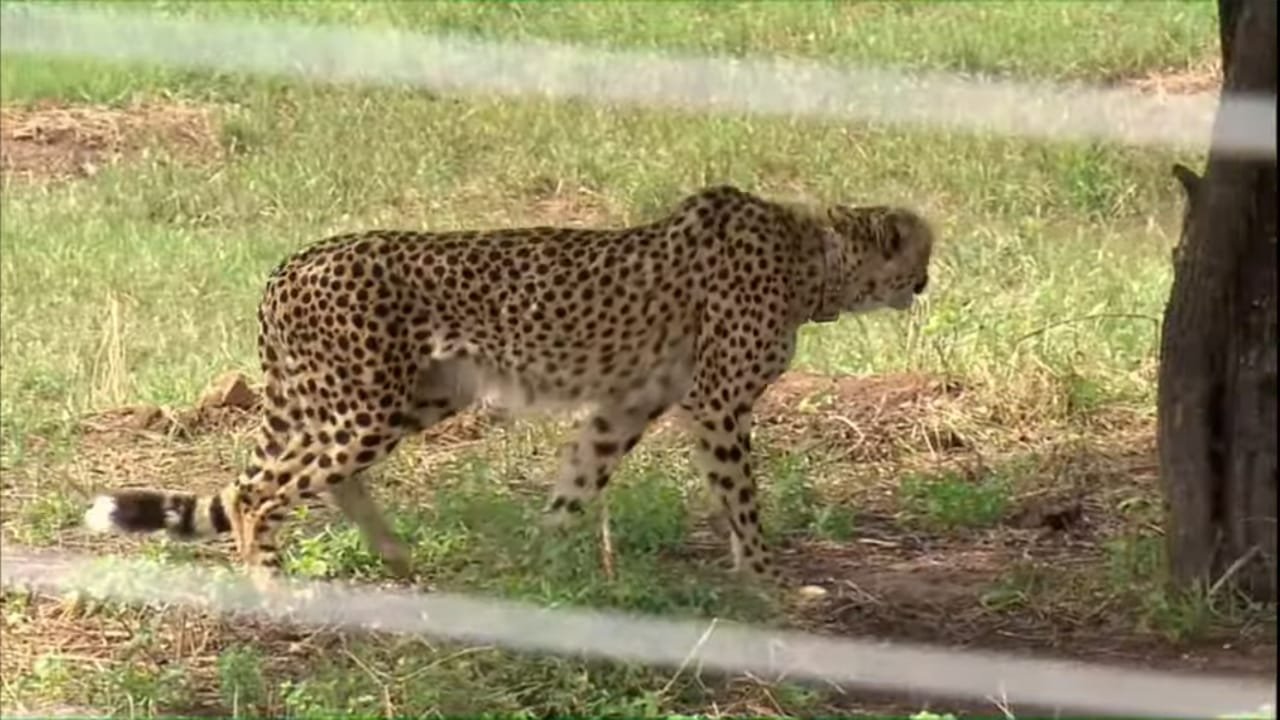
A cheetah associated with the Project Cheetah reintroduction after local extinction. Photo: Prime Minister's Office (PMO India), via Wikimedia Commons (CC BY 3.0). Source page: https://commons.wikimedia.org/wiki/File:Cheetah_In_India_2.jpg
Officials described four distinct phases. The first year was hard, with losses that forced rapid learning about cheetah behaviour, health and management under Indian conditions. The second year shifted toward breeding and cub survival; 13 cubs lived beyond one year. In the third year, 2025, animals were released into open forest and monitored around the clock across an interstate landscape spanning 12 districts. The fourth year has been marked by the establishment of breeding females and survival of second-generation cubs, with the programme moving into consolidation and metapopulation expansion toward additional habitats, including Gandhi Sagar and other candidate sites, according to the review as carried by The Hindu and PTI.
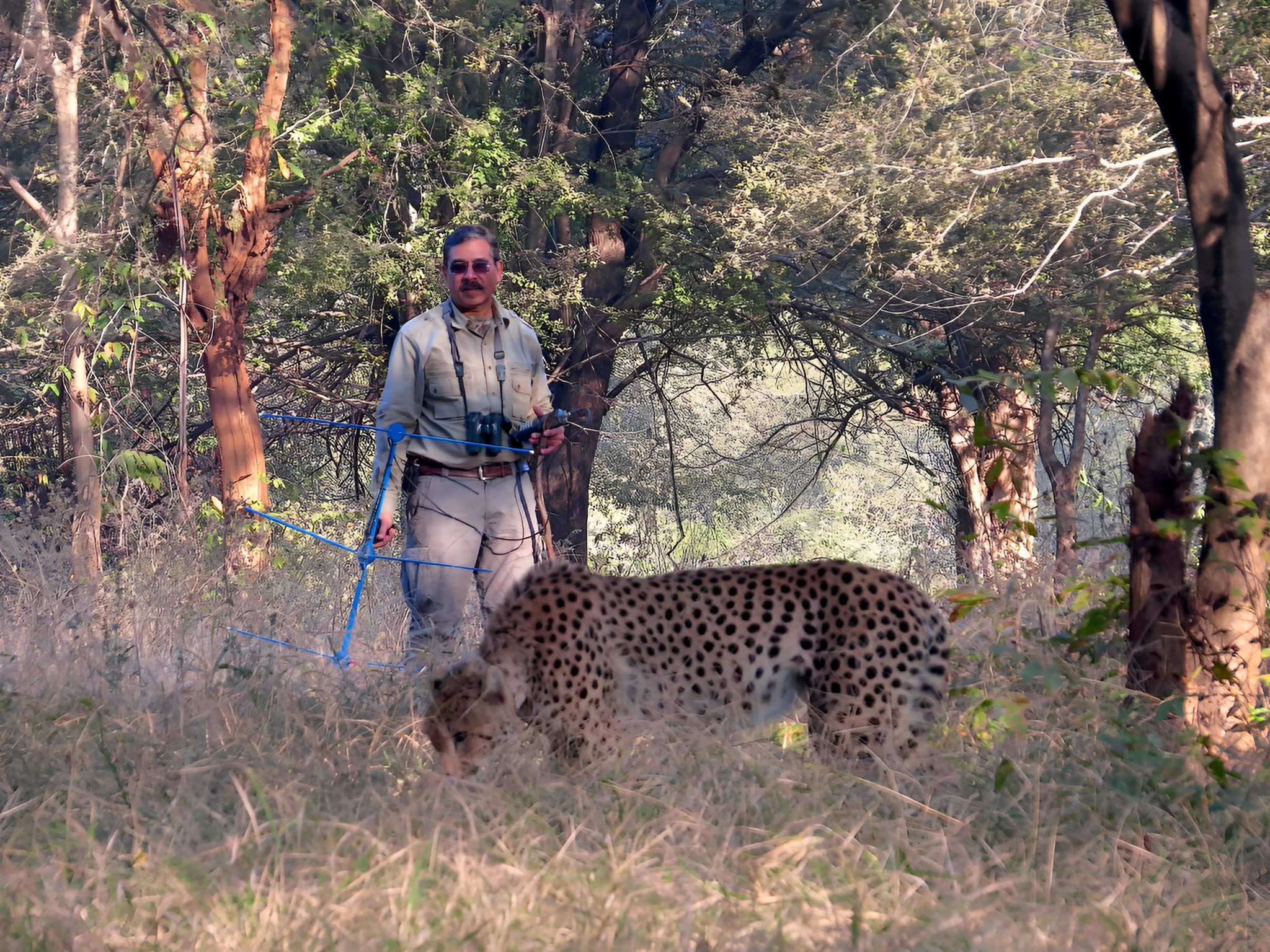
Dr. Y.V. Jhala with an introduced cheetah at Kuno National Park during the reintroduction programme. Photo: Ujjwalwii, via Wikimedia Commons (CC BY-SA 4.0). Source page: https://commons.wikimedia.org/wiki/File:YV_Jhala_%26_Cheetah.jpg
KGP12 is herself Indian-born at Kuno, India Today reported, so her litter is a second-generation birth under Indian conditions. Wildlife biologists treat successful wild breeding as a strong signal of programme viability. The review's headcount of 52 does not yet incorporate the four cubs announced on 18 September; any updated official census would follow separately.
Background on the translocation programme, including action plans and annual reports for Kuno and Gandhi Sagar, is maintained by the National Tiger Conservation Authority.
Sources
- environment
- conservation
- cheetahs
- india
- wildlife
- biodiversity

.jpg)

