
New Zealand's Black Robin, Once Nearly Extinct, Wins Bird of the Year
The karure, or Chatham Islands black robin (Petroica traversi), has won Forest & Bird's 2026 Bird of the Year after climbing from five remaining birds in 1980 to about 350 adults on two pest-free islands, with a record-scale domestic turnout for the annual vote.
Just News Desk, Correspondent||4 min read
WELLINGTON, New Zealand - The karure, or Chatham Islands black robin, has won Forest & Bird's 2026 Bird of the Year, the conservation group said on Monday, capping a recovery that began when only five birds remained and lifting a first-time champion after years near the top of the poll.
In Forest & Bird's published top-ten tally, karure finished first with 25,610 votes. The flightless parrot kākāpō placed second with 19,445, and the kārearea, or New Zealand falcon, third with 17,423. Forest & Bird said about 105,000 people took part at birdoftheyear.org.nz, and that roughly 88 percent of votes came from within Aotearoa New Zealand, the strongest domestic share in recent contests.
Chatham Islands black robin (Petroica traversi), also known as karure in Moriori and kakaruia in Māori. Species photograph used to illustrate the winner; not an image from the 21 September 2026 announcement. Photo: Nutan Parag, via Wikimedia Commons (CC BY-SA 4.0). Source page: https://commons.wikimedia.org/wiki/File:NPP3057.jpg
The black robin (Petroica traversi) lives only in lowland coastal forest on the Chatham Islands, about 800 kilometers east of mainland New Zealand. Forest & Bird and secondary reports describe a population that fell to five birds by 1980, including a single fertile female. A recovery led by the Chatham Islands community and what is now the Department of Conservation worked from one breeding pair, Old Blue and Old Yellow, and pioneered cross-fostering eggs with other species. About 350 adult birds now live on two pest-free nature reserves: Maung'Re / Mangere and Hokorereoro / Rangatira.
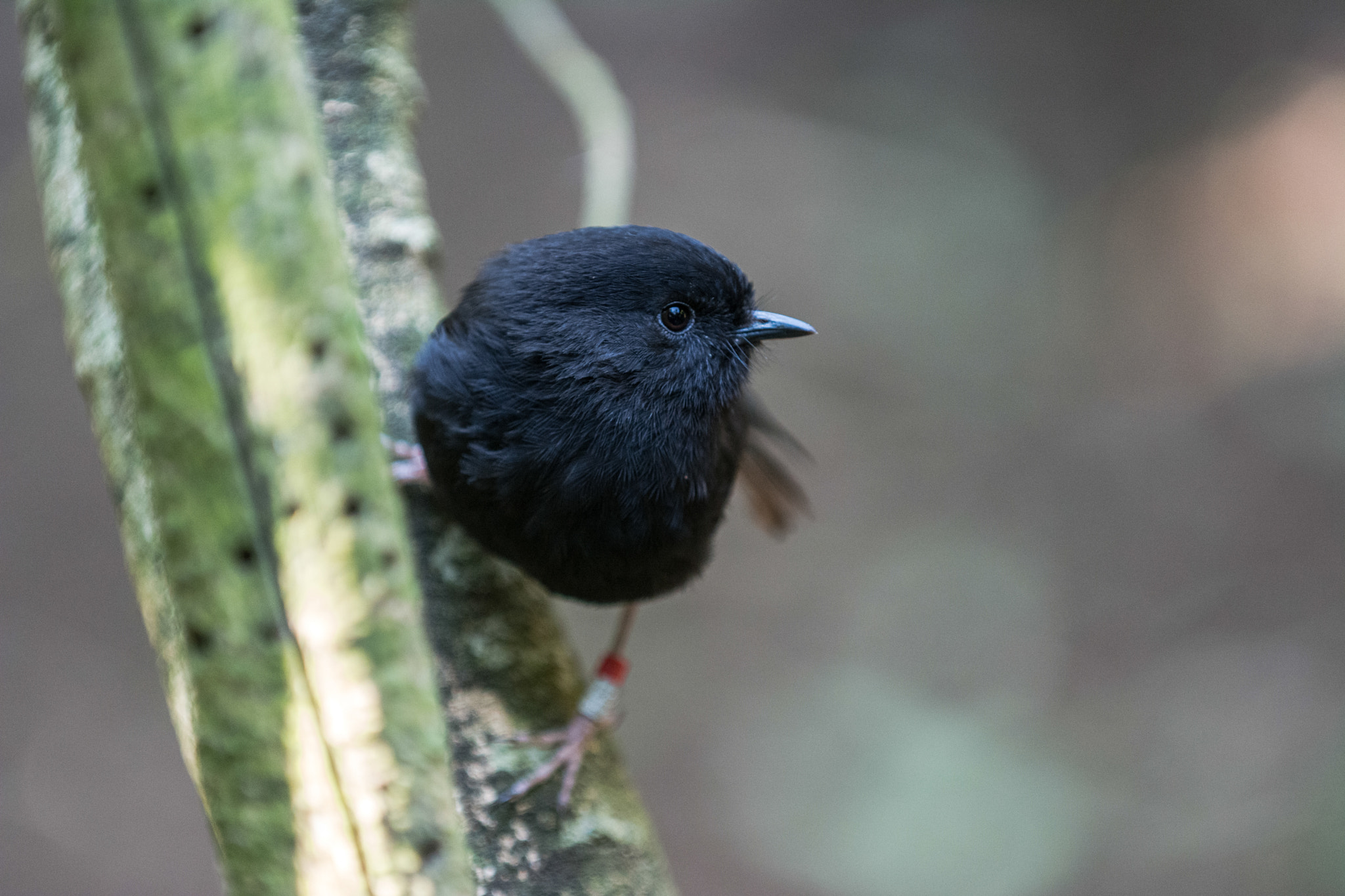
Black robin on Rangatira (South East) Island in the Chatham Islands, one of two pest-free reserves that hold the species. Photo: Leon Berard, via Wikimedia Commons (CC BY-SA 3.0). Source page: https://commons.wikimedia.org/wiki/File:Nz_Black_Robin_(108600329).jpeg
Despite that climb, Forest & Bird classifies the species as still in serious trouble and Nationally Critical. Suitable territories on the two small islands are nearly full. Rebecca Hatch, Forest & Bird's group manager for growing support, told RNZ that a third population on another island is needed if numbers are to keep rising. The Chatham Islands Landscape Restoration Trust, which managed the Bird of the Year campaign for karure, is preparing predator work on Pitt Island (Rangihaute / Rangiauria), including the removal of feral cats, a major threat to the robin.
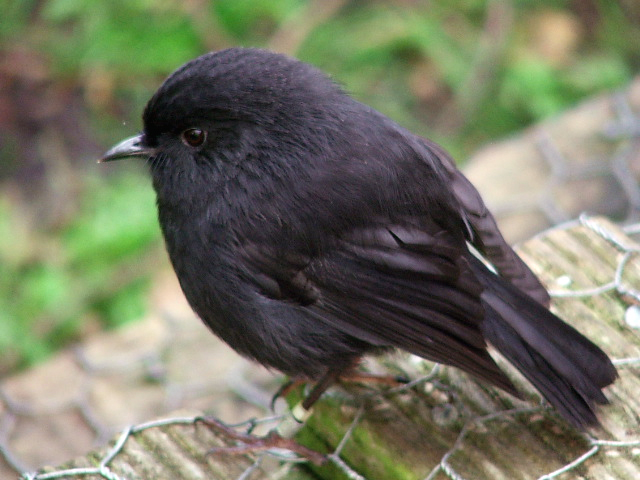
Black robin on Rangatira Island. Photographer noted uncertainty about the bird's sex. Photo: Frances Schmechel, via Wikimedia Commons (CC BY-SA 2.0). Source page: https://commons.wikimedia.org/wiki/File:Black_Robin_on_Rangatira_Island.jpg
Jess Mackenzie, a spokesperson for the Trust, told The Guardian the robin is loved and familiar to New Zealanders but is "not saved yet." Habitat on the present islands is near capacity, she said, and another pest-free island is required. Forest & Bird added that work on Pitt Island would also serve a wider Chatham Islands biodiversity hotspot that supports about 20 percent of New Zealand's threatened bird species.
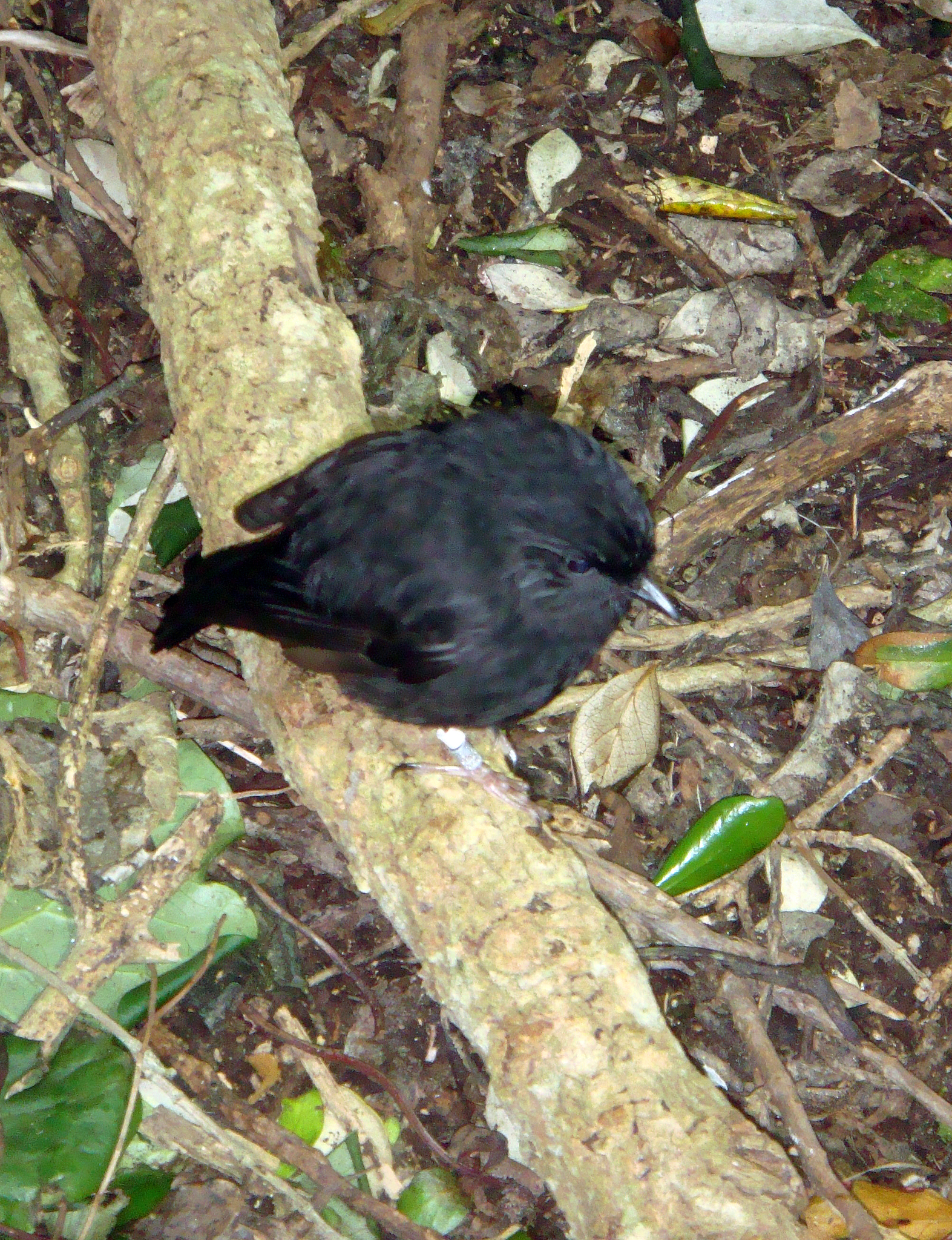
Chatham robin (Petroica traversi) photographed in the Chatham Islands. Photo: Peter de Lange, via Wikimedia Commons (CC0 1.0). Source page: https://commons.wikimedia.org/wiki/File:Petroica_traversi_2235630.jpg
It is the first time karure has won the Forest & Bird election, which has run since 2005, though the bird has finished high in recent years. RNZ reported that Hatch described a surge in participation, with 98,920 validated votes in the outlet's account of her remarks, while Forest & Bird's own announcement emphasized about 105,000 people choosing a favorite manu. Eight of the top 10 finishers, Hatch said, remain in serious trouble. "Karure black robin can't vote," she said. "But we can."
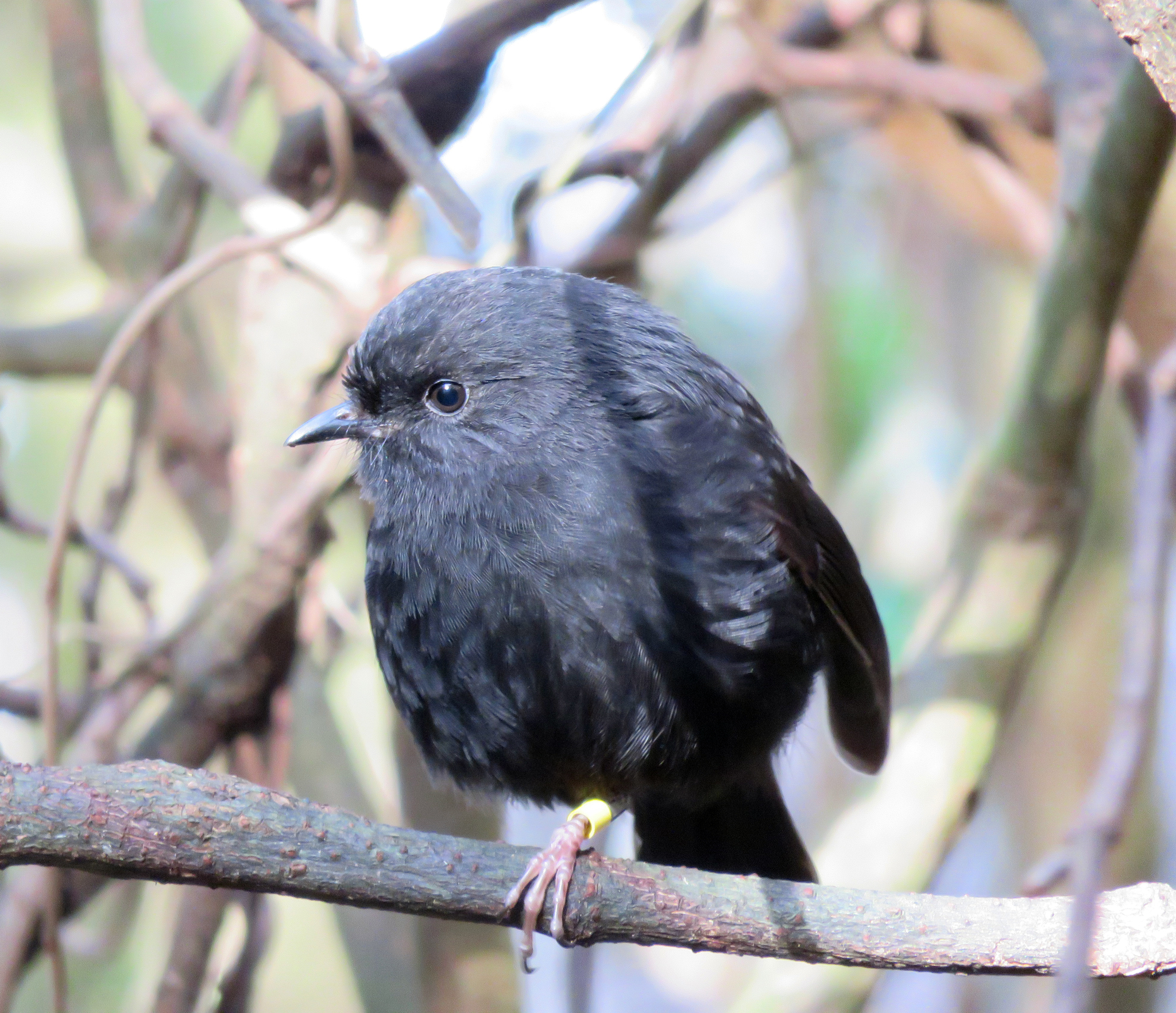
Chatham robin (Petroica traversi) in the Chatham Islands. Photo: Peter de Lange, via Wikimedia Commons (CC0 1.0). Source page: https://commons.wikimedia.org/wiki/File:Petroica_traversi_2305008.jpg
For now the measurable claim is bounded and clear: a Nationally Critical island endemic, once reduced to a handful of individuals, has been named New Zealand's Bird of the Year for 2026, while the same conservation groups that celebrate the win keep pressing for a third safe population beyond the two reserves that already hold nearly all its remaining forest territories.
Sources
- Forest & Bird: Karure black robin wins 2026 Bird of the Year! (21 Sep 2026)
- RNZ: Black robin bucks shy tag to take Bird of the Year 2026 (21 Sep 2026)
- The Guardian: The black robin, once down to just a single breeding pair, wins NZ bird of the year (Eva Corlett, 21 Sep 2026)
- Bird of the Year 2026 winner page (Forest & Bird)
- environment
- conservation
- wildlife
- new-zealand
- birds
- chatham-islands
- biodiversity

.jpeg)


