
Francis Halzen Wins the 2026 Nobel Prize in Physics for Turning Antarctic Ice Into a Neutrino Telescope
The Royal Swedish Academy of Sciences has awarded the 2026 Nobel Prize in Physics to Francis Halzen of the University of Wisconsin-Madison for his decisive role in building the IceCube Neutrino Observatory at the South Pole and for the discovery of high-energy neutrinos from beyond the solar system.
Just News Desk, Correspondent||5 min read
MADISON, Wis. - Francis Halzen, a physicist at the University of Wisconsin-Madison who first proposed using the ice beneath the South Pole to catch particles from the distant universe, has been awarded the 2026 Nobel Prize in Physics, the Royal Swedish Academy of Sciences announced in Stockholm on 6 October. He is the prize's sole laureate this year.
The academy cited Dr. Halzen "for decisive contributions to the IceCube Neutrino Observatory and the discovery of high-energy neutrinos of astrophysical origin." IceCube, which he leads as principal investigator, is a cubic kilometer of Antarctic ice threaded with light sensors, built to register the faint flashes produced when a neutrino strikes an atomic nucleus.
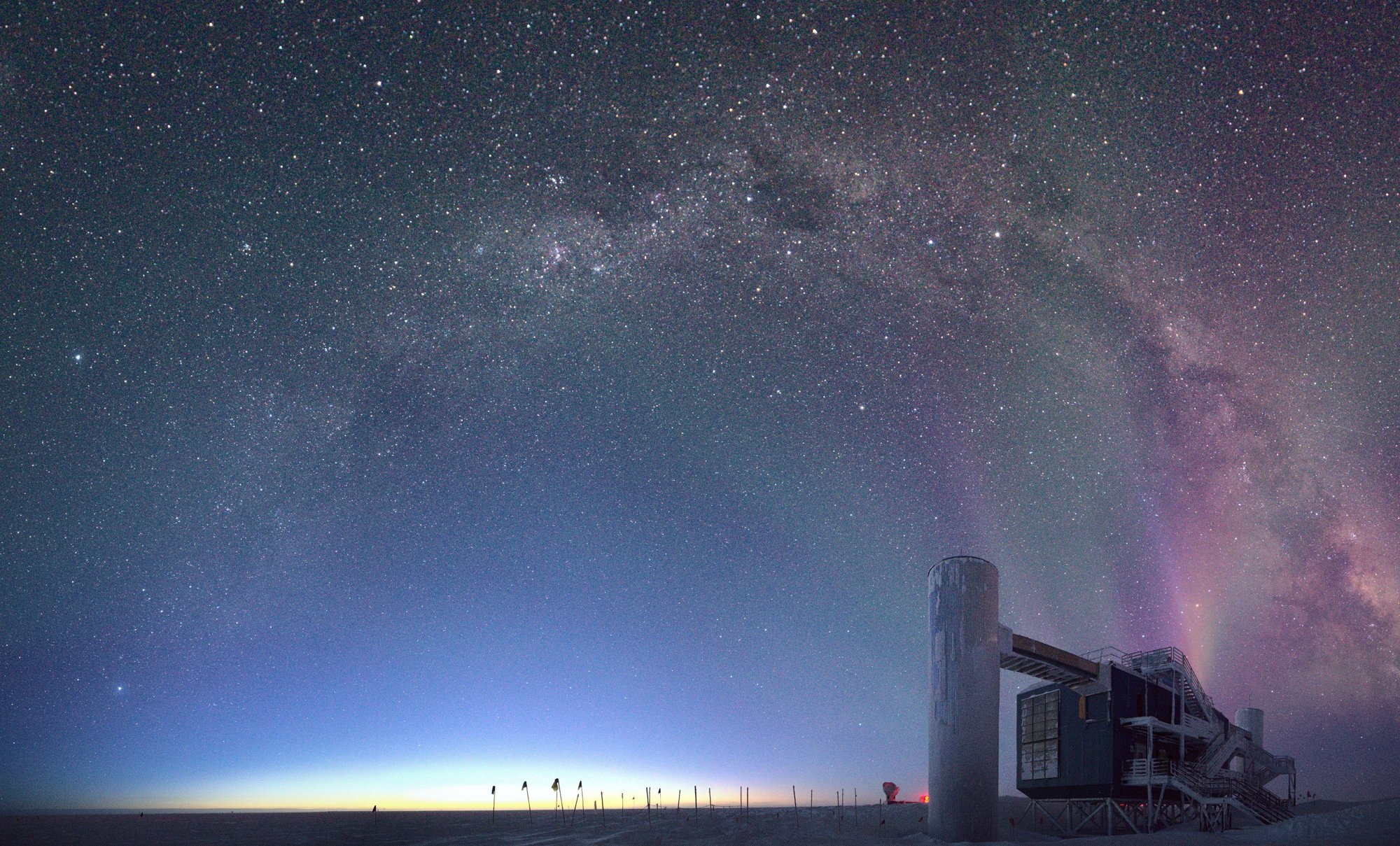
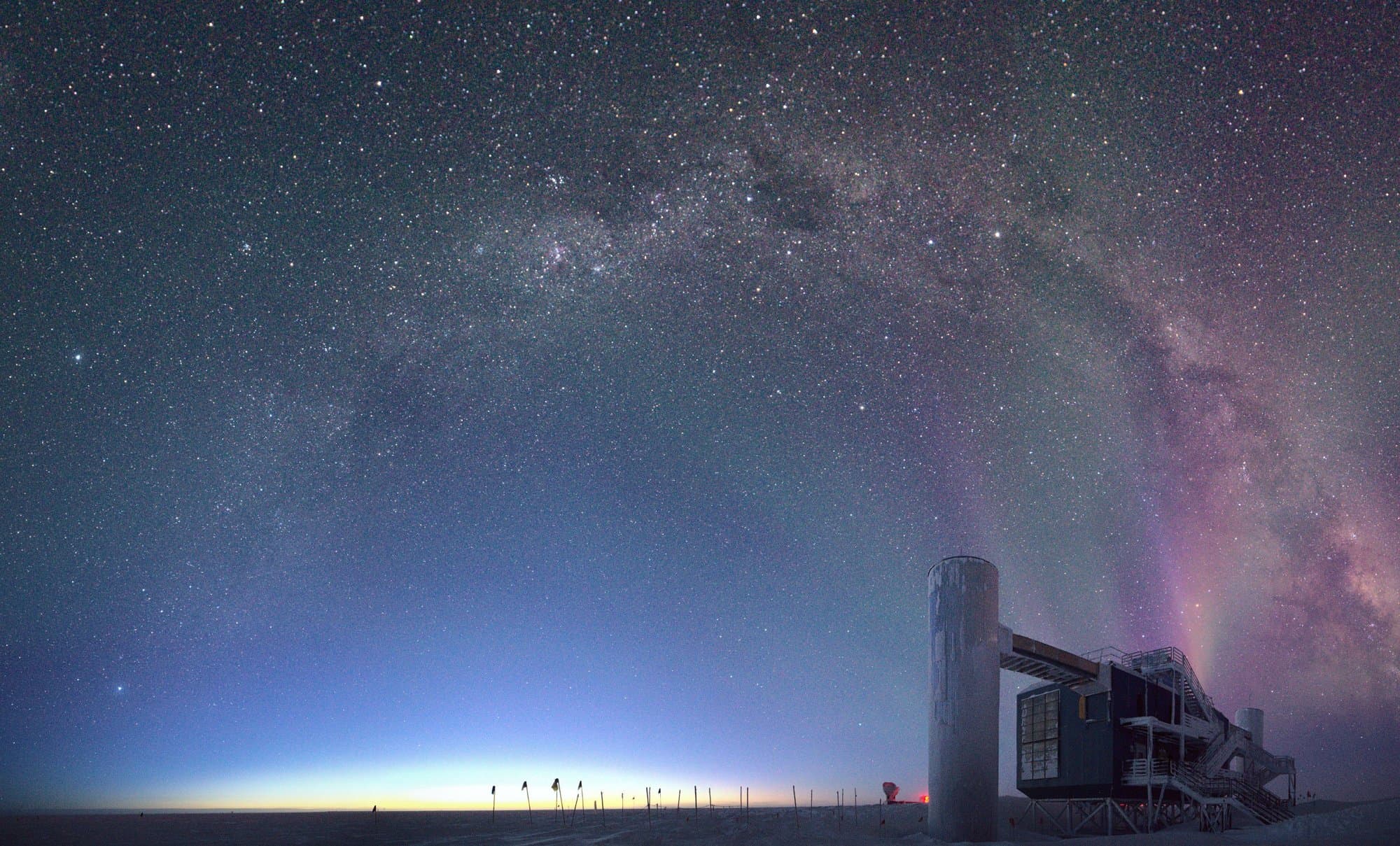
The IceCube Laboratory at the South Pole beneath the Milky Way and auroras, photographed at twilight on 25 August 2020. The building sits above the detector, which is buried in the ice below. Photo: John Hardin, via Wikimedia Commons (CC BY 4.0). Source page: https://commons.wikimedia.org/wiki/File:The_ICL_at_Dawn.jpg
Neutrinos are among the most abundant particles in the universe and among the hardest to see. They pass through the Earth, and through human bodies, almost without a trace, and only very rarely interact with matter. That elusiveness is also their value, the academy explained in its announcement. Unlike other particles, neutrinos reach Earth without changing direction or losing energy, so those born in the universe's most violent environments can point back to where they came from and carry information "that is not available in any other way."
Scientists have long known that the cosmos holds natural particle accelerators that fire out particles with energies up to a million times greater than any laboratory on Earth can achieve, the academy noted. What those sources are, and where, has remained largely a mystery.
Dr. Halzen first presented his idea of capturing neutrinos at the South Pole in 1988. The glacial ice there is exceptionally clear, free of many kinds of interference and geologically stable, with no earthquakes, according to the academy. Other researchers soon rallied to the idea, and within a few years preliminary tests of sensors in the ice were underway. Because cosmic neutrinos of extremely high energy are so rare, an enormous volume of ice was needed to record enough collisions. IceCube, covering a full cubic kilometer, was completed in 2011.
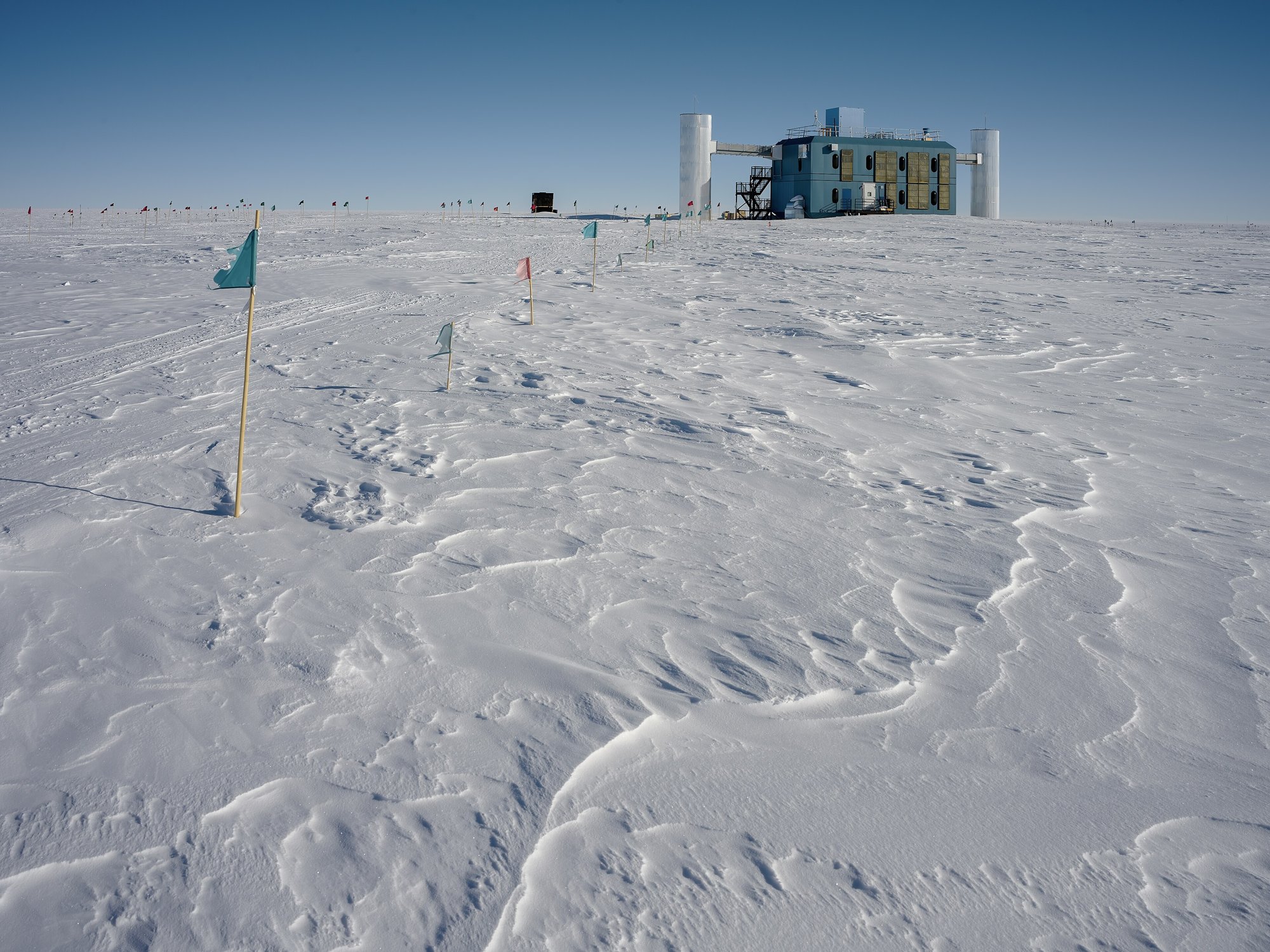
The IceCube Neutrino Observatory's surface laboratory at the South Pole, 6 January 2023. Photo: Christopher Michel, via Wikimedia Commons (CC BY-SA 4.0). Source page: https://commons.wikimedia.org/wiki/File:IceCube_Neutrino_Observatory_in_2023_01.jpg
Results followed. In 2013, IceCube announced the first detection of high-energy neutrinos from outside the solar system, a finding that helped open what physicists call multi-messenger astrophysics, according to the University of Wisconsin-Madison. In September 2017, the detector caught a high-energy neutrino traced to a supermassive black hole at the center of a distant galaxy in the direction of the constellation Orion. In 2022 and 2023, the university said, IceCube provided the first evidence of high-energy neutrino emission from an active galaxy 47 million light-years away and from the Milky Way itself.
"Francis Halzen has led an international team of researchers and engineers who have provided us with a fantastic instrument," Mark Pearce, chair of the Nobel Committee for Physics, said in the academy's announcement. "His tenacity and scientific vision has paved the way for a new kind of astronomy."
Born in 1944 in Tienen, Belgium, Dr. Halzen earned his doctorate from KU Leuven in 1969 and joined the physics faculty at UW-Madison in 1972, according to the academy and the university. He oversaw the design and development of IceCube and of its predecessor experiment, AMANDA. The observatory is funded by the U.S. National Science Foundation and operated by an international collaboration led by the Wisconsin IceCube Particle Astrophysics Center at UW-Madison; the IceCube Collaboration says it now includes more than 450 scientists at 58 institutions around the world.
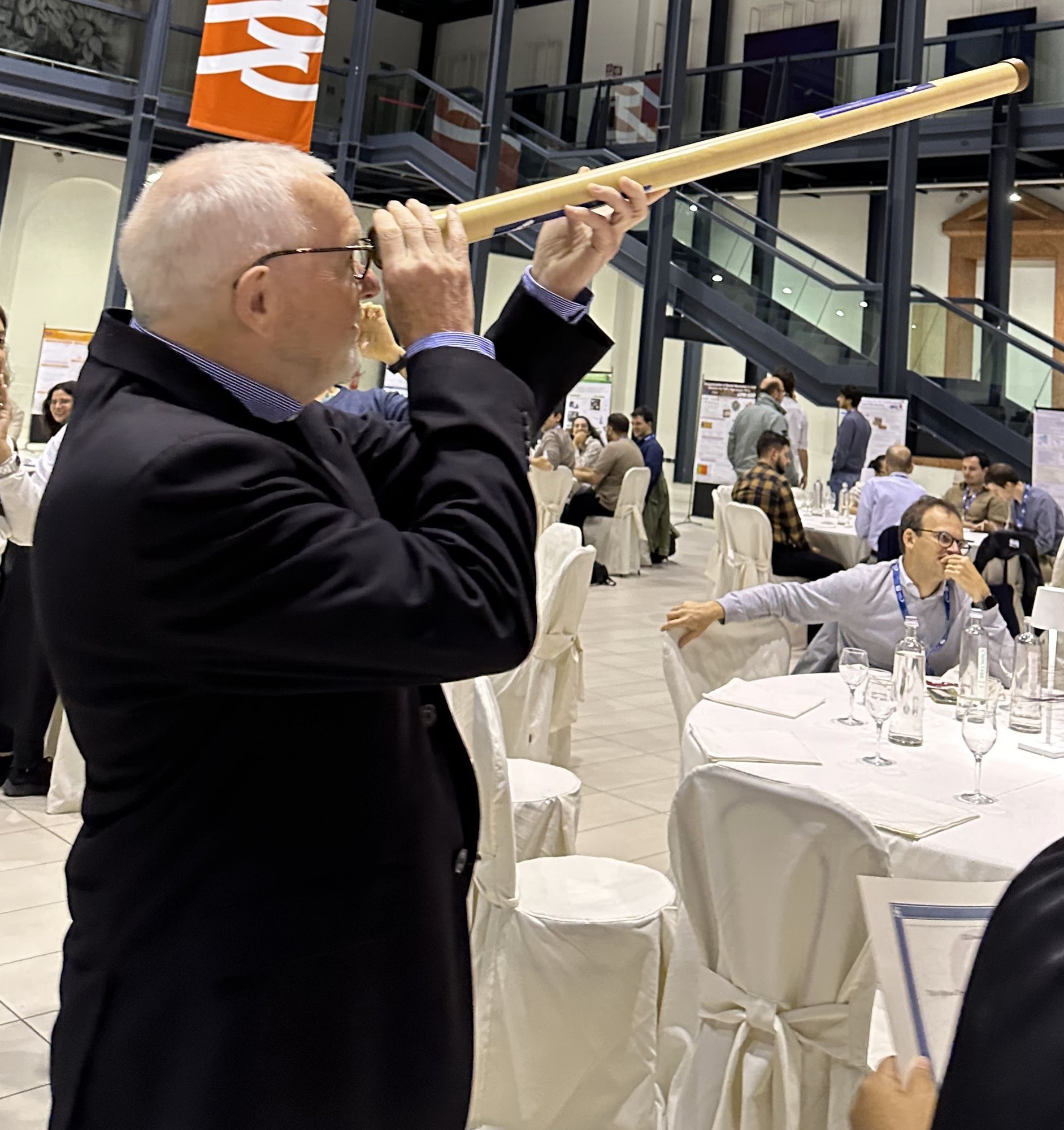
Francis Halzen looks through a replica of Galileo's telescope at the 21st International Workshop on Neutrino Telescopes in Padova, Italy, in October 2025. Photo: Mauro.mezzetto (Wikimedia Commons user), own work, via Wikimedia Commons (CC BY-SA 4.0). Source page: https://commons.wikimedia.org/wiki/File:Halzen-Neutel_(cropped).jpg
In remarks released by the university, Dr. Halzen credited the place where the work was done. "This is a celebration of a very unusual project," he said. "It is difficult to imagine that we could have pulled this off anywhere but at UW-Madison with its unique research infrastructure." The success, he added, "involved some luck."
Eric M. Wilcots, the university's interim chancellor, described the detector as "like no other telescope in the world," and said Dr. Halzen's idea "to create a neutrino detector under almost a mile of ice has led to a remarkable multinational and multi-institutional scientific collaboration and a fundamental shift in how we think about the universe."
Dr. Halzen is the sixth physicist connected to UW-Madison to receive the Nobel Prize, and the award is the 23rd Nobel tied to the university, according to UW-Madison. The prize carries 12 million Swedish kronor.
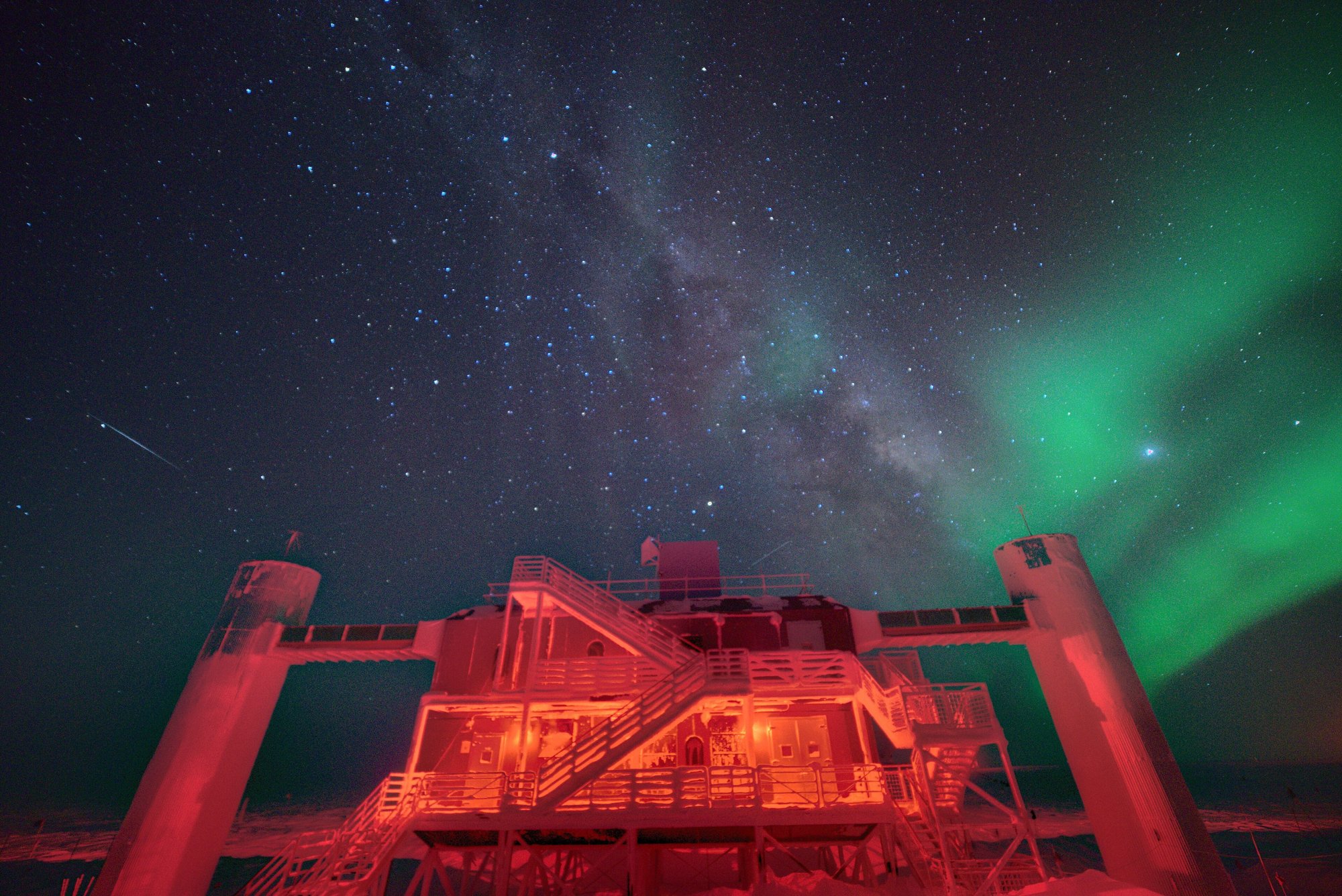
The IceCube Laboratory during the South Pole winter, lit by red safety lights beneath auroras and the night sky, 8 August 2021. Photo: John Hardin, via Wikimedia Commons (CC BY 4.0). Source page: https://commons.wikimedia.org/wiki/File:The_ICL_at_Night.jpg
The work is not finished. IceCube was recently upgraded, the university said, in the observatory's first significant expansion since its completion. The academy, for its part, expects the neutrino interactions it continues to collect to yield new knowledge of the violent settings where high-energy neutrinos are born, and perhaps to reveal "previously unknown cosmic phenomena."
The primary record is the Royal Swedish Academy of Sciences' press release of 6 October 2026, "The Nobel Prize in Physics 2026" (https://www.nobelprize.org/prizes/physics/2026/press-release/). Additional details are from the University of Wisconsin-Madison's announcement of the same date by Alisa King-Klemperer (https://news.wisc.edu/university-of-wisconsin-madison-professor-francis-halzen-named-2026-nobel-laureate-in-physics/) and from the IceCube Collaboration (https://icecube.wisc.edu/news/awards/2026/10/francis-halzen-icecube-principal-investigator-wins-2026-physics-nobel-prize/). The Nobel Prize illustrations, licensed for non-commercial use only, are not reproduced here; the images above are Wikimedia Commons files.
- science
- physics
- nobel-prize
- astronomy
- antarctica
- wisconsin


.jpg)
