The grocery chain that made every worker an owner just posted its best year
Greenleaf Market, a 31-store Pacific Northwest grocer, converted to 100 percent employee ownership in 2021. Five years on, wages are up, turnover is down, and the books — published in the break room — look like a dare to the industry.
David Chen, Business reporter||3 min read
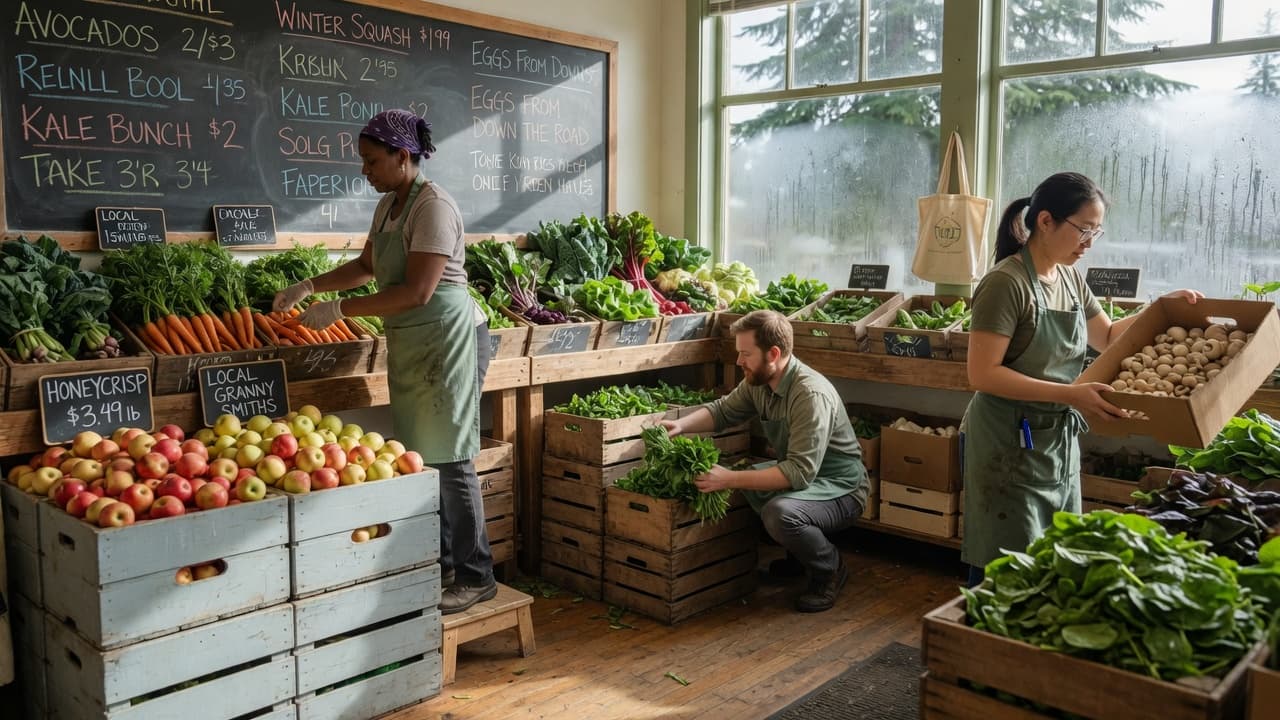
There is a laminated profit-and-loss sheet on the break-room fridge at Greenleaf Market No. 14 in Olympia, Washington. It is not a motivational poster. It is last quarter. Anyone with a badge can read it, including the kid who just learned the code for bananas.
In 2021 the family that built Greenleaf sold the company, then 24 stores, to an employee stock ownership plan. In 2026 the chain has 31 stores, no private-equity backer, and the best operating margin in its 40-year history. Same-store sales are up 6 percent. Annual turnover among hourly staff is 19 percent — a number that makes supermarket veterans blink.
The living wage floor is $22.50 an hour in the Seattle stores and $20.75 elsewhere, plus the ESOP allocation. Average tenure in the produce department at store 14 is six years. In this industry, that is geology.
Owners who still bag groceries
Chief executive Rosa Delgado started as a cashier in 1998. She still walks stores on Tuesdays without a camera crew. “The conversion was not a vibe,” she said, sitting on a dairy case because the office chairs were all in a training. “It was a sale, with lawyers, and then a culture that had to catch up to the lawyers.”
Catching up meant teaching 1,400 people how to read a P&L without making them accountants. Night classes, optional, paid. About 40 percent of staff have taken at least one. The ones who have not still see the fridge sheet.
When a store in Eugene wanted to stop carrying a popular energy drink on health grounds, the argument went to a worker council, then to a vote of that store. They kept the drink and moved it off the endcap. “Purism is easy when you do not share the profit,” said night-stock lead Andre Brooks. “We share the profit. So we argue like adults.”
What the numbers are not
Greenleaf is not cheap. Prices sit a notch above the national discounters and a notch below the glossy naturals. The bet is that people will pay for a full dairy case and a checker who is still there next month. So far, in cities where the chain is known, the bet is holding. In the two new Idaho stores it is tighter. Delgado published that tightness too.
Critics on the left want the company to be a cooperative. Critics on the right want it to behave like a normal chain and stop “politicizing” oats. Delgado’s answer is the same in both directions: look at the wage, look at the margin, look at the fact that no one got a dividend for firing a town.
The ESOP does not make every worker rich. It makes a 15-year produce clerk in Olympia look at a statement that is not zero. For some, that statement is a down payment. For others it is a reason to stay through a bad winter.
A replicable dare
Grocery is a brutal category: thin margins, huge incumbents, delivery apps, and a public that wants both cheap eggs and a moral identity. Greenleaf’s useful contribution is not that it is beloved. It is that the beloved part survived contact with a balance sheet.
Other regional grocers have called. Two have started the conversion paperwork. Most will not finish. The ones that do will need a seller who wants a legacy more than a maximum bid, and a workforce that can stand the sight of its own numbers.
At store 14, closing time is 10 p.m. Brooks walked the last pallet into the cooler and clocked out. On the fridge, someone had written in marker next to the margin line: we did this. The handwriting was not management. Management would have used a printout. The marker is the point.
- community
- labor
- food
- ownership