Yorkshire Beavers Cut Peak Flood Flows Nearly in Half in Five-Year Cropton Forest Trial
An Ecohydrology study of Forestry England’s Cropton Forest beaver trial found a 46.6% drop in median peak flows and a 417% rise in baseflow after five years, as partners begin public talks on a wider Yorkshire Derwent return.
Just News Desk, Correspondent||3 min read
CROPTON FOREST, North Yorkshire - Five years after two Eurasian beavers were released into a fenced 10-hectare woodland here, researchers report that the animals’ dams transformed how water moves through the site, cutting median peak flows by 46.6 percent and raising baseflow by 417 percent compared with an upstream control, according to a peer-reviewed study in Ecohydrology.
The paper, published online on 7 June 2026 and led by Professor Mark W. Smith of the University of Leeds with colleagues including researchers linked to the University of Exeter and Forestry England, documents the Cropton Forest beaver trial that began on 17 April 2019. Forestry England released a pair of adult beavers from Scotland under a Natural England licence, building on the earlier “Slowing the Flow” flood-management work that had sought to protect communities downstream of Pickering after severe flooding, including damage estimated at about £7 million in 2007.
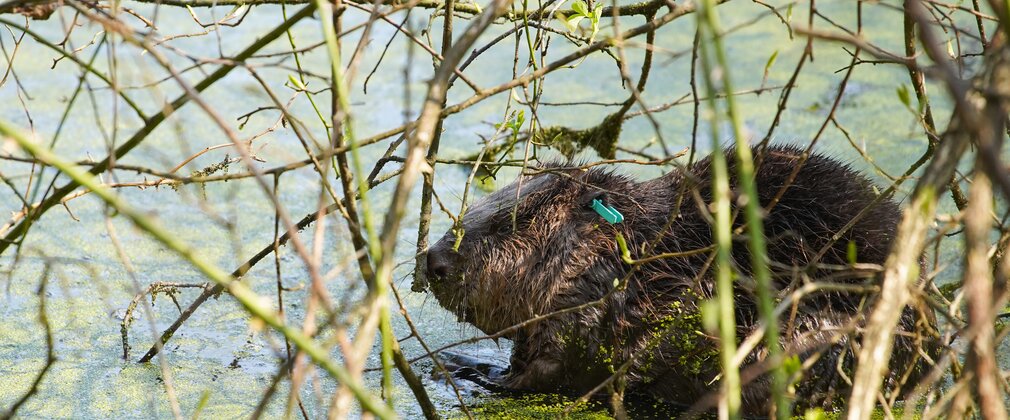
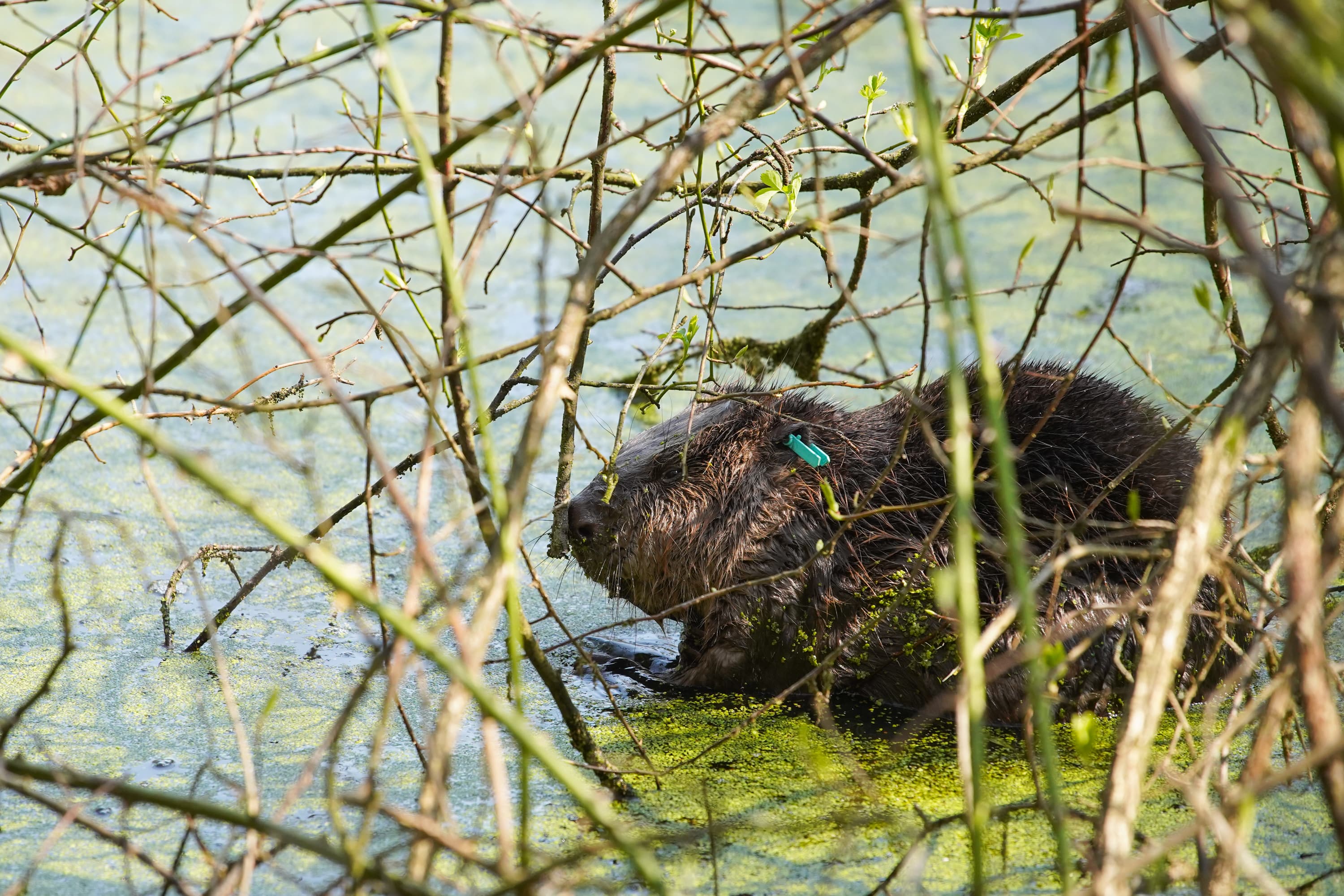
A male Eurasian beaver in a pond at Cropton Forest during the enclosed trial. Photo: Sam Oakes / Forestry England. Source page: https://www.forestryengland.uk/cropton-forest/beaver-trial-cropton-forest
The beavers built six dams. After that construction, the study found, the hydrological response became less flashy. Median turbidity fell by about 31 percent below the enclosure, and the authors recorded broader gains in water quality metrics, aquatic plant diversity, and vertebrate species richness relative to a neighbouring comparison stream. Bat detections rose at locations and times that matched new beaver activity. More than 50 volunteers contributed over 2,500 hours to the project, Forestry England says.
“When we started our monitoring in March 2019… what happened was beyond our imaginations,” Professor Smith said on Forestry England’s project page. “A diverse and dynamic habitat emerged that revealed unexpected surprises each year.”
Cath Bashforth, the leading ecologist for the project, described watching Yorkshire’s first beaver return in centuries reshape the site: “They have created a complex wetland habitat connecting the river with the floodplain, holding back water in the upper catchment, bringing benefits in times of drought and slowing the flow in times of flood.”
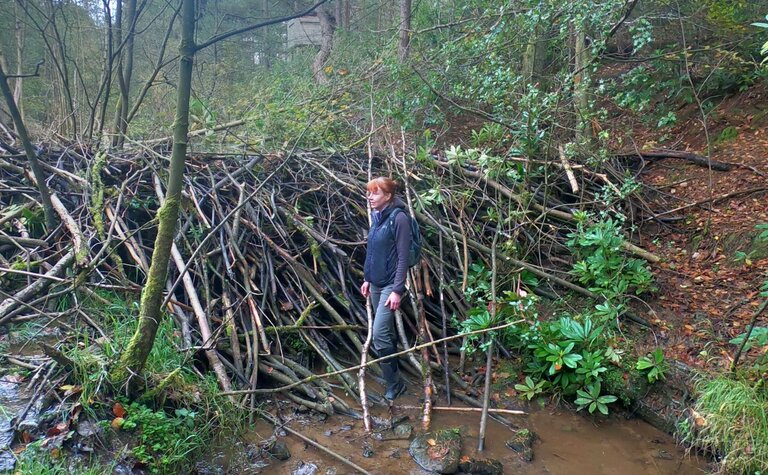
A volunteer or staff member stands beside a beaver dam taller than she is at Cropton Forest. Photo: Forestry England (photographer not named on the caption for this still). Source page: https://www.forestryengland.uk/cropton-forest/beaver-trial-cropton-forest
Natural England extended the trial for another five years after the original licence period ended in April 2024. Kits have been born in multiple seasons; juveniles have been relocated to seed other English projects. In summer 2026, Forestry England said it is exploring a licensed reintroduction across the Yorkshire Derwent catchment with the North York Moors National Park and Yorkshire Wildlife Trust, and opened a round of public drop-in sessions beginning 17 September 2026 at Settrington Village Hall.
The Ecohydrology article is open access under a Creative Commons Attribution licence. Partners stress that Cropton remains an enclosed scientific trial; any wider return would require separate licensing, community engagement, and monitoring.
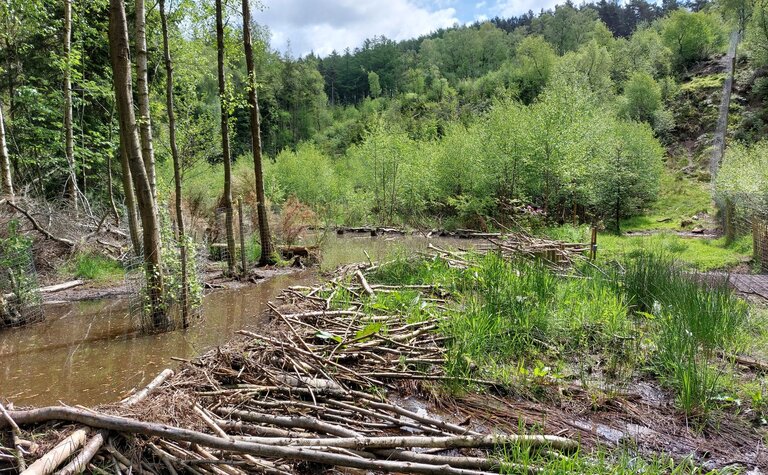
Stick structures along a forested river corridor inside the Cropton beaver enclosure in 2023. Photo: Forestry England. Source page: https://www.forestryengland.uk/cropton-forest/beaver-trial-cropton-forest
- environment
- conservation
- beavers
- uk
- flooding
- biodiversity